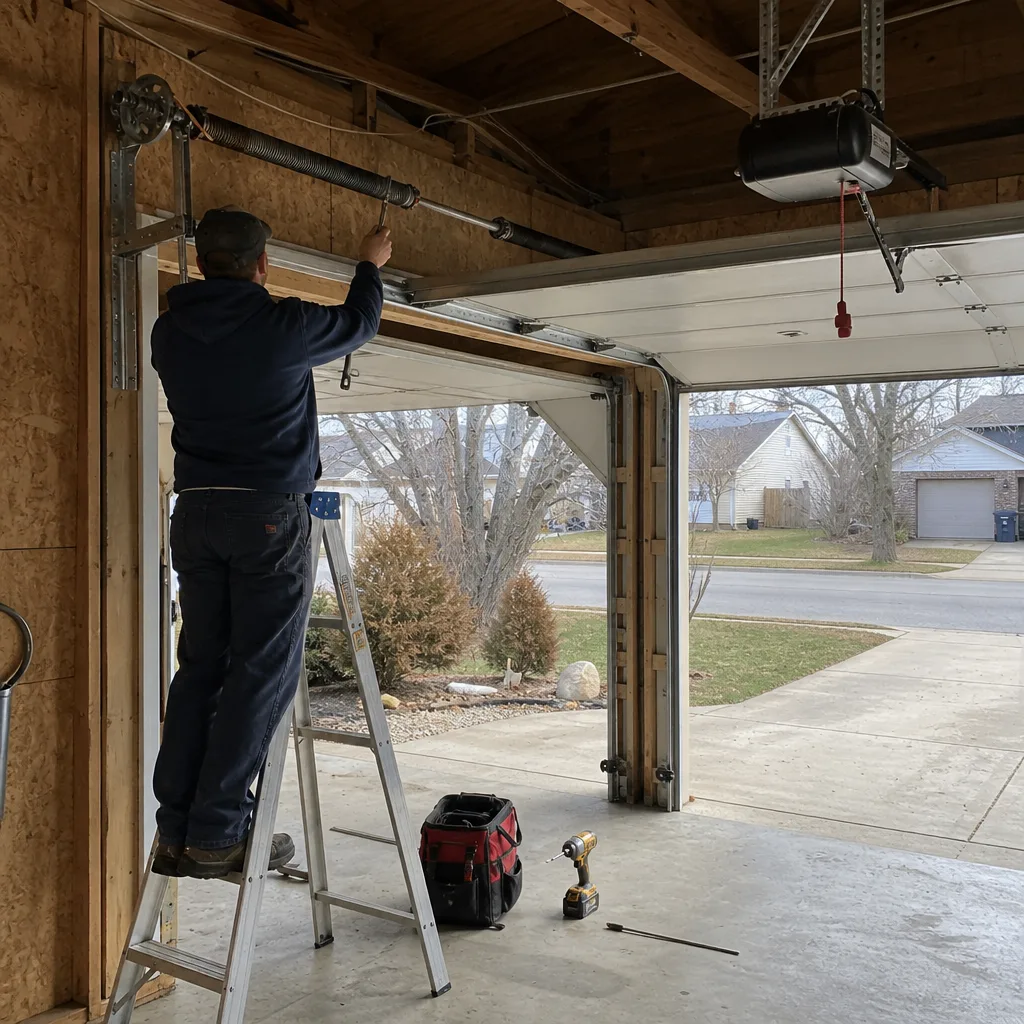
Last updated November 22, 2026
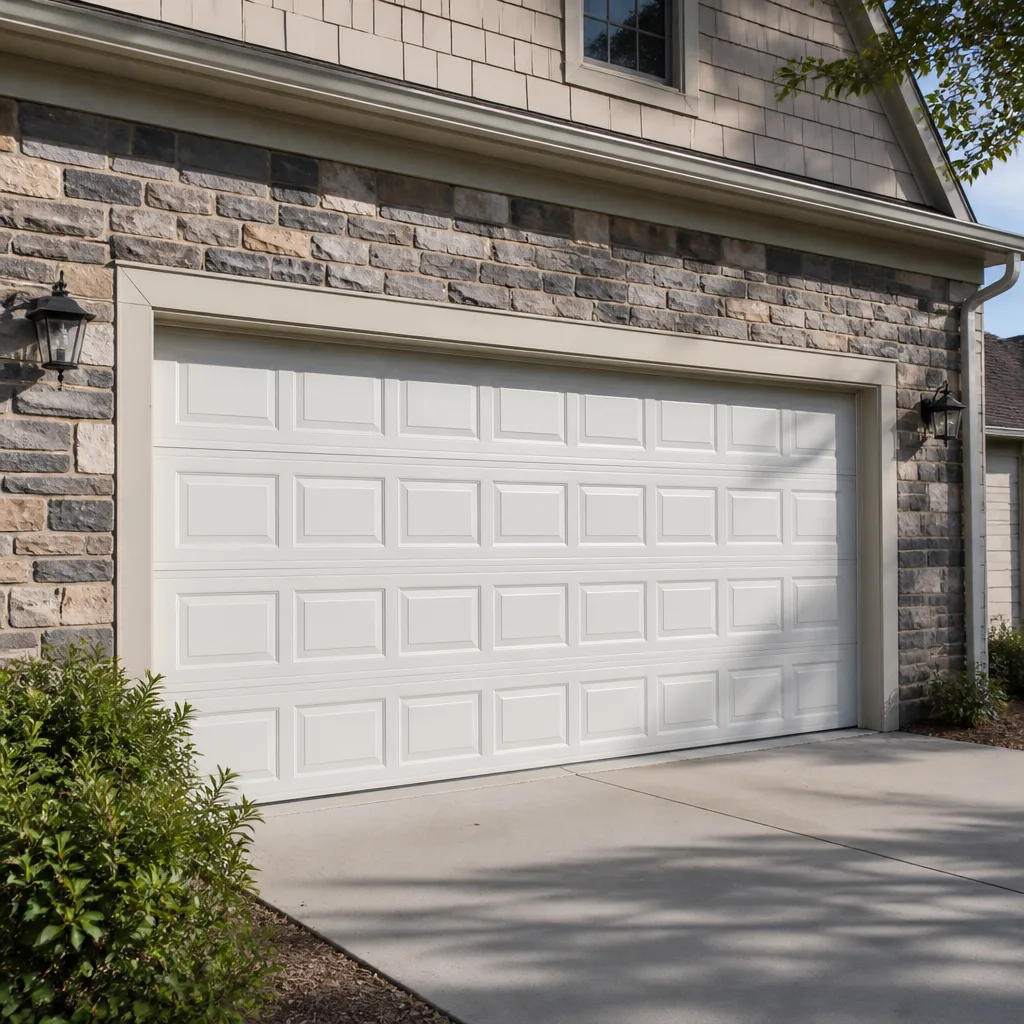 Raised-panel steel
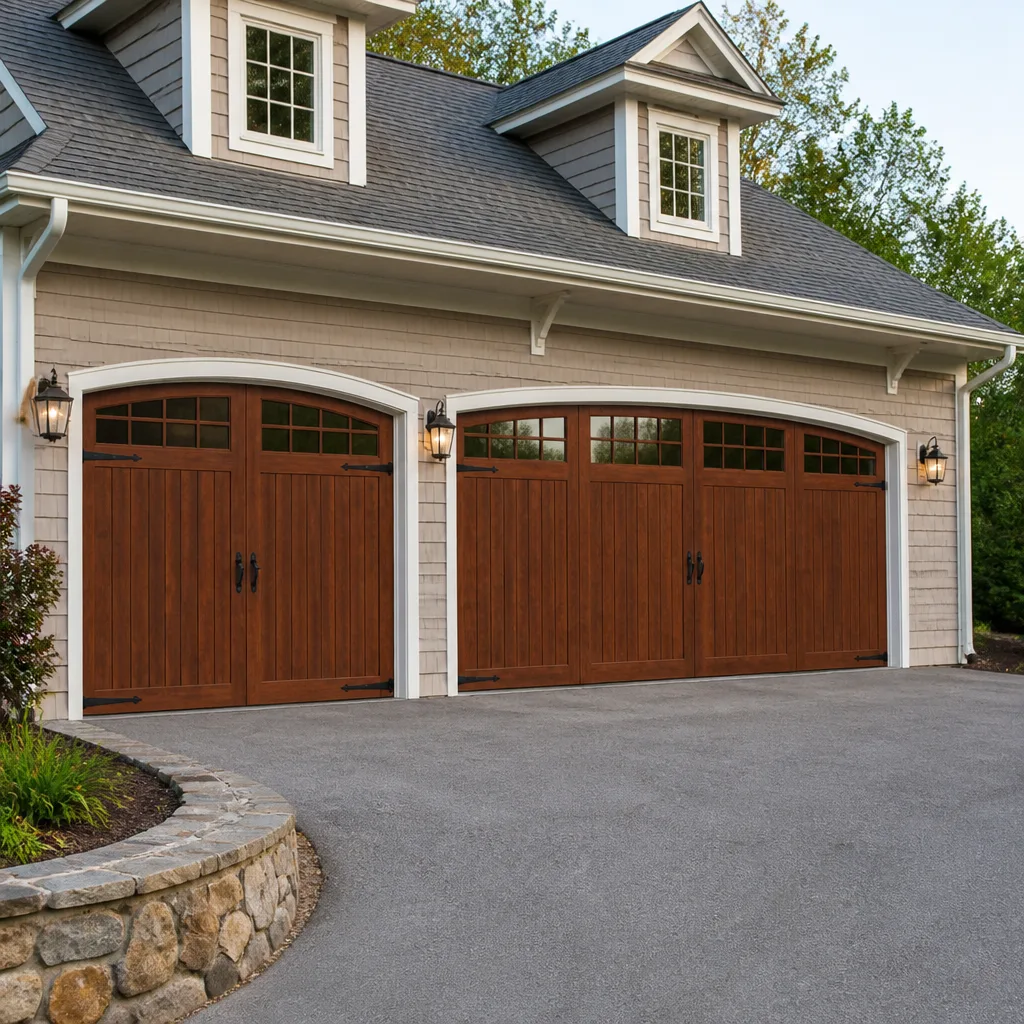 Carriage house
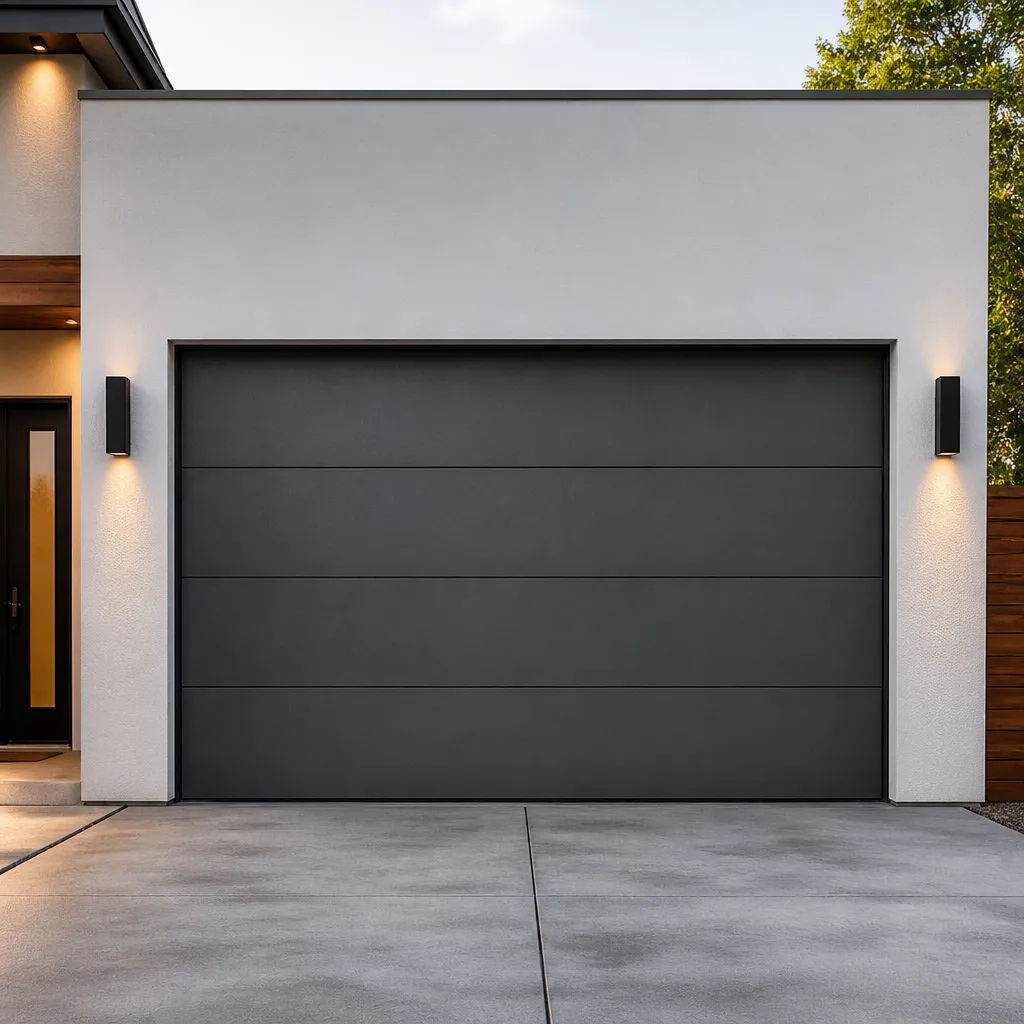 Modern flush
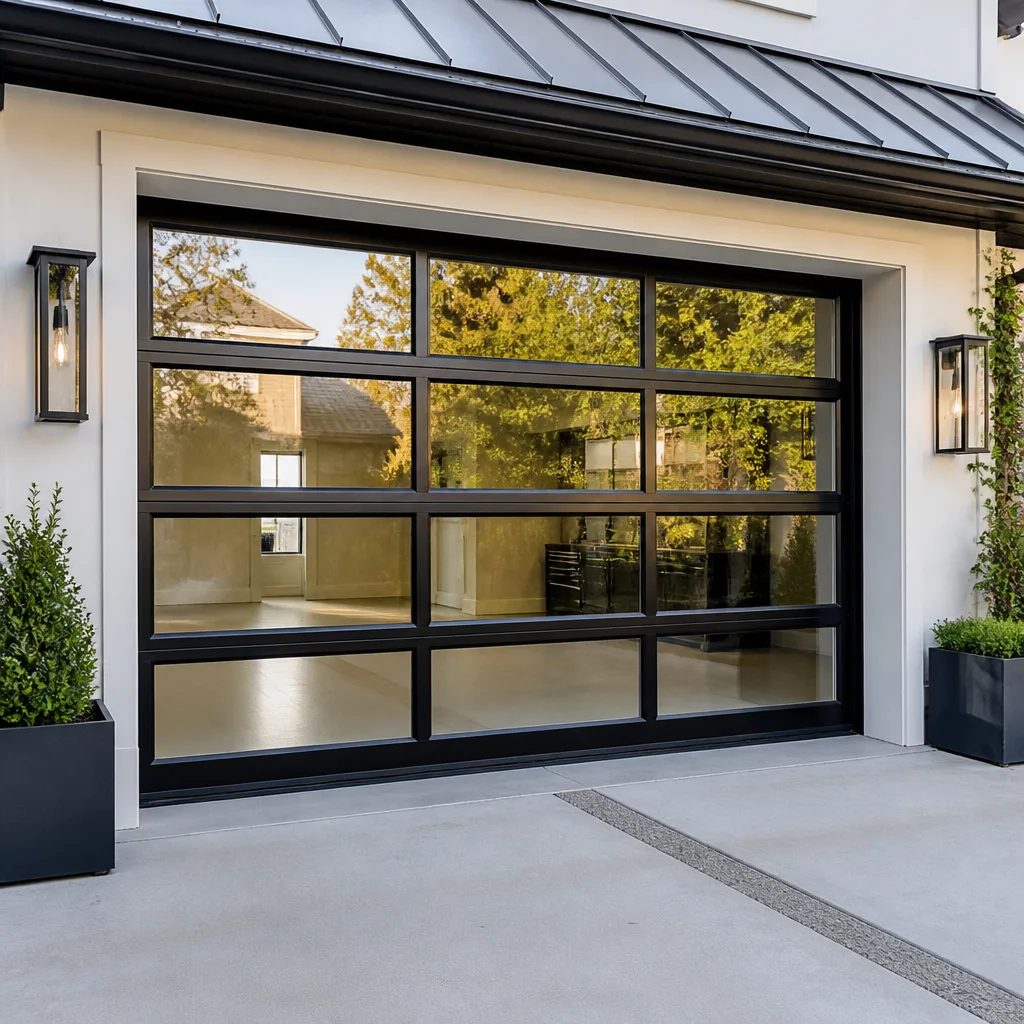 Full-view glass
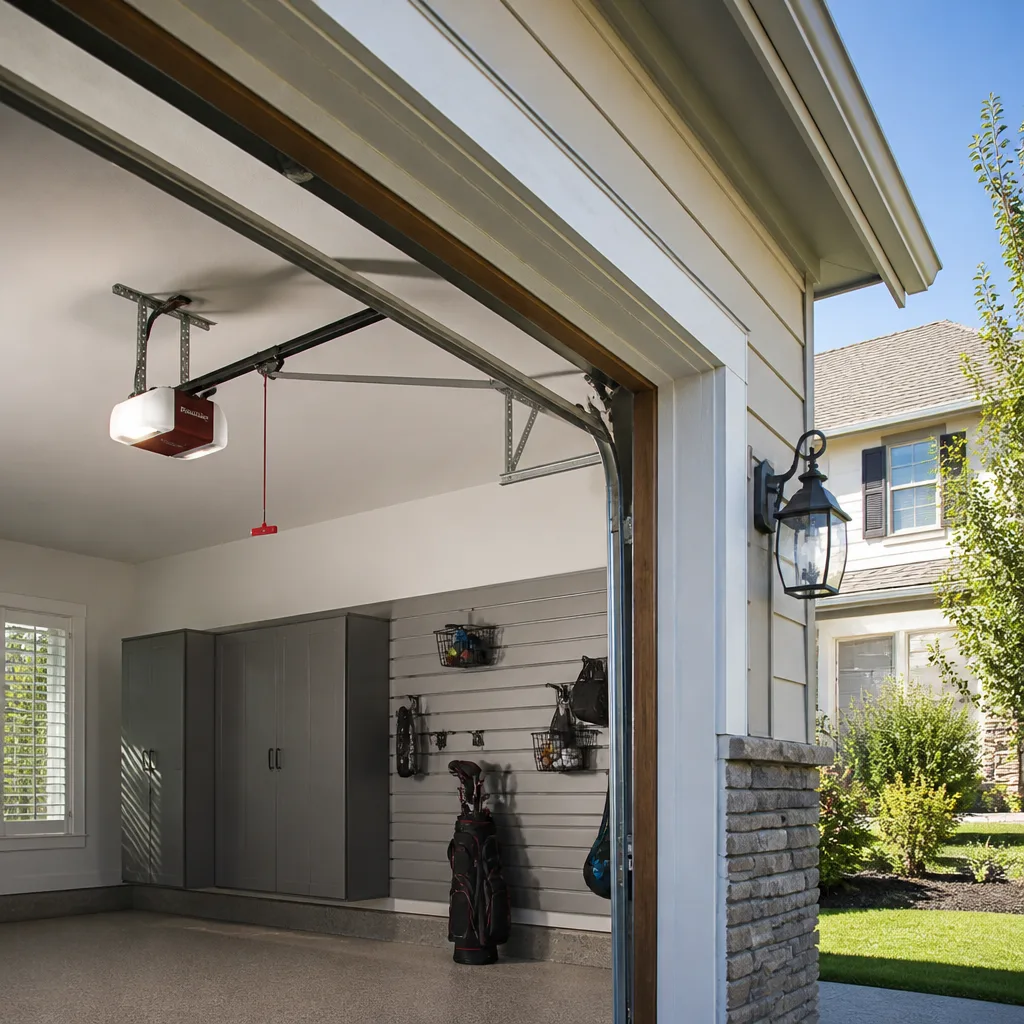 LiftMaster openers
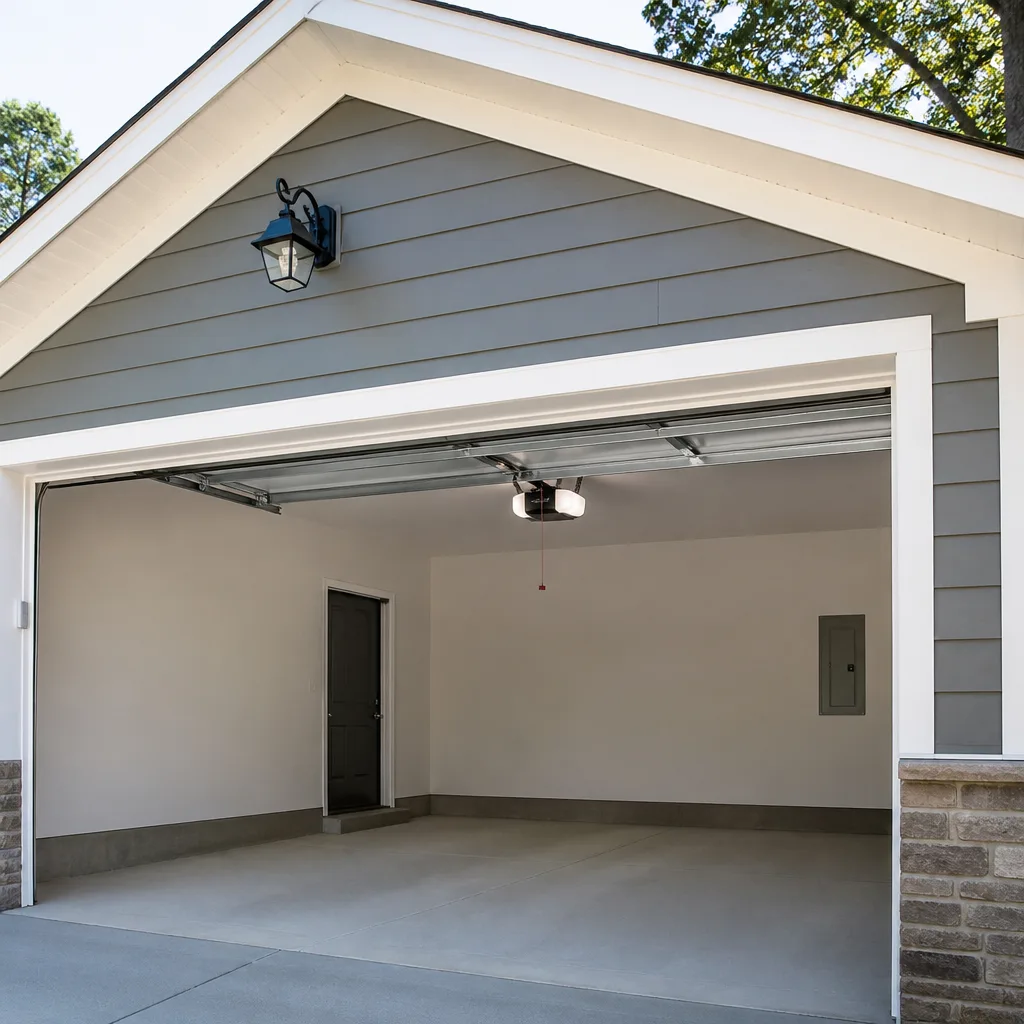 Chamberlain openers
Full 25-point door and opener safety check with every visit - springs, cables, rollers, tracks, and your LiftMaster or Chamberlain opener included
You get a price before we start. It does not change when the pro arrives.
Get your free estimateGarage Door Repair Maintenance Checklist for Lawrence Homeowners
Most garage door maintenance checklists start with the same item: lubricate the chain. That’s the item that matters least if your spring tension is already off, and in a Lawrence winter, spring tension is exactly what fails first. A checklist’s value comes from its order, not its length. Work the same tasks in the wrong sequence and you’ll spend a Saturday afternoon on a door that still binds, still slams, and still leaves a gap at the bottom wide enough to feel. What follows is a failure-frequency checklist built for central Indiana weather: what breaks first here, what to check with a tape measure instead of a guess, what you can safely handle, and what to hand to a technician before someone gets hurt.
Quick Answer
A garage door maintenance checklist for Lawrence should prioritize springs, bottom seals, safety sensors, and cables first, because those four components fail most often in central Indiana’s freeze-thaw cycles. Lubrication and hardware tightening come second. Visual inspections with measurable thresholds catch most problems before they strand a door, and any spring or cable work belongs with a trained technician, not a homeowner.
Styles & brands we work with
- Raised-panel steel
- Carriage house
- Modern flush
- Full-view glass
- LiftMaster openers
- Chamberlain openers
Table of Contents
- Why Failure Order Matters More Than Checklist Length
- The Lawrence Failure-Frequency Ranking
- Lubrication: Exact Products, Component by Component
- Visual Inspection Benchmarks You Can Actually Measure
- DIY vs. Liability: What You Can and Can’t Touch
- Seasonal Timing: When to Do What in Lawrence
- The Five-Minute Monthly Routine
- When a Checklist Item Becomes a Repair Call
Why Failure Order Matters More Than Checklist Length
Search for a garage door maintenance checklist and you’ll find the same forty-item list copied across dozens of sites. It’s not wrong. It’s just unranked. Every task is presented as equally urgent, which means readers work top to bottom, spend their time on the easiest items, and skip the ones that actually cause failures.
Garage doors fail in a predictable sequence when you account for local weather. Components that carry load and see the widest temperature swings go first. Components that carry no load and sit out of the weather go last. In Lawrence, that means torsion springs, bottom seals, and safety sensors sit at the top of the list, while hinges and track bolts sit near the bottom. Our technicians have up to 10 years of experience, and the pattern is consistent: most calls we get trace back to one of the top four items, rarely the bottom four.
Sequence matters for a second reason. Some checklist tasks depend on others. You can’t judge whether a door is balanced until the track is clean and the hinges are tight. You can’t judge whether a bottom seal needs replacing until you know the door is closing squarely. Work the items out of order and you’ll get false readings on both. Treat this checklist as a diagnostic sequence, not a to-do list you complete once and forget.
The Lawrence Failure-Frequency Ranking
Here’s how components stack up by how often they fail in central Indiana’s climate, and why each one earns its position.
- Torsion and extension springs. Springs carry the full weight of the door and cycle thousands of times a year. Lawrence’s freeze-thaw pattern means metal expands and contracts constantly from November through March, and that cycling accelerates fatigue. Springs are the number-one failure across every door brand we work on, from Amarr to Wayne Dalton. If you need it addressed, that’s garage door spring repair territory and should never be a homeowner project.
- Bottom seals and weatherstripping. Rubber hardens and cracks in cold, then thaws and re-forms over and over. A failed bottom seal lets in cold air, insects, and moisture, which is a bigger nuisance in Lawrence’s humid summers than most homeowners expect. It’s also the cheapest item on this list to fix, which makes skipping it hard to justify.
- Safety sensors and photo-eye alignment. These sit near the floor where snow, road salt tracked in on tires, and blown debris collect. A misaligned or dirty sensor is the most common reason a door reverses mid-travel. This is almost always a two-minute fix, but only if you know to check it first.
- Cables. Cables fray at the drum and at the bottom bracket. They see the same load cycling as springs and fail on a similar timeline. A frayed cable is a safety issue, not a maintenance item, and belongs with a technician.
- Rollers. Steel rollers wear flat spots and get noisy; nylon rollers crack at the hub. Rollers fail more slowly than springs or seals but make up a large share of noise complaints.
- Hinges and track hardware. Bolts back out from vibration. Tracks get bumped by cars and bicycles. Both are easy to check and usually easy to correct.
- Openers and drive systems. Modern openers, including LiftMaster and Chamberlain units, are reliable. Failures here usually trace back to a door that’s out of balance putting extra strain on the motor, not the motor itself. When an opener does need attention, that’s garage door opener repair work.
Notice how the ranking shifts the effort. If you spend an hour lubricating the chain and five minutes checking spring tension, you’ve inverted the list. Do it the other way around.
Lubrication: Exact Products, Component by Component
Lubrication is where most checklists get vague. “Lubricate moving parts” tells you nothing useful. Different components take different products, and one common mistake can damage rollers permanently.
- Torsion springs: A light coat of white lithium grease or a dedicated garage door spring lubricant. Apply once a year, not monthly. Too much grease attracts grit that accelerates wear.
- Hinges and pivot points: White lithium grease or a silicone-based spray. Apply to the pivot, not the flat plate.
- Rollers: Silicone spray only, and only on the roller stem, not the wheel. Never apply grease to roller wheels themselves; it collects dust and grinds.
- Track: A dry silicone spray on a clean cloth, wiped along the interior surface. Never use oil, grease, or WD-40 on a track. Oil attracts dirt, dirt hardens, and a hard track is worse than a dry one.
- Chain drive: A light chain lubricant or white lithium grease, applied sparingly. Excess grease flings off onto the door and the ceiling.
- Belt drive: No lubrication. Belts are self-lubricating, and adding product shortens their life.
Two products to keep out of your garage entirely. First, general-purpose household oil on nylon rollers: it degrades the nylon over time and turns a clean roller into a cracked one. Second, WD-40 as a lubricant anywhere on the door system. It’s a solvent, not a lubricant, and it strips the protection you’ve applied.
If you have a Craftsman or Genie opener with a chain drive, the chain needs the lightest application of any component on the door. A single pass with a lubricated cloth is enough. More is not better.
Visual Inspection Benchmarks You Can Actually Measure
“Check for wear” is the least useful instruction in any maintenance guide. Wear is not a feeling. Here are benchmarks you can measure with items already in your garage.
- Door balance: Disconnect the opener, lift the door to waist height by hand, and let go. A properly balanced door holds position or drifts less than a few inches. If it drops hard, the springs are worn or the tension is wrong.
- Bottom seal gap: Close the door and set a flashlight on the floor inside, aimed at the seal. If you see light across the entire width, the seal needs replacing. A pencil-width gap is a pass; a finger-width gap is not.
- Spring tension loss: With the door closed, measure the length of each torsion spring along the shaft. Compare against the same measurement taken when the springs were new (write it on the wall if you don’t have it). More than about 15 percent of stretch means the spring has lost meaningful tension and is on borrowed time.
- Cable inspection: Look for fraying, kinks, or a birdcage pattern at the drum. Any visible fraying means stop using the door and call a technician.
- Sensor alignment: With the door open, wave a hand in front of the photo-eye. The door should reverse immediately. If it takes more than a beat or doesn’t reverse at all, the sensor is out of alignment or dirty.
- Roller check: With the door closed, look at each roller in the track. A nylon roller with a visible crack at the hub or a steel roller with a flat spot needs replacing.
- Track level: Set a level against the vertical track. More than a slight gap at either end means the track has shifted and needs adjustment.
Run these checks in the order listed, because each one can mask the next. A door that fails balance will also look like it has a seal problem, and it doesn’t. And if your door is an older model with unfamiliar hardware, you can find a full breakdown of what’s involved in garage door repair work generally.
DIY vs. Liability: What You Can and Can’t Touch
The line between homeowner-safe and liability is sharper than most checklists admit. Here’s the honest split.
Genuinely safe for a homeowner:
- Cleaning safety sensors and re-aiming them by hand
- Lubricating hinges, rollers (stems only), and chain
- Replacing a bottom seal on a standard residential door
- Tightening hinge and track bolts with a socket wrench
- Visual inspection, measurement, and record-keeping
- Cleaning and straightening the track with a rubber mallet
Not safe and not covered by most homeowner insurance:
- Adjusting or replacing torsion springs
- Replacing cables
- Adjusting the opener’s force limits without proper diagnostics
- Cutting or extending springs
- Any work under a door that’s being held open by something other than proper locking pliers
Springs and cables are the two components that can cause serious injury or death when handled incorrectly. A torsion spring under load carries hundreds of pounds of force stored in coiled steel. When it releases unexpectedly, it does so in an instant. This is one of the highest-skill, highest-risk repairs in the trade, which is why we offer it as a dedicated service rather than a side note. A trained technician uses the right winding bars, understands the system, and knows when a spring is showing early fatigue. A homeowner with a socket set does not. If you have any doubt about whether a task is within your ability, it isn’t.
Seasonal Timing: When to Do What in Lawrence
Timing matters as much as the checklist. Central Indiana’s seasons dictate when each task is worth doing.
- Early spring (March – April): Post-winter inspection. Springs have just cycled through their hardest season. Check balance and spring length first, then bottom seal integrity, then sensor alignment. Clear any grit or debris the winter brought in from the track.
- Late spring (May): Lubrication pass. Apply grease to springs, hinges, and chain, and silicone to rollers and track. This is the one time per year the full lubrication list applies.
- Summer (June – August): Watch for humidity effects. A door that worked in May can bind in July as wood components in older doors swell. Check for sticking and re-inspect the bottom seal; summer heat accelerates rubber degradation too.
- Early fall (September – October): Pre-winter prep. Tighten all hardware before the temperature swings begin. Inspect the weatherstripping around the door frame. Test the safety reverse for the first time since spring.
- Late fall (November): Final lubrication and sensor check before the cold sets in. Inspect the bottom seal one more time; a failed seal going into winter lets cold air into the garage all season.
- Winter (December – February): Monitor only. Note any increase in noise, binding, or balance drift. Don’t lubricate in cold weather; cold grease thickens and creates more friction than it removes.
The result is roughly two heavy maintenance windows per year: late spring and late fall, with lighter monitoring in between. If you’re in doubt about which task applies to your door’s brand or age, we service equipment from Amarr, Wayne Dalton, Craftsman, and Raynor alongside other major manufacturers, so we can answer the question against your specific system rather than guessing.
The Five-Minute Monthly Routine
Between the two heavy maintenance windows, a five-minute monthly check catches most problems before they become repairs.
- Open and close the door once, listening for changes. A new rattle, squeal, or grind is a signal. Old sounds that haven’t changed are usually fine.
- Look at the bottom seal. Any visible gap at the floor is the main item to watch.
- Wave a hand in front of the safety sensors. The door must reverse. No exceptions.
- Look at the track’s visible surfaces. Debris, leaves, or snow buildup in the track means friction.
- Try the manual release once a month. The red handle should pull smoothly and re-engage cleanly. A release that’s stuck means you’d have no way to operate the door if the opener failed.
Five minutes a month is enough to catch the four top failure items while they’re still small. The compromise most homeowners make is skipping the monthly pass and doing a full annual pass instead, which is fine, but the monthly check is the one that turns a spring replacement into a spring inspection.
When a Checklist Item Becomes a Repair Call
Every checklist item has a threshold where it stops being maintenance and becomes a repair. Here are the clear signals:
- Spring length has grown more than 15 percent, or the door drops hard when released at waist height
- Any visible fraying, kinking, or birdcaging on a cable
- The door reverses or stops mid-travel after sensor cleaning and alignment
- The door goes up crooked, binds at one corner, or makes a loud pop when opening
- A torsion spring has broken outright (the door will feel extremely heavy and the opener will strain)
- Balance fails after you’ve confirmed the track is clean and hardware is tight
At that point it’s no longer a maintenance task, it’s a repair call, and delaying it costs more than scheduling it. Garage Door Repair Lawrence Pros offers free estimates in Lawrence. For the situations that can’t wait, we also offer emergency service for a broken spring, stuck door, or a door that won’t close. Call (844) 681-4256.
Common Mistakes to Avoid
- Lubricating the chain first. A lubricated chain on an out-of-balance door is wasted effort. Check spring tension and balance first, then move to lubrication. In Lawrence, we see this mistake more than any other because it’s the first item on most checklists.
- Using general-purpose oil on nylon rollers. Household oil degrades nylon over time, turning a clean roller into a cracked one. Use silicone spray on the stem only, never on the wheel.
- Assuming a noisy door needs new rollers. Noise is usually a hinge or track issue, not a roller issue. Diagnose before replacing, because replacing rollers cures the wrong problem when the real cause is a loose bolt.
- Skipping the safety sensor test because it worked last month. Sensors drift silently after a bump or a change in humidity. A two-second hand wave every month catches drift before a door reverses onto something.
- Adjusting spring tension “just a little” without proper tools. Springs are the one item on this checklist that can hurt you. If you don’t have winding bars, a spring winding gauge, and the confidence to use them correctly, don’t touch them.
- Replacing the bottom seal without checking the door closes squarely. A new seal on a misaligned door wears out in one season. Balance and alignment first, then the seal.
- Over-greasing the track. Oil, grease, or WD-40 on a track turns it into a dust magnet. Use dry silicone and a cloth, and only inside the track, not on the roller wheels.
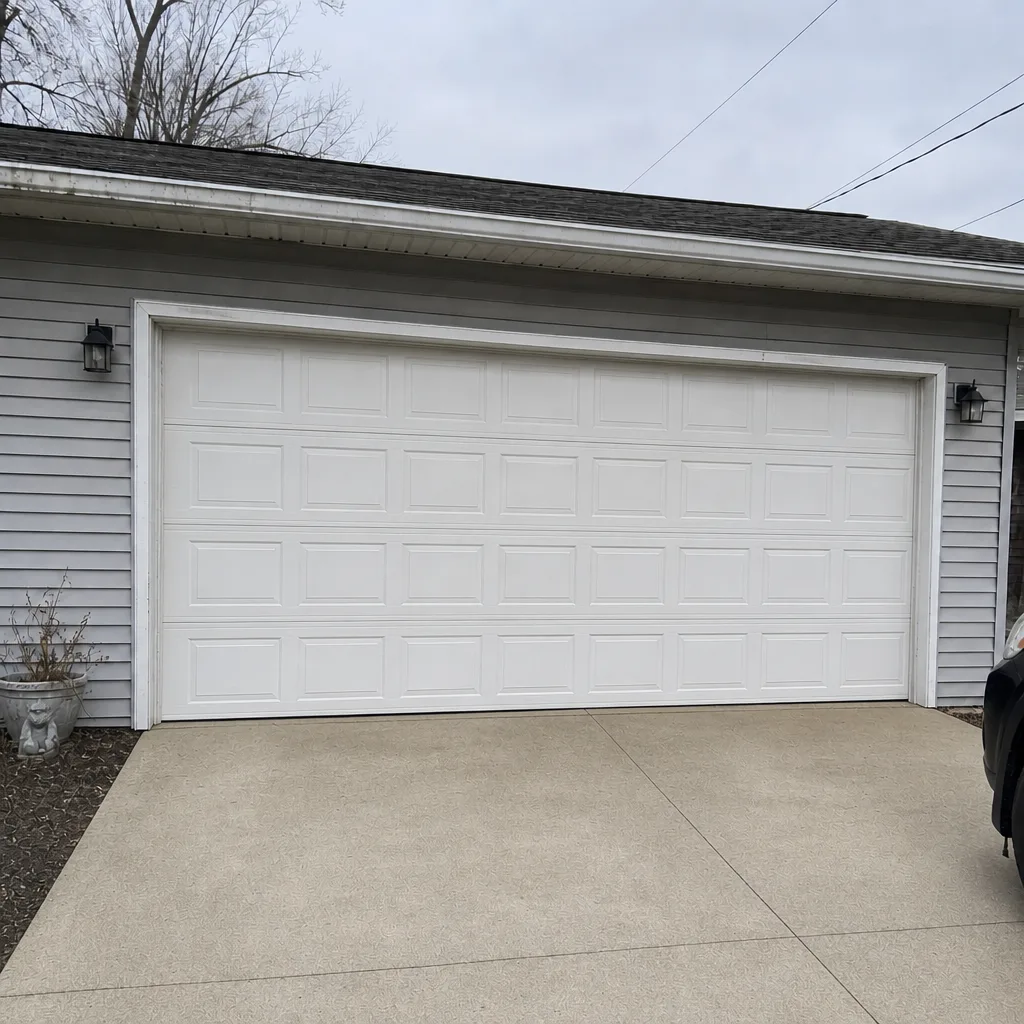
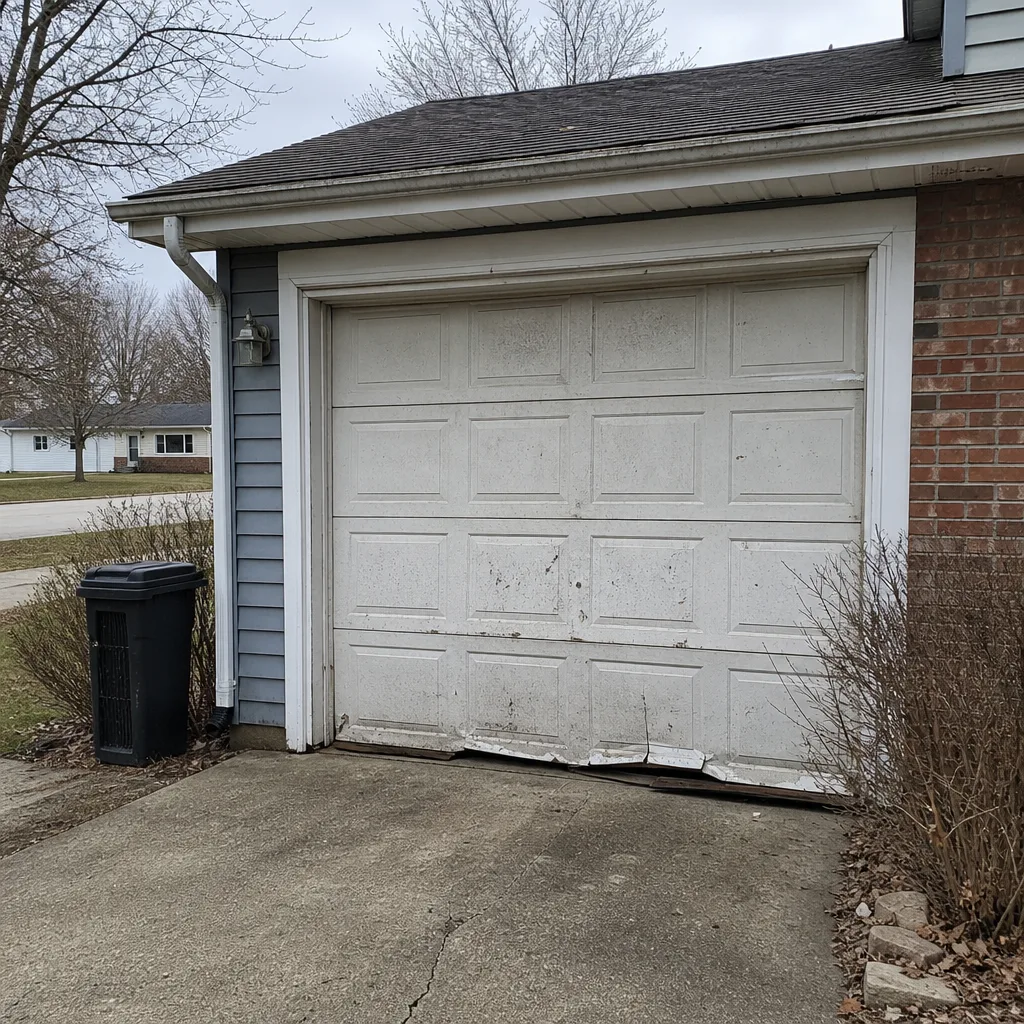
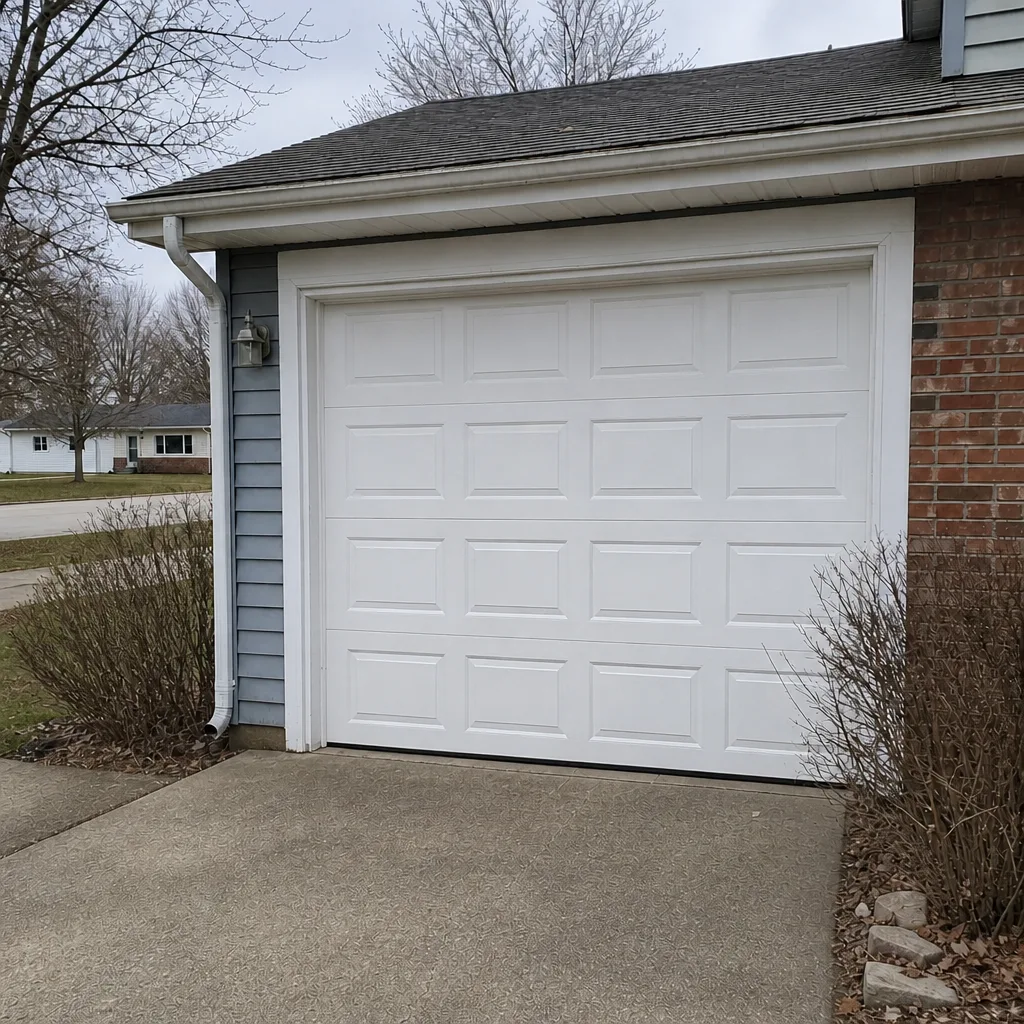
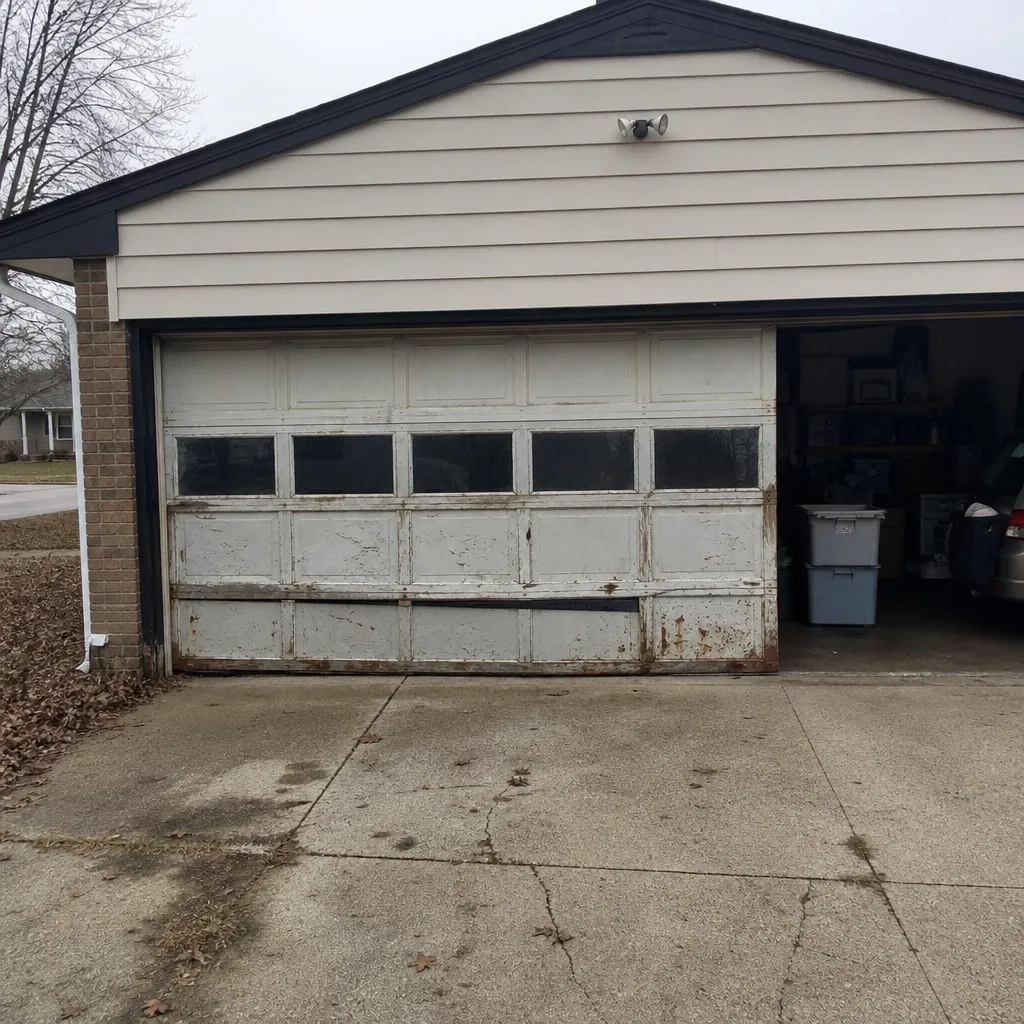
See the difference
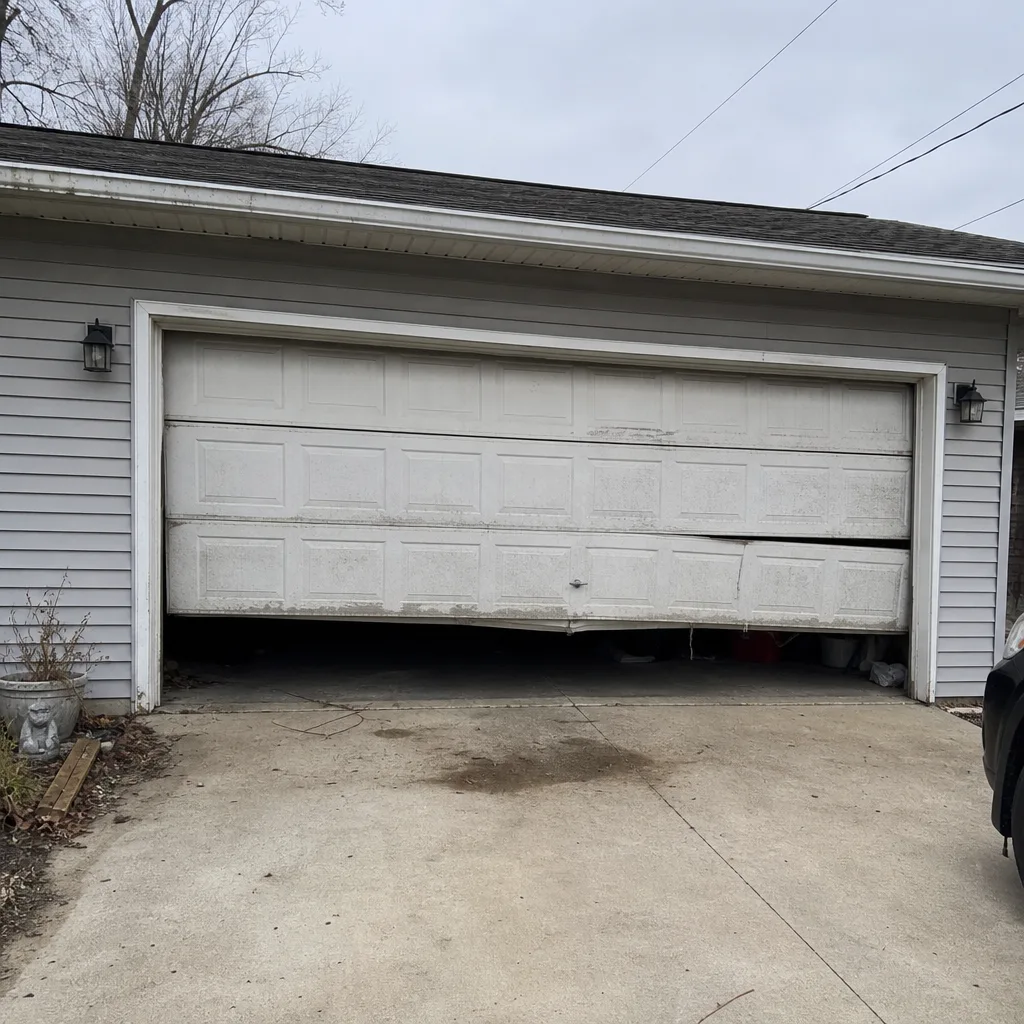 Before
 After
 Before
 After
 Before
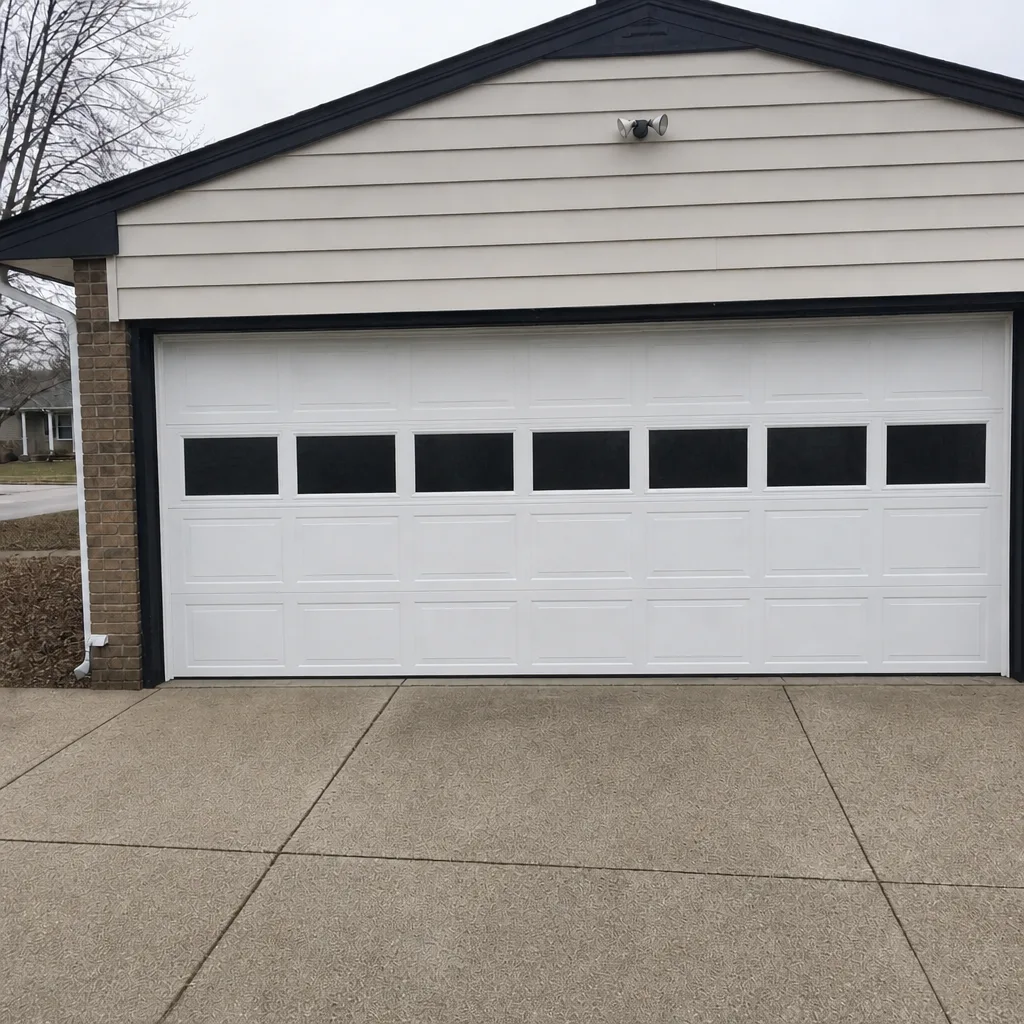 After
When to Call a Professional
Call a technician when the checklist produces a “stop” signal: a broken or stretched spring, a frayed cable, a door that won’t reverse for sensors after cleaning, or a balance failure that doesn’t correct after tightening hardware. Call when a door is off its track, when the opener runs but the door doesn’t move, or when you hear a loud pop followed by the door refusing to open. Call when any maintenance task requires getting near a loaded spring or cable. The liability and personal safety case for professional work is clear, and no checklist item is worth a trip to the emergency room. Garage Door Repair Lawrence Pros offers free estimates in Lawrence. Call (844) 681-4256.
Frequently Asked Questions
Twice a year, in late spring and late fall, aligns with Lawrence’s freeze-thaw cycle. The late-spring pass handles lubrication and track cleaning after winter; the late-fall pass handles hardware tightening and weatherstripping before the cold.
Yes, you can apply a light coat of white lithium grease or a dedicated spring lubricant to the exterior of a torsion spring once a year. You can’t adjust, wind, or replace springs yourself safely. Lubrication is safe; anything involving winding bars is not.
Never use WD-40 or general household oil on nylon rollers or the track. WD-40 is a solvent that strips protection, and household oil degrades nylon. On the track, avoid oil and grease entirely; use dry silicone on a cloth.
Measure the spring length while the door is closed and compare to when it was new. More than about 15 percent of stretch means significant tension loss. A door that drops hard when released at waist height also signals worn springs. Call (844) 681-4256 if you notice either.
Yes, a standard bottom seal is a genuine DIY task with the right replacement and basic tools. Skip it if the door closes unevenly; a new seal on a misaligned door wears out in a season.
Wave your hand in the beam path with the door open. It should reverse immediately. Any delay, or no reversal at all, means the sensors need cleaning or alignment before anyone uses the door.
The Bottom Line
A garage door checklist’s value is in its order, not its length. Springs, seals, sensors, and cables come first in Lawrence because central Indiana weather wears them fastest. Lubrication and hardware work come second, and the sequence matters as much as the task. Two heavy maintenance passes per year (late spring and late fall) plus a five-minute monthly check is enough to catch most failures early. Spring and cable work belongs with a trained technician. If you’d rather someone else run the checklist against your specific system, our technicians have up to 10 years of experience across Amarr, Wayne Dalton, Craftsman, Raynor, and the other major brands. From opener to full installation, we handle the full garage door. Whether you need garage door opener repair or a Garage Door Repair Lawrence Pros estimate on a full replacement, call (844) 681-4256 to book a free estimate in Lawrence.
Written by the team at Garage Door Repair Lawrence Pros.