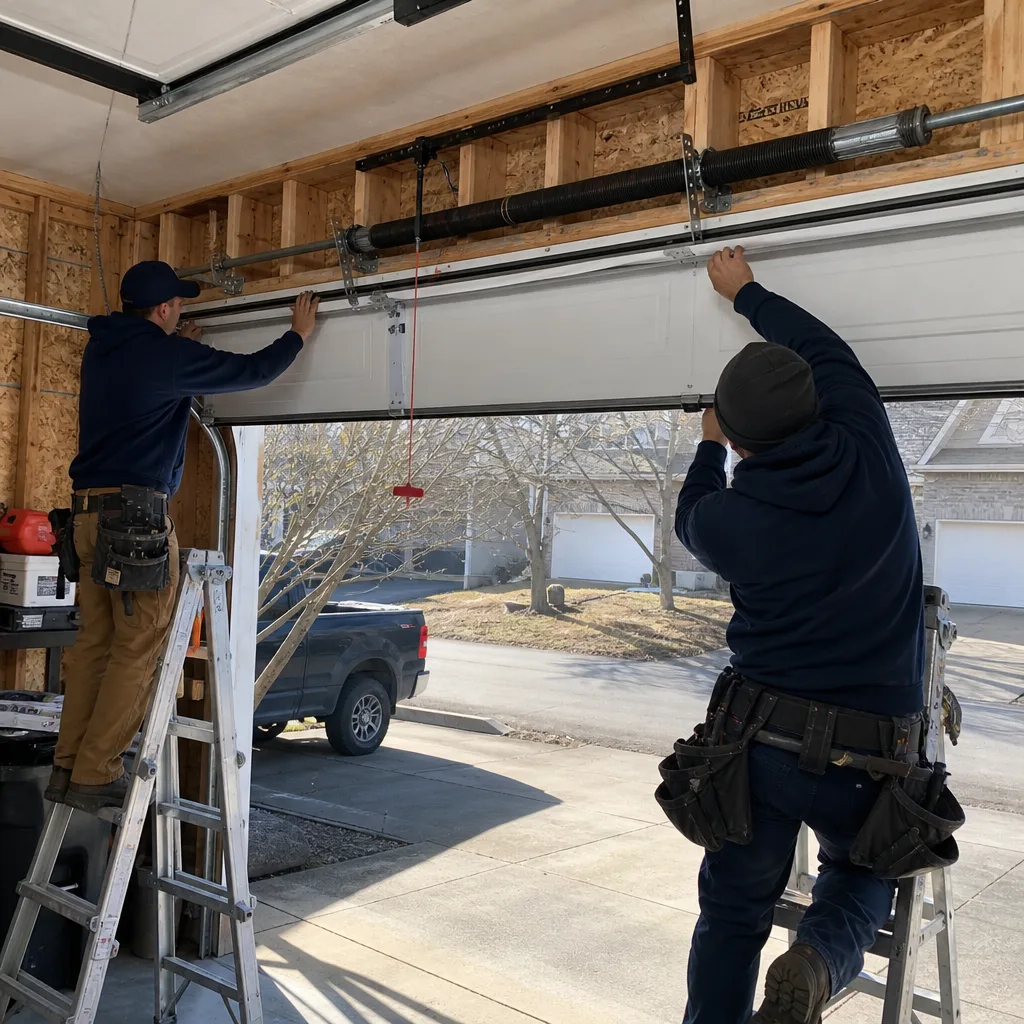
Last updated November 22, 2026
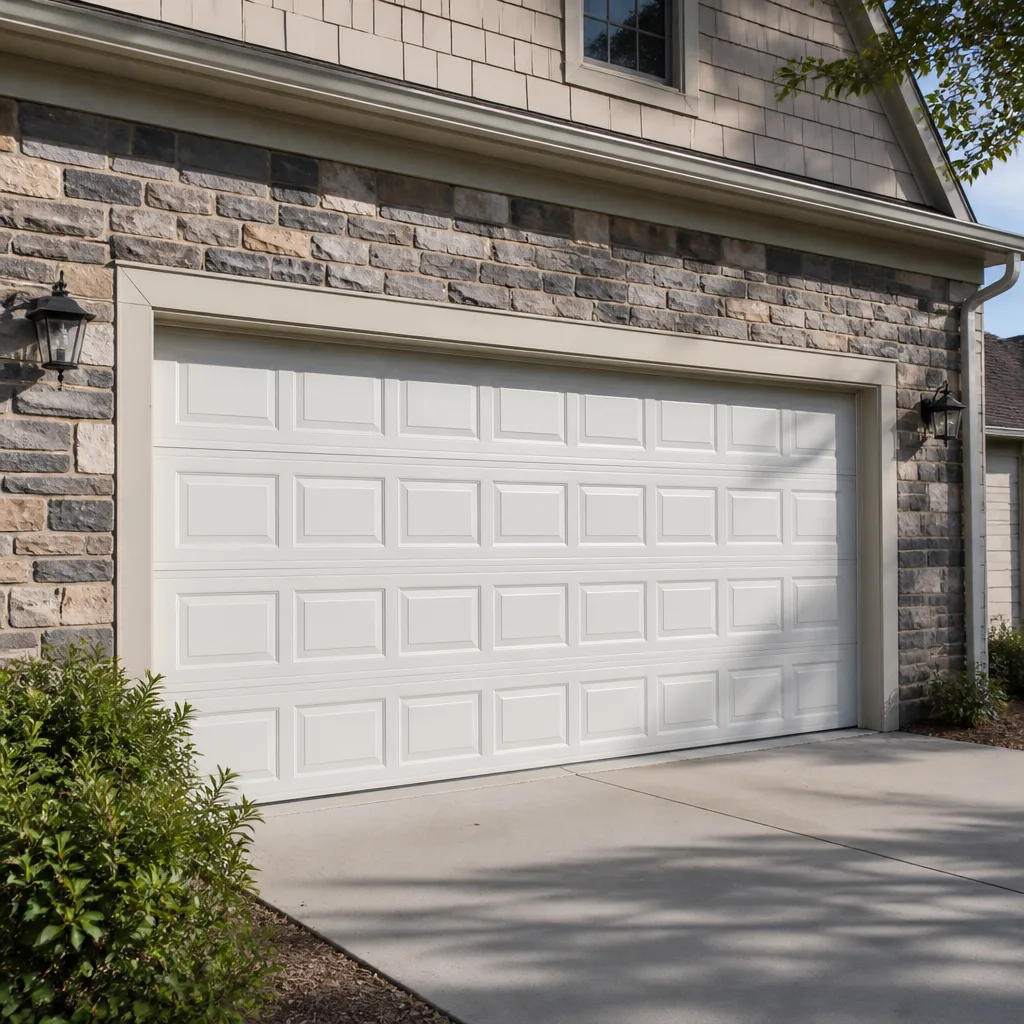 Raised-panel steel
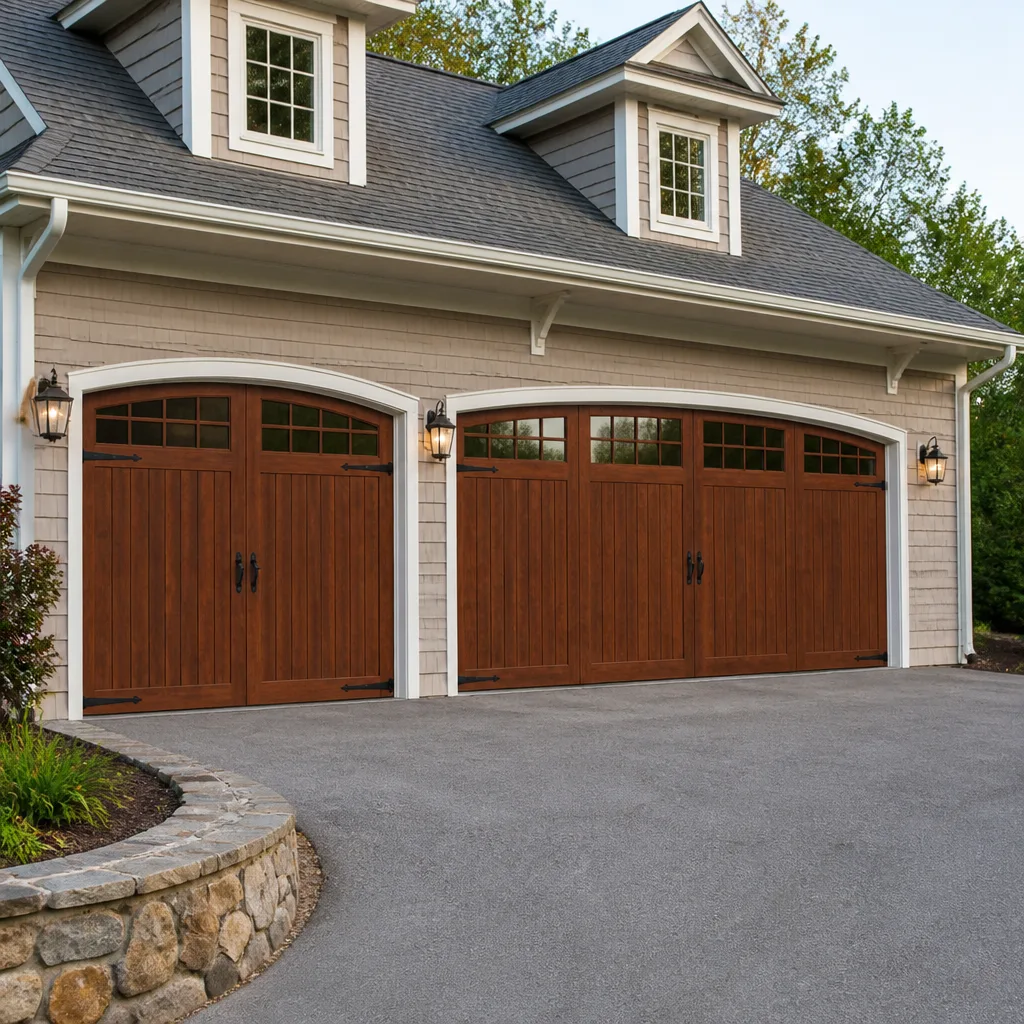 Carriage house
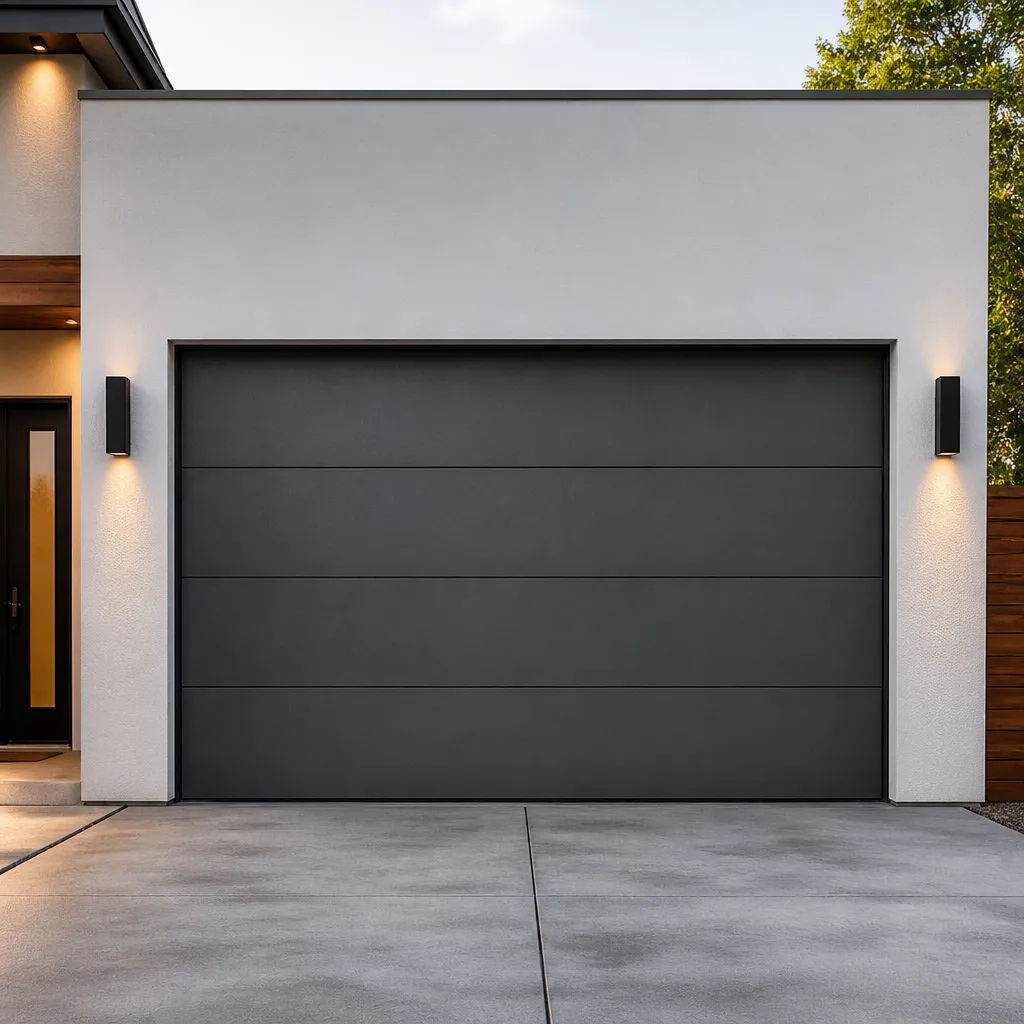 Modern flush
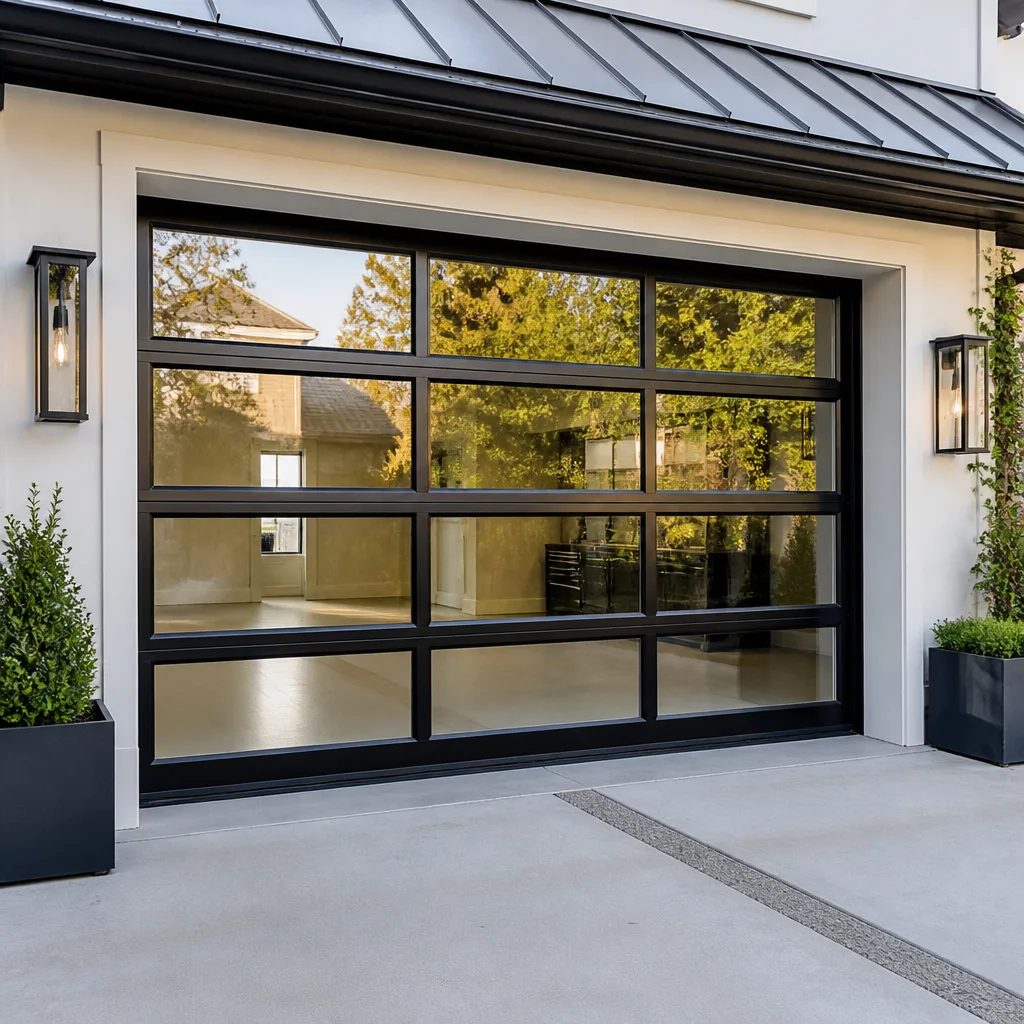 Full-view glass
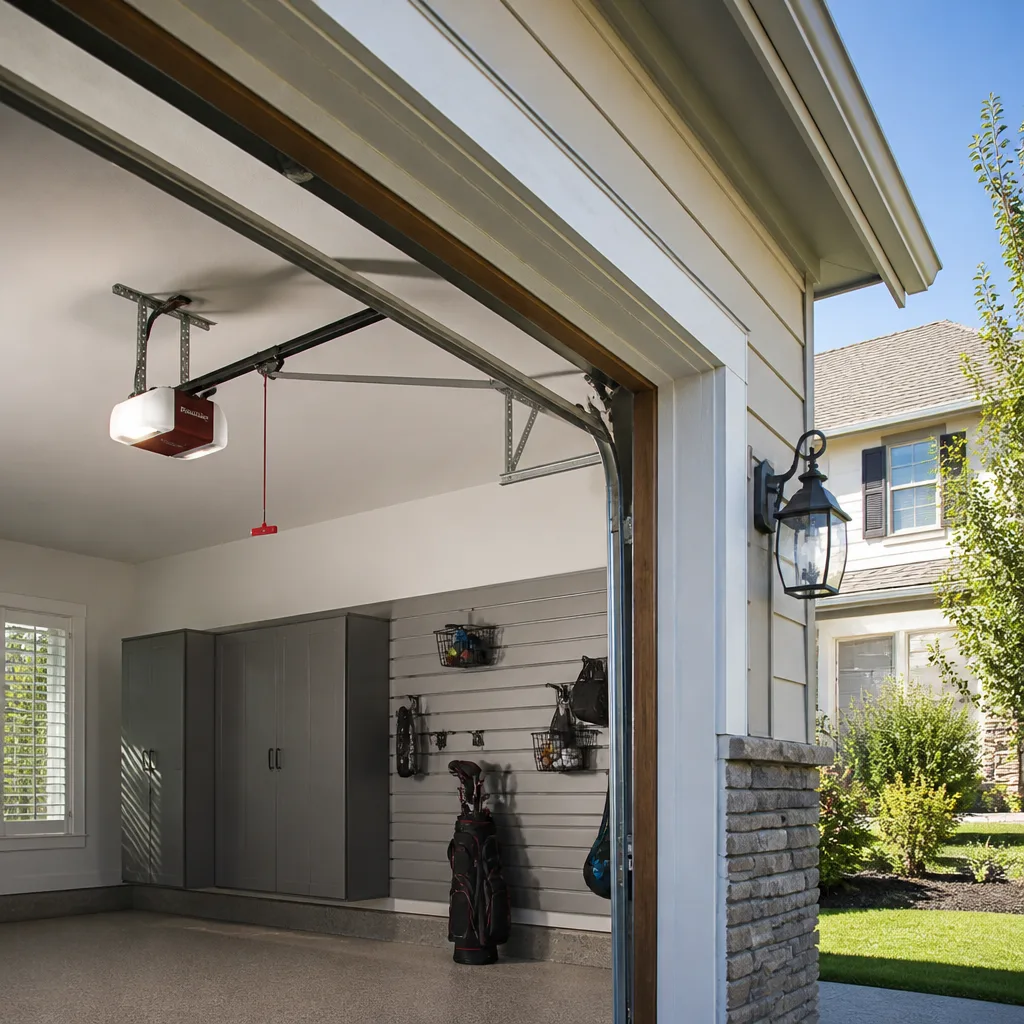 LiftMaster openers
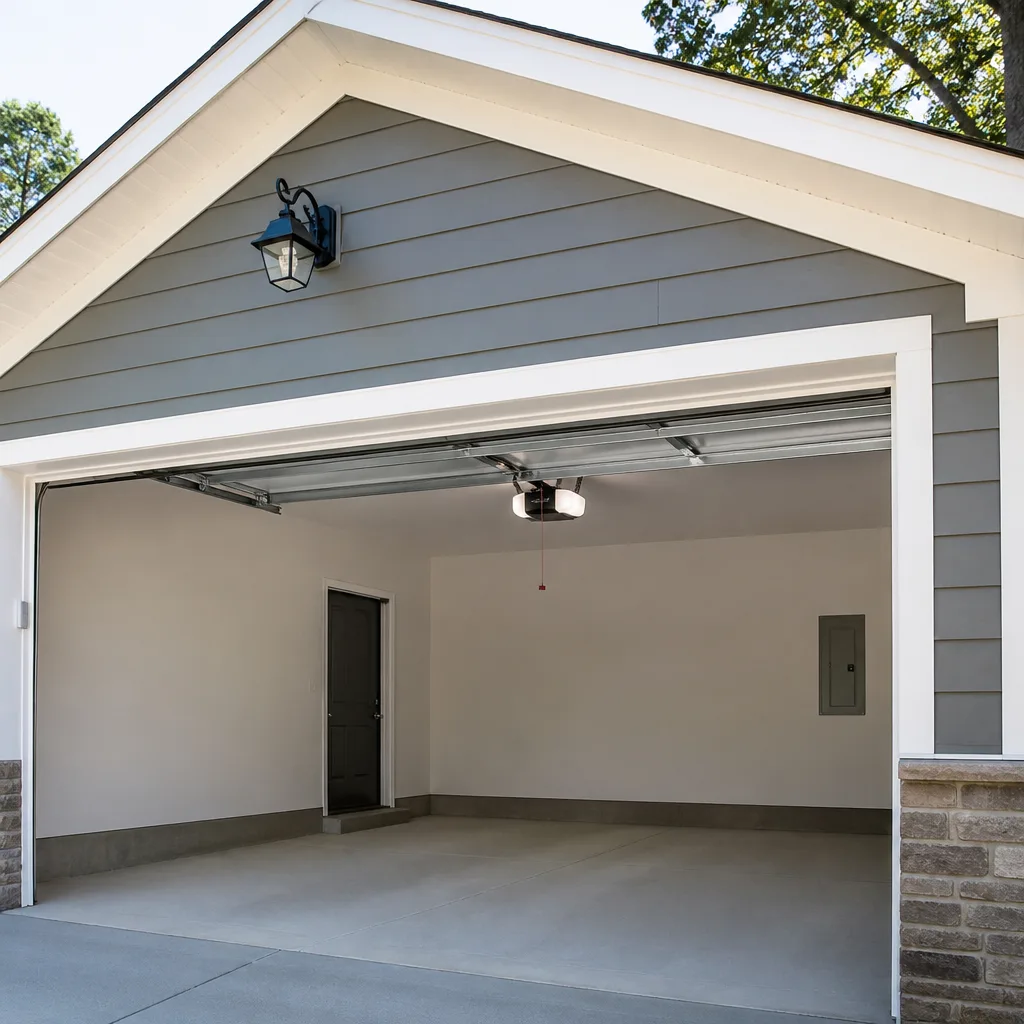 Chamberlain openers
Full 25-point door and opener safety check with every visit - springs, cables, rollers, tracks, and your LiftMaster or Chamberlain opener included
You get a price before we start. It does not change when the pro arrives.
Get your free estimateGarage Door Repair Maintenance Schedule: What to Do and When
Most garage door maintenance advice treats every month the same, which is why so many doors fail at the worst possible time. In Lawrence, the freeze-thaw cycles that run from November through March put more stress on springs, cables and bottom seals than the other nine months combined. A door that sailed through summer without a sound can start groaning and sticking by the first hard cold snap. A single annual tune-up isn’t a schedule; it’s a hope strategy. What follows is a task-by-task, month-by-month calendar matched to Indiana’s seasonal stress points, so you know exactly what to check, when to check it, and what result should make you pick up the phone. We’ll cover the 90-second balance test, lubrication specs by component, brand-specific intervals and the maintenance log habit that helps any technician diagnose faster.
Quick Answer
A workable garage door maintenance schedule in Lawrence follows the seasons: inspect and lubricate in fall before the first freeze, re-check springs and bottom seals after the freeze-thaw stretch in late winter, and clean and seal wood sections during summer humidity. Run a monthly balance test, lubricate moving parts every three to six months, and replace weather seals based on wear rather than the calendar. Anything involving springs, cables or the torsion assembly is a job for a trained professional, not a weekend project.
Styles & brands we work with
- Raised-panel steel
- Carriage house
- Modern flush
- Full-view glass
- LiftMaster openers
- Chamberlain openers
Table of Contents
- Why a Seasonal Schedule Beats an Annual Tune-Up in Lawrence
- Pre-Winter Prep: What to Do Before the First Freeze
- The 90-Second Monthly Balance Test
- Lubrication Spec: What Goes Where, and What Never to Use
- Spring Inspection After Freeze-Thaw Stress
- Summer Humidity Checks on Wood and Painted Sections
- Brand-Specific Maintenance Intervals: Clopay, Wayne Dalton, Amarr
- How to Log Maintenance So a Technician Can Diagnose Faster
Why a Seasonal Schedule Beats an Annual Tune-Up in Lawrence
A garage door is a system under constant tension, and that tension doesn’t care about the calendar on your wall. It cares about temperature. The metal in your springs, tracks and hinges expands and contracts as the mercury moves, and in Lawrence that movement is dramatic between November and March. Cold nights pull metal tight; mild afternoons let it relax. Repeat that cycle for months and you get fatigue in the exact places that fail: springs, cables, rollers and the bottom seal that lives closest to the cold concrete floor.
An annual tune-up catches whatever happens to be wrong on the day the technician shows up. It says nothing about the stress the door will face three months later. That’s the flaw in the “one visit a year” model. A real schedule is built around the moments when your door is about to work hardest.
Here’s how we think about the local year, and it’s worth mapping to your own door:
- Late fall (before first freeze): the door is about to face its toughest stretch. This is when a thorough inspection and fresh lubrication pay off most.
- Late winter (after the freeze-thaw run): the stress has been applied. Now you check what it did to springs, cables and seals.
- Summer: humidity becomes the story, especially on wood sections, painted panels and the hardware around them.
- Monthly, year-round: the quick self-tests that catch problems early.
If you’d rather have the hard mechanical work handled, our garage door repair team in Lawrence works on the brand you already own, which means no guessing at a model we’ve never seen. But the calendar below is something you can run yourself between visits. That’s the point: routine checks belong to you, and anything involving the springs, cables or torsion assembly belongs to a trained professional.
One more thing worth saying plainly. The reason this schedule matters isn’t just that a broken door is a hassle. It’s that a door that’s drifting, sticking or slow to close is a door with a mechanical problem that tends to get worse, not better. Catching it in the calendar keeps a small adjustment from turning into a full spring replacement.
Pre-Winter Prep: What to Do Before the First Freeze
The most important maintenance window in Lawrence falls in the weeks before the first hard freeze. This is your chance to get ahead of the stress instead of reacting to it in February. Set aside an hour and work through the door systemically.
- Walk the perimeter. Look at the bottom seal and the side weatherstripping. Any gap that lets cold air and moisture in will show up as a draft in January. If the seal is cracked or flattened, plan to replace it before the cold sets in.
- Check the balance. Run the balance test (covered in the next section) and note the result. This is your baseline for the winter.
- Inspect the rollers and hinges. Look for flat spots on steel rollers, wobble in the roller stems, and wear at the hinge pivots. Anything that rattles or grinds is telling you it’s tired.
- Lubricate with the right products. Fall is the ideal time for a full lubrication pass, component by component. More on the exact products below.
- Test the safety reverse. Put a piece of wood or a roll of paper towels in the door’s path and close it. The door should reverse on contact. If it doesn’t, stop using the opener until it’s fixed.
- Look at the opener. Listen for grinding, check that the chain or belt isn’t slack, and confirm the wall control and remotes all work. If your opener is a LiftMaster, Chamberlain, Genie or Craftsman, that’s exactly the equipment our garage door opener repair service handles.
Why does fall matter more here than in, say, a mild coastal climate? Because the first freeze is the moment all the stretching and shrinking begins. A door that’s well-lubricated, balanced and sealed going into that stretch has a far easier winter than one that isn’t. In our experience, the doors that struggle most in February are the ones that got no attention in October.
If any step turns up a problem you’re not comfortable with, especially anything touching the springs or the torsion bar, that’s your cue to call. A pre-winter inspection is cheap insurance against a mid-winter emergency.
The 90-Second Monthly Balance Test
This is the single most useful thing you can do as a homeowner, and it takes about a minute and a half. The balance test tells you whether your springs are carrying their share of the door’s weight or whether the opener is doing work it was never meant to do. Run it once a month, and always with the door disconnected from the opener.
- Close the door completely.
- Pull the emergency release cord so the door is disconnected from the opener. This is the handle that hangs from the trolley.
- Lift the door by hand to about halfway open and let go.
- Watch what happens.
Now here’s the part most guides skip: exactly what result means what.
- It stays put: the springs are matched to the door’s weight and working properly. This is the result you want.
- It drifts down on its own: the springs are losing tension or the door is too heavy for them. That’s a sign the springs need adjustment or replacement.
- It rises on its own: the springs are over-tensioned, which puts extra strain on the opener and the door’s framing. Also a sign of adjustment needed.
- It slams down hard: stop. Don’t use the door. A door that drops fast can indicate a spring or cable problem that’s genuinely dangerous, and it should be looked at by a trained professional before anyone operates it again.
Reconnect the door and re-engage the opener when you’re done, and make sure the emergency release is properly seated.
Here’s why this test matters so much in Lawrence specifically. A door that’s out of balance relies on the opener motor to lift it, and that motor runs harder in the cold. An opener working against an unbalanced door in January is an opener on borrowed time. The balance test catches that before it strands you. If your door fails the test, that’s a spring question, and garage door spring repair is work we handle as a dedicated service because the torsion system is one of the most mishandled and genuinely dangerous parts of the whole assembly. Springs are under extreme tension and can cause serious injury if handled without the right tools and training. Don’t try to adjust or replace them yourself. That’s not caution for its own sake; it’s the honest reality of the mechanism.
Lubrication Spec: What Goes Where, and What Never to Use
Lubrication is where a lot of well-meaning maintenance goes wrong. The product that’s right for one component can be wrong for another, and one common household spray should stay off your door entirely. Here’s the component-by-component spec we work from.
Hinges
Use a white lithium grease or a silicone-based lubricant on the hinge pivots. A small amount worked into the pivot point is enough. Wipe off the excess, because excess grease collects dust and grit that wears the hinge faster.
Rollers
Steel rollers with bearings take a few drops of light machine oil at the bearing, not on the wheel itself. Nylon rollers generally need no lubrication at all and can actually attract grit if you grease them. Know which type you have before you reach for the oil can.
Drive chain
A chain-drive opener wants a chain and cable lubricant, applied lightly along the length of the chain. Too much and it flings off onto the ceiling and the door. Belt-drive openers don’t need chain lube at all.
Rail and track
Wipe the rail and the vertical and horizontal tracks with a clean rag. Don’t grease the tracks themselves. Tracks are meant to be clean and dry so the rollers roll; grease in a track turns it into a grit trap.
Springs
A light spray of lubricant on the torsion springs helps reduce friction and noise. This is lubrication for surface friction only, not a substitute for a spring inspection by a professional. Never attempt to adjust or disassemble anything around the springs to lubricate them.
What never to use
WD-40 as a long-term lubricant is the biggest mistake we see. It’s a penetrating oil and solvent, not a lasting lubricant, and it strips away the grease your hinges and rollers actually need. It’ll quiet a squeak for a day or two and then leave the part drier than before. Keep it away from the door’s moving parts. Similarly, avoid heavy automotive grease on the tracks and rollers.
How often? A full lubrication pass every three to six months is a reasonable rhythm, and the pre-winter pass is the one that matters most in Lawrence. If a component is squeaking loudly enough to hear from inside the house, lubricate it sooner.
Spring Inspection After Freeze-Thaw Stress
Once the worst of the cold has passed and the freeze-thaw cycle winds down, your door has been through its annual stress test. This is the second critical window in the Lawrence calendar, and it’s about assessment rather than prep. Here’s what to check, and what to leave to a professional.
What you can check yourself:
- Re-run the balance test. Compare it to your fall baseline. A door that was balanced in October and drifts in March has lost spring tension over the winter.
- Listen. New noises after a winter of cold are a signal. Grinding, popping or a loud bang you can’t place all deserve attention.
- Look at the bottom seal. The seal closest to the cold, damp floor takes the hardest hit. Cracking, flattening or gaps after winter mean it’s time to replace it.
- Inspect the cables. Look for fraying, kinks or slack. Cables are under tension and a failing cable is dangerous, so if anything looks wrong, stop using the door and call a professional.
- Check the door’s alignment. Does it close flush, or is one corner hanging up? A door that suddenly doesn’t sit square in the opening is telling you something shifted.
What to leave alone: the torsion spring assembly, the cables, and the bottom brackets. These components are under extreme tension and are the leading cause of serious garage door injuries. A trained technician has the tools and the know-how to work on them without putting themselves or you at risk.
If your spring inspection turns up a problem, don’t put it off until it fails completely. A spring that’s failing announces itself with the balance test long before it snaps. Handling it as a scheduled service is far better than handling it as an emergency at seven in the morning when you can’t get the car out. That’s also why we treat spring work as its own specialty rather than a side task: on a cold Lawrence morning, the difference between a door that’s been inspected and one that hasn’t is the difference between a normal commute and a stuck door.
Summer Humidity Checks on Wood and Painted Sections
Indiana summers bring a different kind of stress, and it’s easy to overlook because it doesn’t make noise the way a failing spring does. Humidity works quietly on the parts of your door that absorb moisture: wood sections, painted panels and the seams and joints around them.
A wood garage door in summer is a wood door in its most demanding season. Wood swells in humid air and shrinks when it dries, and that movement shows up first at the joints, the panels and the base of the door near the floor. Here’s what to watch for:
- Paint and finish wear. Check for blistering, peeling or faded spots, particularly on the south- and west-facing side of the door where sun and heat do the most work. A worn finish lets moisture into the wood.
- Swelling at the bottom. Wood sections nearest the floor take the most moisture. Look for softness, swelling or discoloration at the base of the door.
- Panel separation. Gaps opening or closing at panel joints as the wood moves with the humidity.
- Mold or mildew. A garage that traps humid summer air can grow mildew on wood sections and seals. Good ventilation helps; keeping the door and its seals clean helps more.
What to do about it: touch up worn paint and reseal exposed wood before the finish fails entirely, and keep the bottom seal and the base of the door clean and dry. If your door is painted, a fresh coat every few years keeps moisture out and the wood stable. This is also a good season to check the weather seal around and under the door, because summer is when you notice drafts and pests getting in.
Metal and steel doors don’t absorb moisture the way wood does, but humidity still affects the hardware, the seals and the connections between panels. So clean and inspect the whole system, not just the door face. Our technicians have up to 10 years of experience with wood, steel and insulated doors, so if the summer inspection turns up a problem you can’t identify, we can tell you what you’re looking at.
Brand-Specific Maintenance Intervals: Clopay, Wayne Dalton, Amarr
Here’s something most maintenance guides sail right past: not every door has the same service intervals, because not every door is built the same. The weather seals on one manufacturer’s door can wear differently from another’s, and the hardware service windows shift with the design. If you don’t know your brand, look at the label on the door or the opener, or dig out the paperwork. It’s worth knowing, because it tells you what to expect.
A few general patterns, brand by brand:
- Clopay doors, particularly the steel and insulated lines, tend to hold their seals well, but the hardware still wants a periodic check for loose fasteners and roller wear. The service window is generally built around how heavily the door is used, so a busy household should look at it more often.
- Wayne Dalton doors, especially the wood and composite sections, warrant a closer eye on the finish and the bottom seal through the humid summer, and a re-check of the balance after winter.
- Amarr doors are common on newer Lawrence homes. Their seals and hardware follow a similar rhythm, but when a seal does wear, replacing it with the right part matters more than forcing a universal fit.
That’s the general shape of it. The real point isn’t a rigid table of days; it’s that knowing your brand and model helps a technician service your door correctly the first time, with the right parts and the right expectations. We service equipment from Genie, Clopay, Amarr and Wayne Dalton, among the brands we work on, so when you tell us what you have, we already know the platform. There’s no guesswork about which seal or which hardware your door needs.
One caveat worth stating honestly: we don’t have a confirmed interval table from any manufacturer, so treat the brand section above as a set of general patterns rather than a published spec. The reliable rule is to inspect by season and condition, not by a fixed number of months. If you’re not sure whether your seal or hardware is due, call and describe what you’re seeing. That’s faster than guessing.
How to Log Maintenance So a Technician Can Diagnose Faster
This is the one habit that quietly saves time and money, and almost nobody does it. A simple maintenance log tells a technician exactly where your door has been and what’s changed, which shortens the diagnosis. When we show up and you can say “the balance drifted in February and the bottom seal started cracking in June,” we’re not spending the first part of the visit figuring out what happened. We already know.
What to log, in a notebook or a note on your phone:
- Date of every check. Even the monthly balance test. A running timeline shows whether a problem is new or slow-building.
- Balance test result. Note whether the door held, drifted down, rose, or dropped. This is your single best indicator of spring health.
- Noises and when they happen. Grinding on the way up, popping at a certain point, squealing from the opener. The timing is as useful as the sound.
- Lubrication dates and products. What you used, where. If a squeak returns after a particular product, that’s useful information.
- Repairs and replacements. What was fixed, when, and by whom. This matters if you ever sell the house or need to know how old a part is.
- Brand and model. Your door and opener model numbers, written down in one place. It saves a technician a trip to the label and prevents wrong-part callbacks.
Why does this cut cost? Because diagnosis time is labor time. A technician who has to trace a history from scratch takes longer than one handed a clear timeline. In our experience, the homeowners who keep even a rough log get faster, more accurate answers, and fewer return visits. It’s a small habit with a real payoff.
Common Mistakes to Avoid
- Relying on one tune-up a year. An annual visit catches what’s wrong that day, not what’s coming. In Lawrence, the freeze-thaw stretch between November and March needs its own pre- and post-winter checks.
- Spraying WD-40 on everything. It’s a solvent, not a lasting lubricant, and it strips the grease your hinges and rollers need. It’ll buy a day of quiet and cost you a worn part. Use the right product for each component.
- Greasing the tracks. Tracks should be clean and dry. Grease in a track collects grit and wears rollers faster, and in a humid Lawrence summer it also attracts dust and grime that gum up the whole system.
- Skipping the balance test. It’s the cheapest, fastest check you can do, and it’s the earliest warning of a spring problem. A door that fails the test is straining your opener every time it runs.
- Ignoring the bottom seal. The seal nearest the cold, damp floor takes the most wear. A cracked seal lets in cold, pests and moisture, and it’s easy and inexpensive to replace. Letting it go leads to bigger problems at the door’s base.
- Attempting spring work yourself. Torsion springs are under extreme tension and are genuinely dangerous. This is the one part of the whole schedule that should always go to a trained professional. No exceptions.
- Letting a slow problem become an emergency. A door that’s drifting, sticking or slow to close is telling you something. Waiting for it to fail completely turns a scheduled repair into a stuck-door morning.
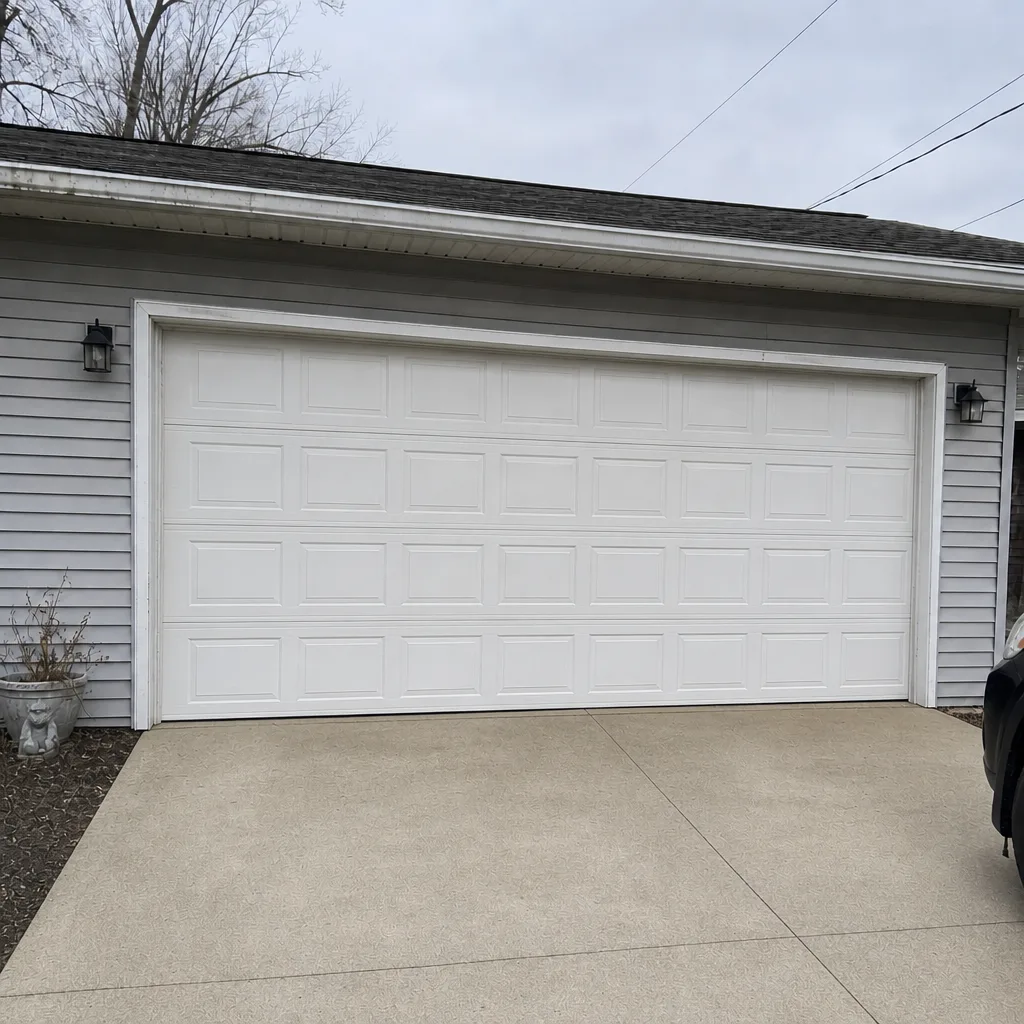
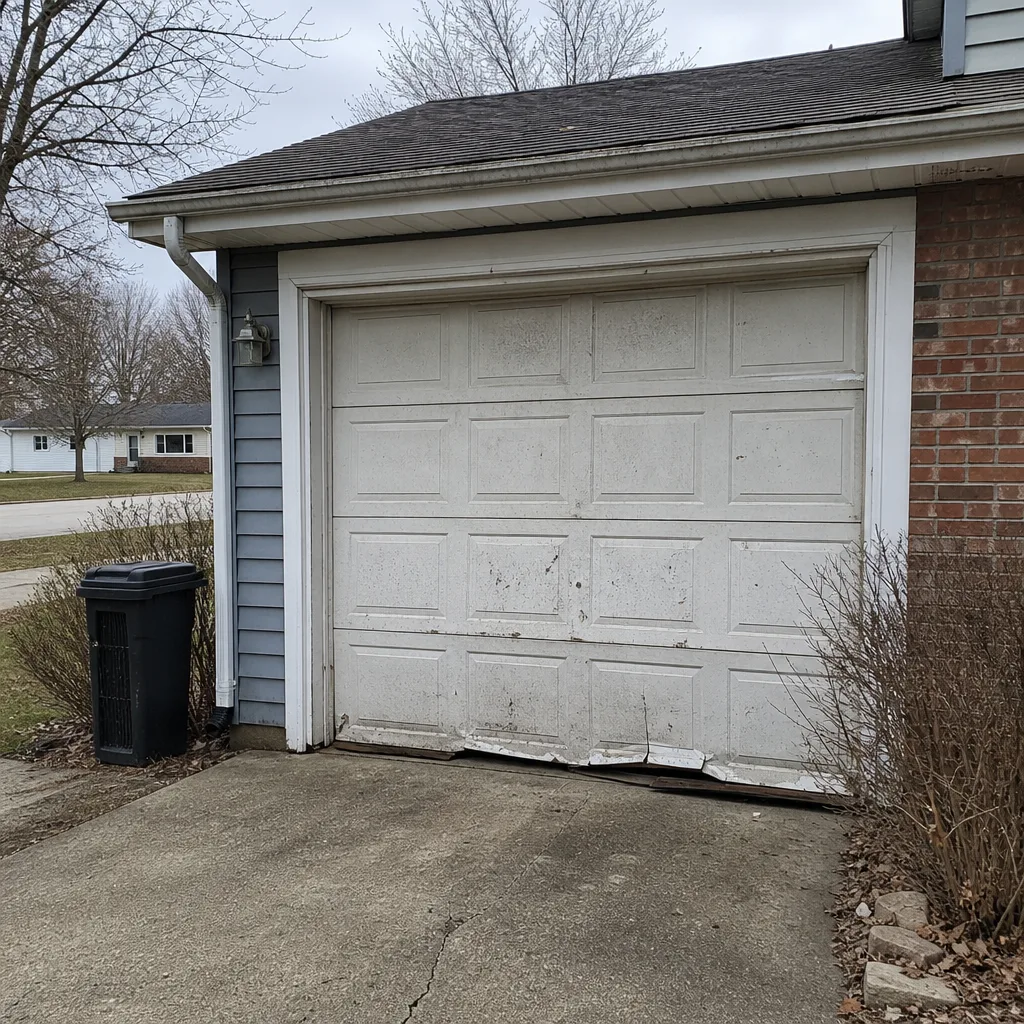
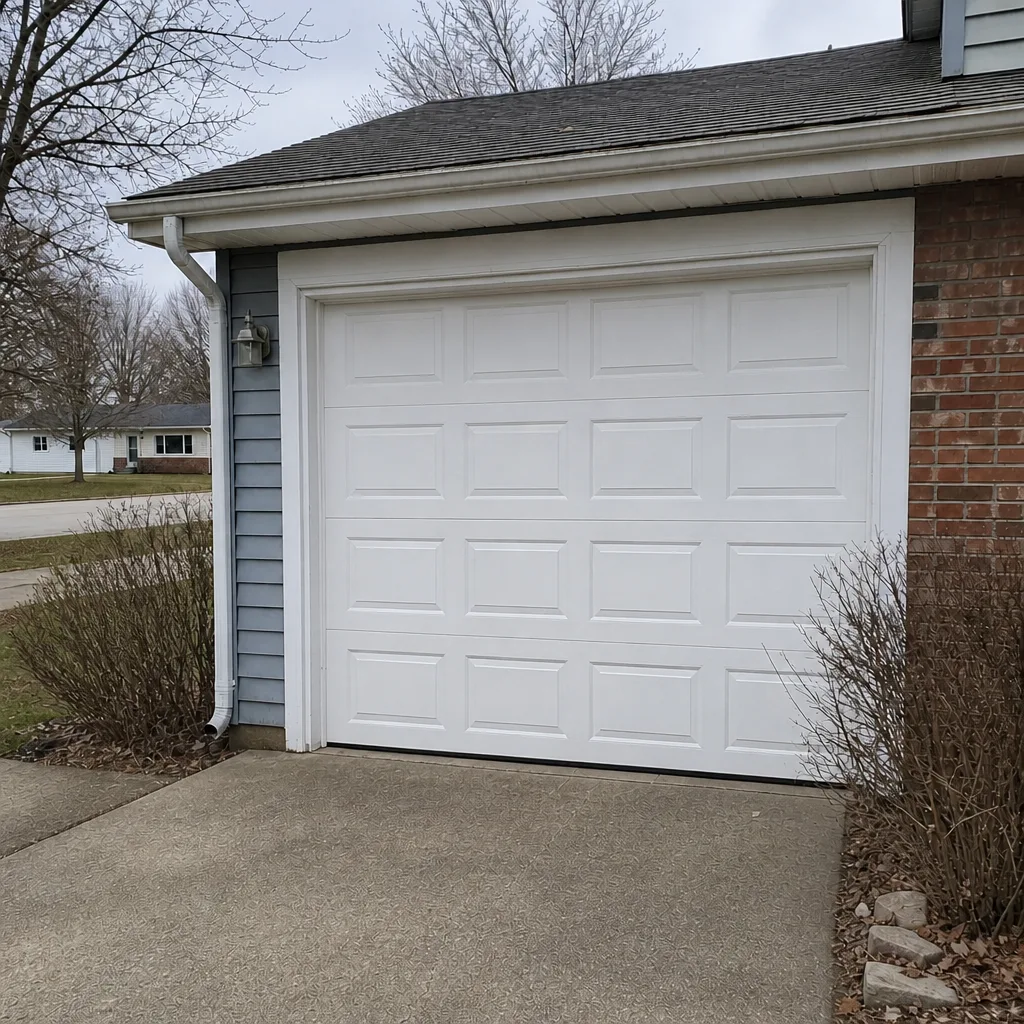
See the difference
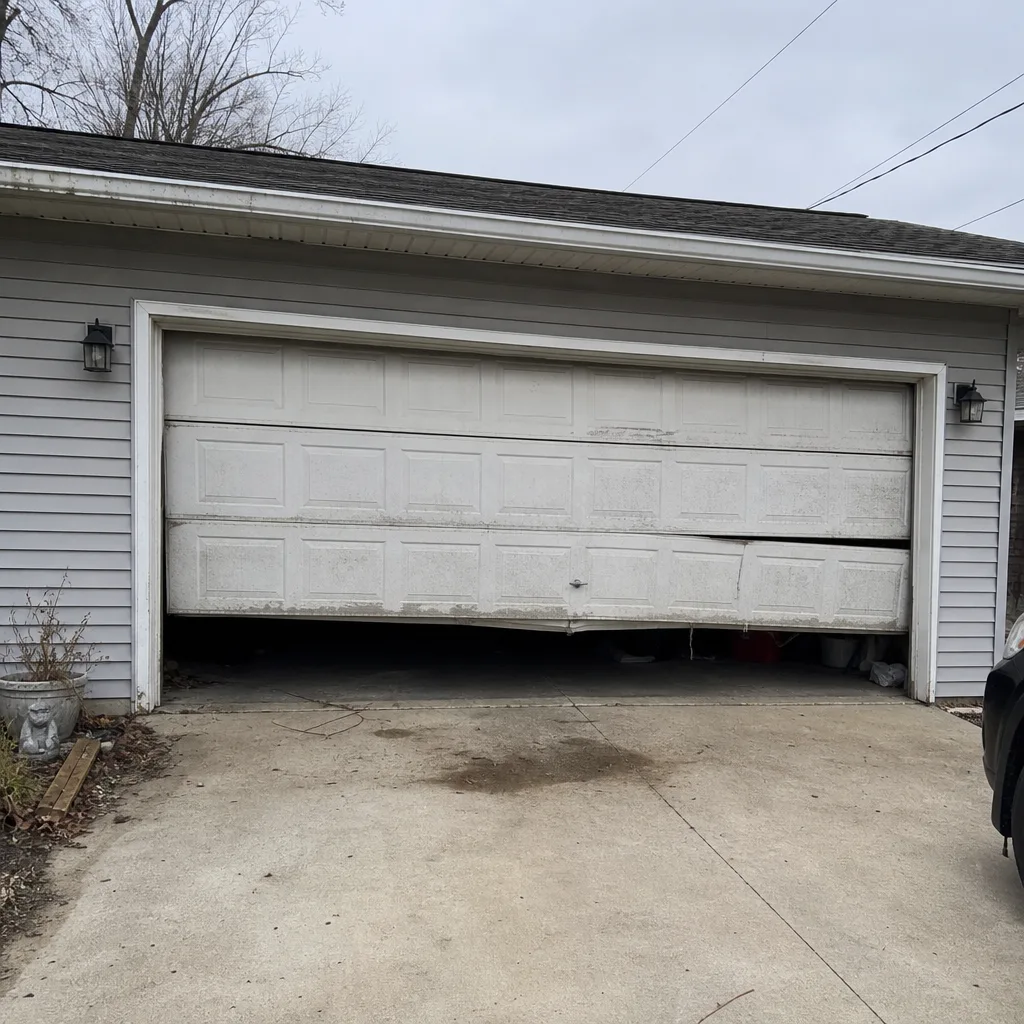 Before
 After
 Before
 After
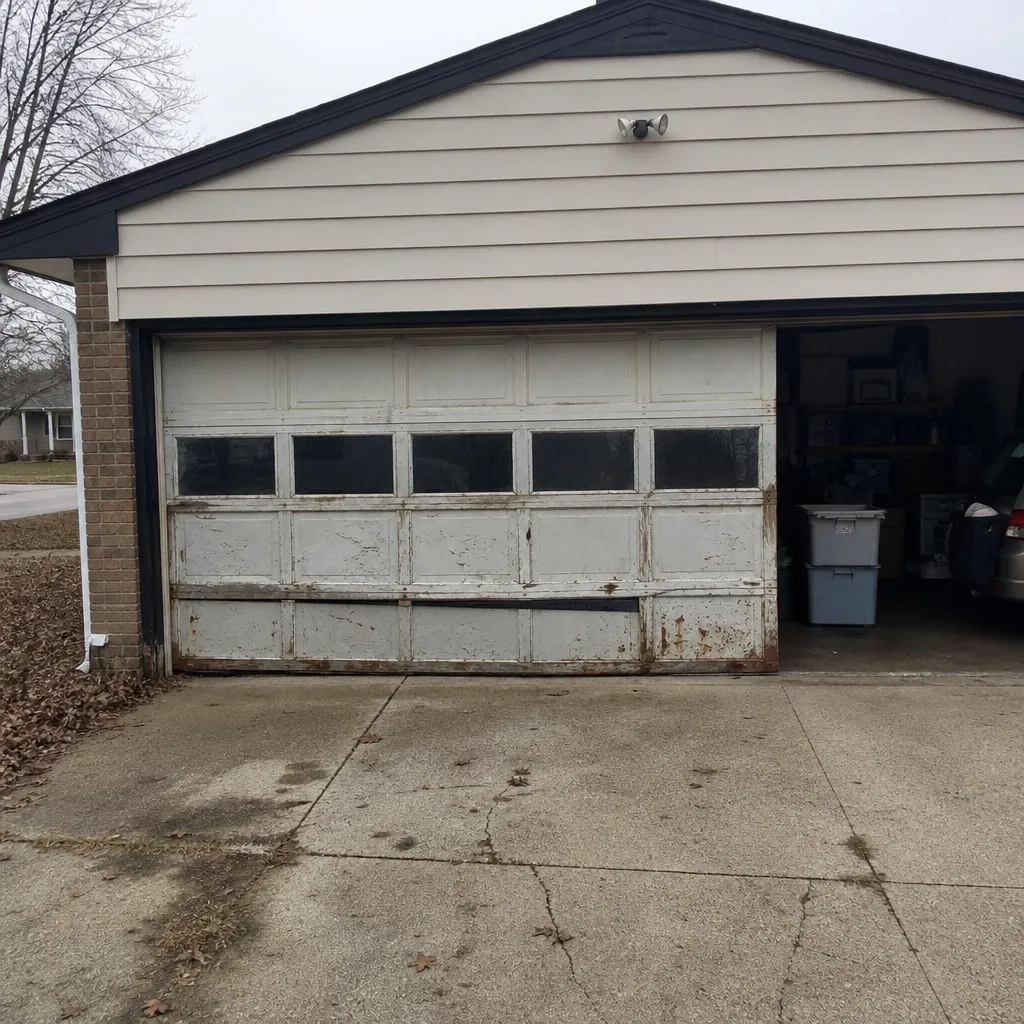 Before
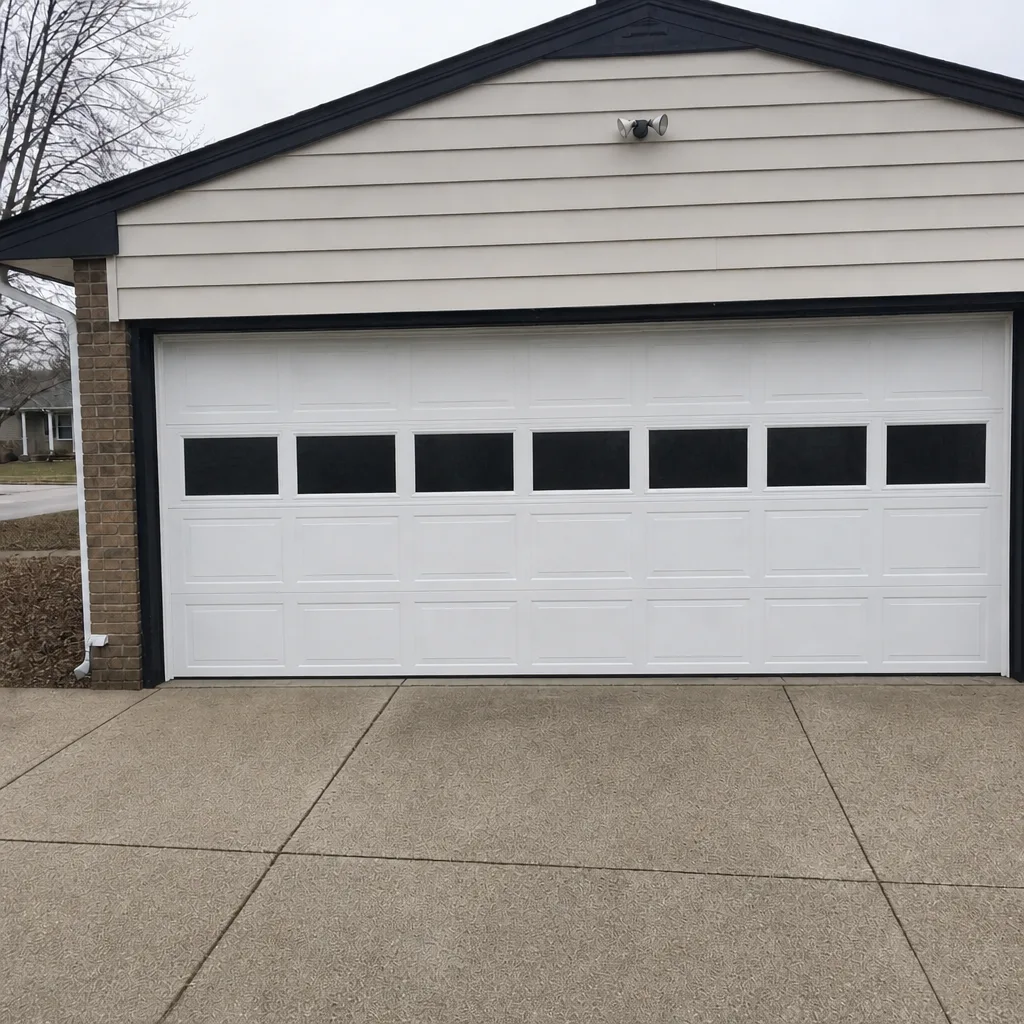 After
When to Call a Professional
Some of this schedule belongs to you. Some of it doesn’t, and knowing the line is what keeps you safe and your door running. Call a professional when the balance test fails and stays failed, when you hear a loud bang or see a spring that’s visibly broken or stretched, when a cable looks frayed or kinked, or when the door drops or slams on its own. Call when the opener reverses poorly, the door binds in the tracks, or a panel is bent or separated. And call before winter if a pre-winter inspection turns up anything you’re not sure about. Anything touching the springs, cables or torsion assembly is a professional’s job, full stop.
Garage Door Repair Lawrence Pros offers free estimates in Lawrence. For a door that can’t wait, we also provide emergency garage door service, because a broken spring or a stuck door is a safety and security issue, not just an inconvenience. Call (844) 681-4256 and we’ll help you get it sorted.
Frequently Asked Questions
Plan on a full professional service once a year, timed for late fall before the first freeze, plus a self-check after the winter freeze-thaw stretch. Between those visits, run the balance test monthly and lubricate moving parts every three to six months. In Lawrence, the seasonal timing matters more than the exact date on a calendar, because the cold is what drives most wear.
It means the springs aren’t carrying the door’s weight properly. If the door drifts down it’s under-tensioned or too heavy; if it rises it’s over-tensioned. Either way, the springs need adjustment or replacement by a trained professional. Don’t adjust them yourself, because the torsion system is under extreme tension and can cause serious injury. Call (844) 681-4256 for an exact quote, and estimates are free.
Not as a long-term lubricant. WD-40 is a penetrating oil and solvent, so it quiets a squeak briefly and then leaves the part drier than before. Use white lithium or silicone on hinges, light machine oil on steel roller bearings, and a chain lubricant on chain-drive openers. Keep the tracks clean and dry. If you’re not sure which type of roller you have, that’s worth a quick look before you lubricate.
They share the same basic schedule of balance, lubrication and seal checks, but their weather seals and hardware service windows can differ. The practical approach is to inspect by season and condition rather than a fixed interval, and to know your brand so the right seal and parts get used. We work on Genie, Clopay, Amarr and Wayne Dalton equipment, so when you tell us your brand we already know the platform.
Run the monthly balance test and keep a simple log of the result. It’s a 90-second check that catches spring problems before they fail, and the log tells a technician exactly what’s changed. That combination prevents more emergencies than any other habit.
Replace it when it’s cracked, flattened, torn or leaving a visible gap, not on a fixed schedule. The bottom seal takes the most wear from cold and moisture, so check it after winter and again in summer. If you can see daylight under a closed door, the seal is due. Call (844) 681-4256 if you’re unsure, because estimates are free and a technician can tell you in minutes.
The Bottom Line
A garage door maintenance schedule isn’t a single annual appointment. It’s a rhythm: pre-winter prep before the first freeze, a post-winter spring check once the cold lets up, summer humidity checks on wood and painted sections, and a monthly balance test that catches trouble early. Lubricate the right component with the right product, and keep WD-40 away from moving parts. Log what you do and what you notice, and a technician can diagnose faster. Most of all, remember that springs, cables and the torsion assembly are a professional’s job. Handle the routine checks yourself, call us for the rest, and your door will give you far fewer bad mornings in a Lawrence winter.
When it’s time for the work that belongs to a technician, Garage Door Repair Lawrence Pros is a call away. We repair and install the full range of residential systems, from opener to full door replacement, and we service LiftMaster, Chamberlain, Genie, Clopay, Amarr, Wayne Dalton, Craftsman and Raynor equipment. Call (844) 681-4256 for a free estimate and a clear, upfront price before any work starts.
Written by the team at Garage Door Repair Lawrence Pros.