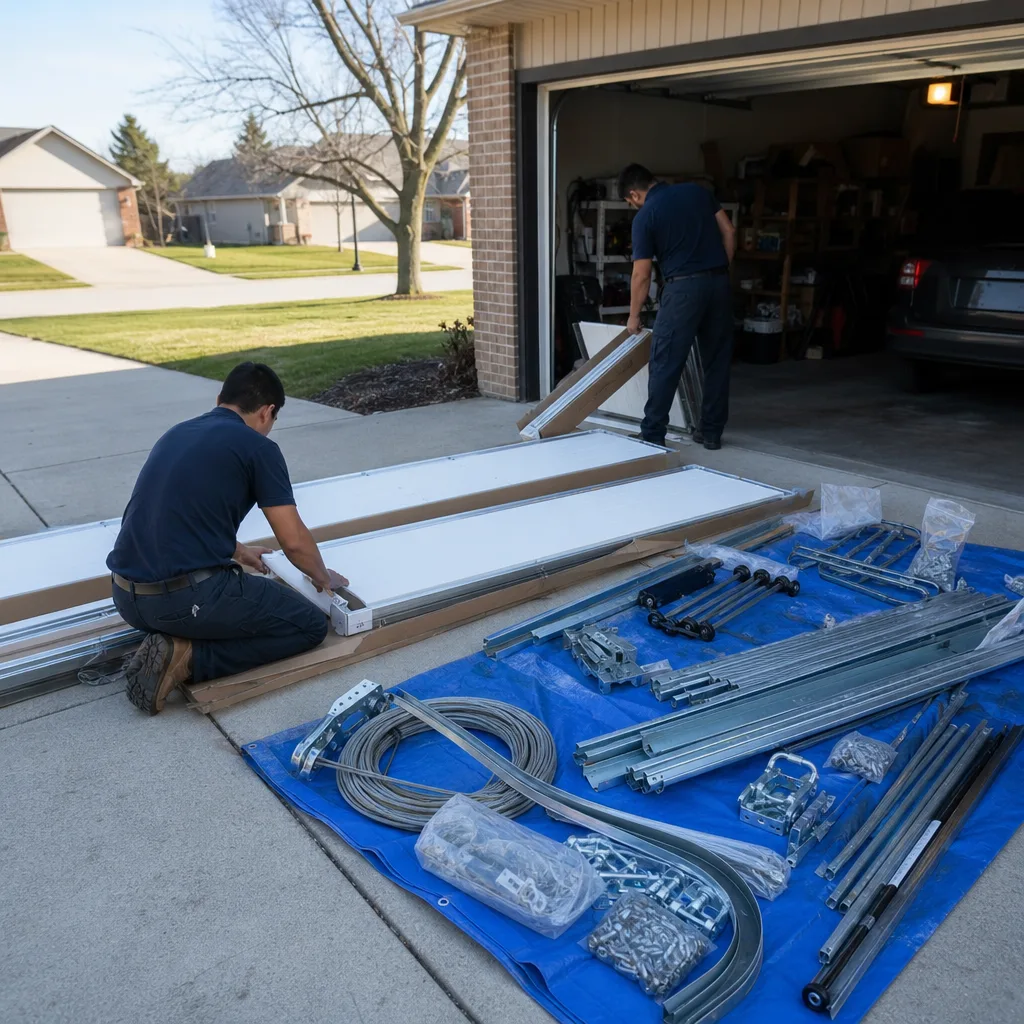
Last updated November 22, 2026
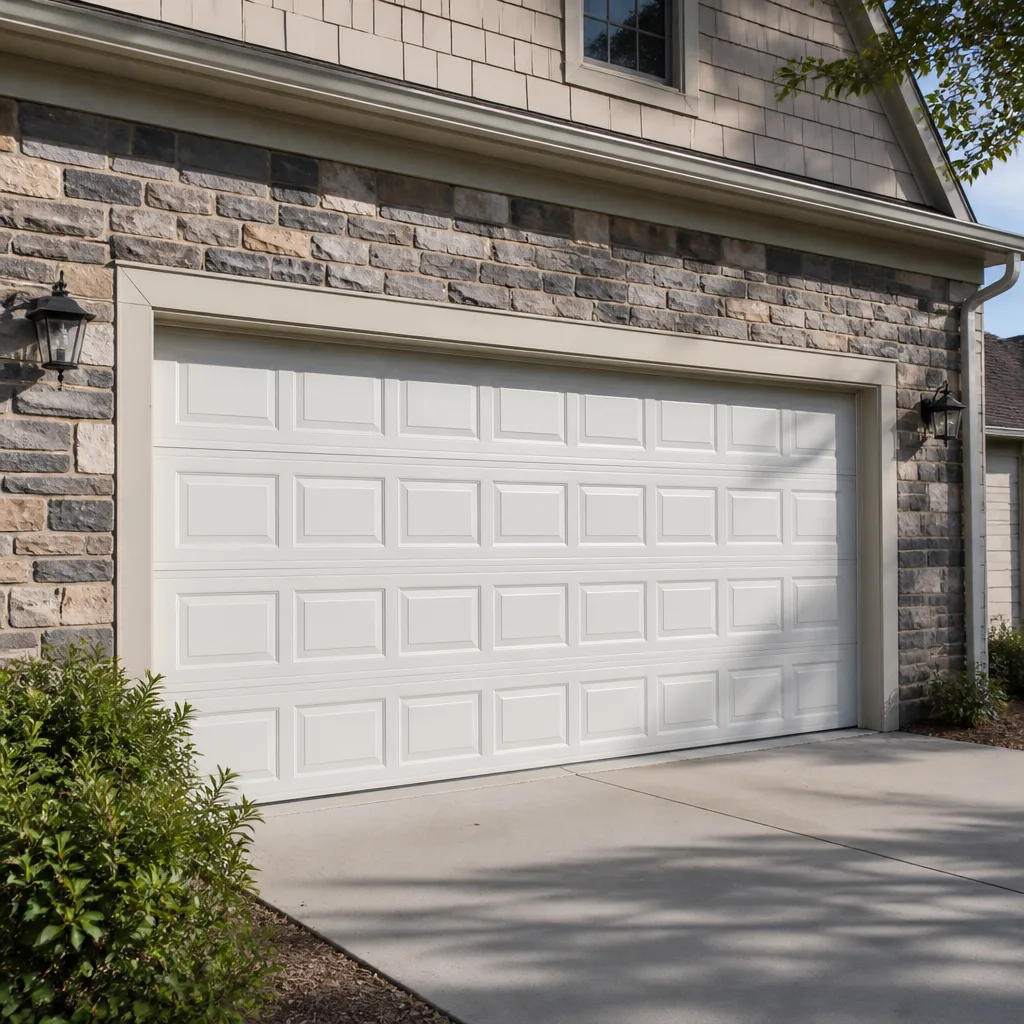 Raised-panel steel
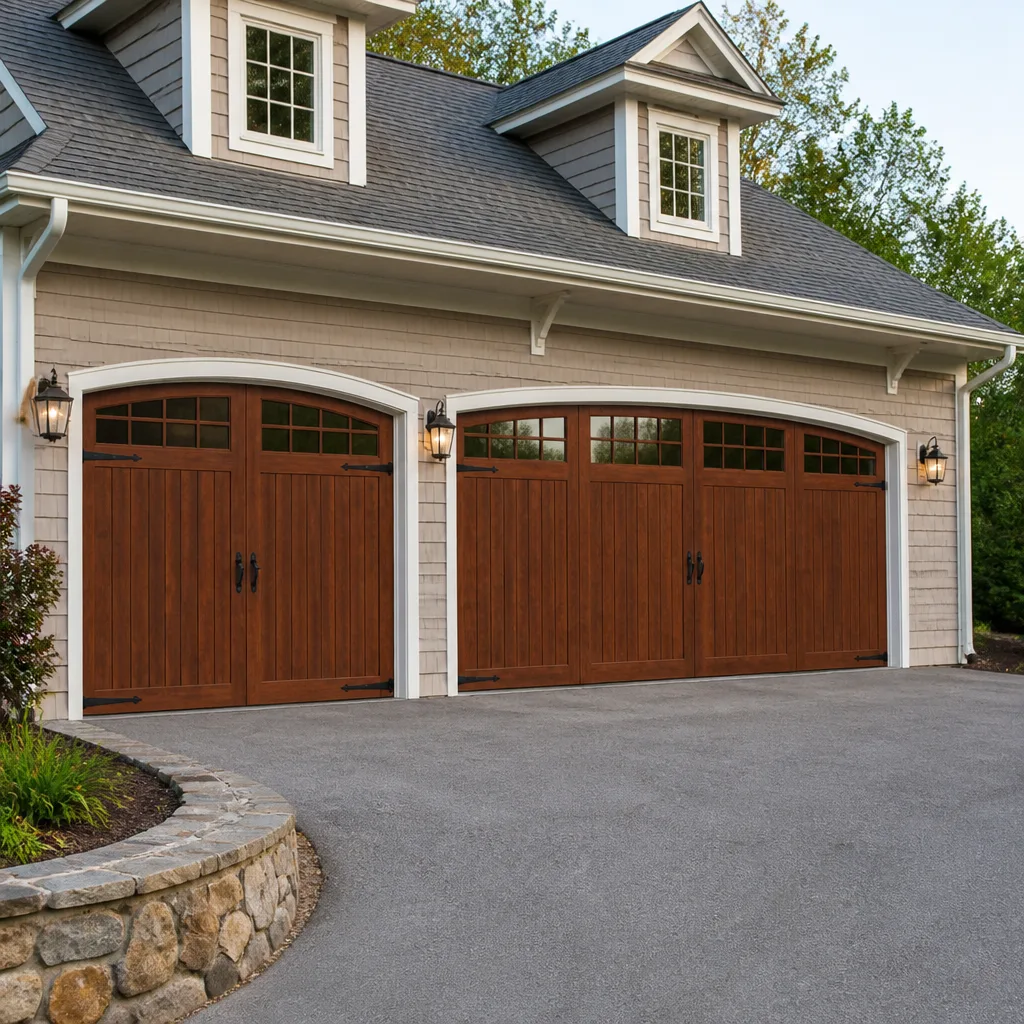 Carriage house
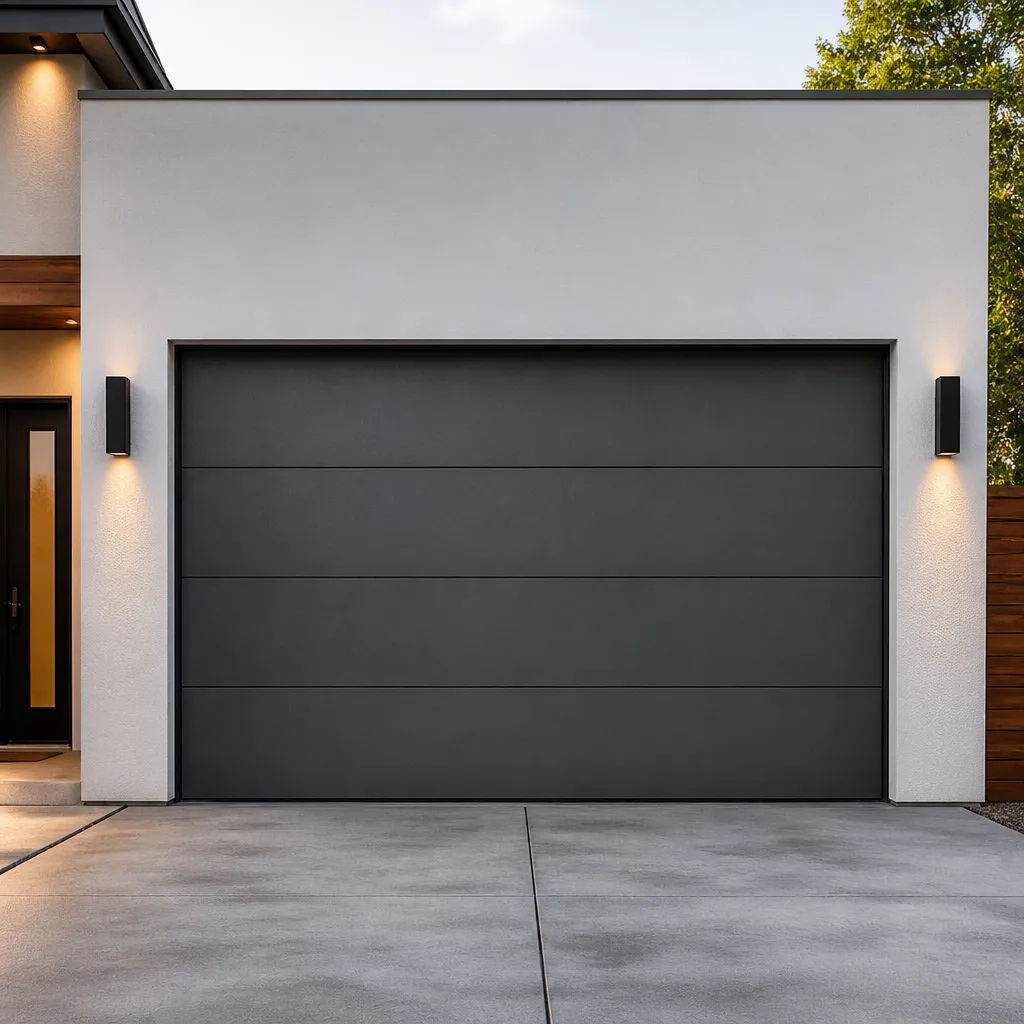 Modern flush
 Full-view glass
 LiftMaster openers
 Chamberlain openers
Full 25-point door and opener safety check with every visit - springs, cables, rollers, tracks, and your LiftMaster or Chamberlain opener included
You get a price before we start. It does not change when the pro arrives.
Get your free estimateGarage Door Warning Signs: A Lawrence Homeowner’s Reference Guide
A broken torsion spring doesn’t snap without warning. It telegraphs the failure for weeks through uneven lift, extra motor strain, and cable slack that most homeowners mistake for “just how it sounds now.” The same is true for opener failures, roller wear and track drift. Garage doors rarely fail without a trail of quiet signals, and the homeowners who catch those signals early spend less and stay safer than the ones who call after the door comes down crooked. This guide covers the sounds worth listening for, the visual benchmarks worth checking, and how to sort a sign that needs a same-week visit from one that can wait a month. We work on doors across Lawrence, and we’ve written this so you can read your own door before anything gets worse.
Quick Answer
The most common garage door warning signs in Lawrence are a door that lifts unevenly or jerks, grinding or popping sounds during travel, visible cable fraying, gaps between panels, and an opener that strains or reverses without reason. Any sign involving a frayed cable, a bent track or a door that won’t close fully is a call-today issue because the door can drop or fail to secure the house. Most other signs, like squeaking rollers or slow opener response, can be scheduled within the week. When in doubt, describe the symptom to a technician before touching anything, since springs and cables are under extreme tension.
Styles & brands we work with
- Raised-panel steel
- Carriage house
- Modern flush
- Full-view glass
- LiftMaster openers
- Chamberlain openers
Table of Contents
- The sound guide: which noises mean spring wear, roller wear or opener strain
- What to look at: cables, panels and tracks
- How fast you need to act: three urgency tiers
- The warning signs that only show up in Lawrence winters
- How to photograph and document warning signs before you call
- Signs that mean repair versus signs that mean replacement
- Common Mistakes to Avoid
- Frequently Asked Questions
The Sound Guide: Which Noises Mean Spring Wear, Roller Wear or Opener Strain
Sound is the first thing a garage door tells you, and the type of sound usually points to the failing part. A door that bangs once sharply at the start of travel is different from one that grinds the whole way up, and a technician who hears the report can often narrow the problem before arriving. Here’s how to sort the noises you’re hearing.
- Loud pop or bang at the start of travel, then the door won’t lift. That’s the classic sound of a torsion or extension spring breaking. Stop using the door and call. Don’t try to open it by hand.
- A grinding or scraping through the whole cycle. Usually roller or hinge wear, or a roller that has slipped out of the track. The door still moves, but metal is rubbing metal and the wear accelerates.
- A rhythmic thumping or wobbling. A bent or unbalanced panel, a loose drum, or a roller that needs replacing. Left alone, this puts strain on the opener and the springs.
- A humming opener that doesn’t move the door. A stripped gear, a broken drive belt or chain, or a safety sensor issue. Common on Chamberlain and Genie units that have run for years.
- A high-pitched squeal or squeak. Often rollers, hinges or the torsion shaft. This one is usually low-urgency, but it’s a sign that lubrication and inspection are overdue.
- Clicking that repeats and the door reverses. Usually the opener’s safety sensors or a travel limit that has drifted. This is an opener issue, not a door issue.
What trips people up is adaptation. A door that has been grinding a little for months starts to sound normal. If you’re not sure whether your door always sounded this way, record a short clip of it going up and down. Comparing that recording to how it sounds after a tune-up is often the moment a homeowner realizes how far the door had drifted.
What to Look At: Cables, Panels and Tracks
Visual warning signs are the ones homeowners can spot themselves without touching the door. Walk around the inside of the garage with a flashlight and compare each of these against its paired side. The door is a system of two mirrored halves, so any spot where the left and right don’t match is worth noting.
- Cables. Look at the two cables that run from the bottom brackets up along each side. A healthy cable is smooth and tightly wound. Fraying, kinks, or a strand that has popped out of the wrap means the cable is compromised. Don’t touch it. Cables are under the same tension as springs, and a snapped cable can whip across the garage.
- Bottom brackets. Check that both brackets are tight and that the cable sits cleanly in the drum. A loose or shifted bottom bracket is a serious issue.
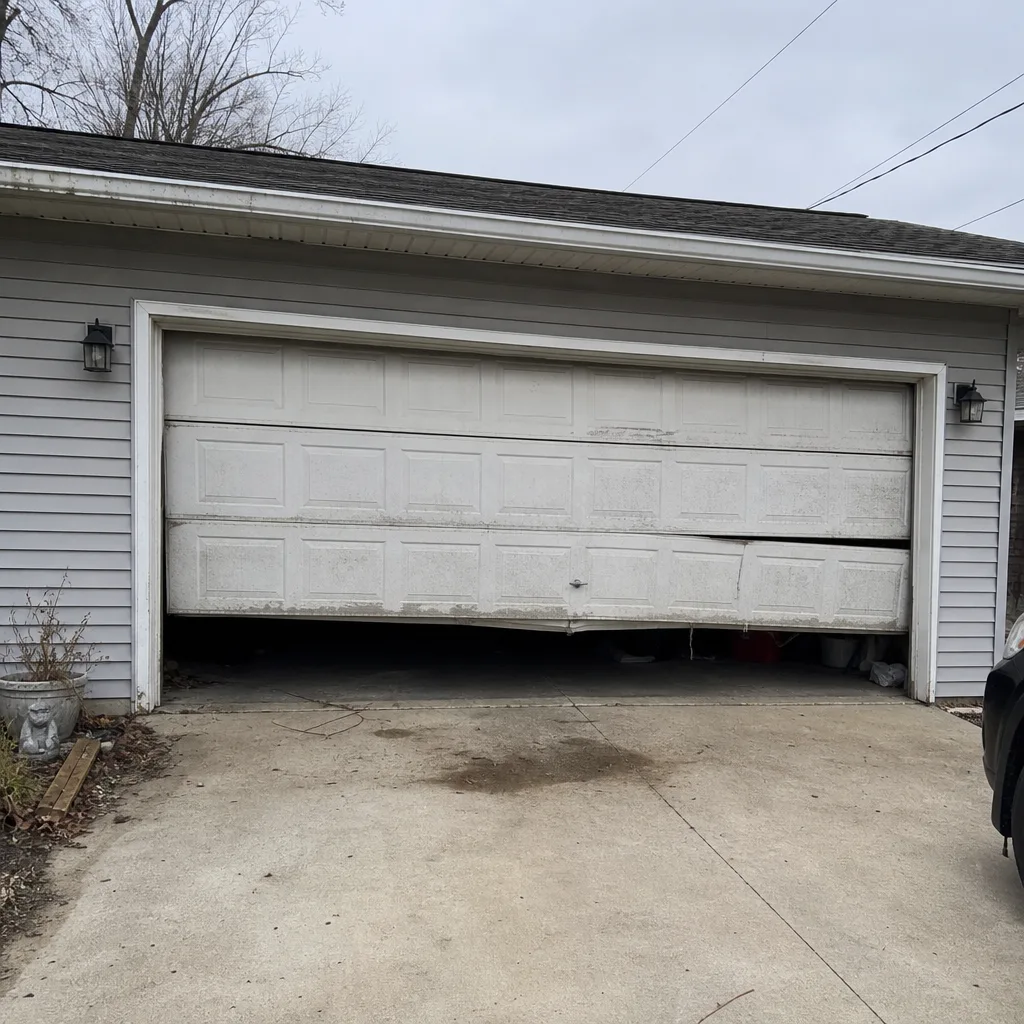
- Panel gaps. Look up at the seam between panels when the door is closed. If a gap opens or a panel edge is bowed, the door’s structure has been compromised. A door that has visibly bowed has usually absorbed an impact at some point.
- Track alignment. Run your eye down each vertical track and see if it looks parallel. On a working door the track is straight and the gap between the door edge and the track is even top to bottom. A track that has clearly drifted inward or outward means the door will rub.
- Rollers. The rollers should sit evenly in the track with no visible damage. A roller that’s cracked, flattened or out of the track is a same-week fix.
- Hinges and fasteners. A loose hinge bolt or a bolt backing out of a panel bracket is an easy catch.
- Weather stripping and bottom seal. A worn or torn bottom seal lets water and air in, and in a Lawrence winter that becomes a frozen threshold and a stuck door.
Photograph any of these that look off. That’s covered further down, but know that a photo is worth more than a description at the front desk.
How Fast You Need to Act: Three Urgency Tiers
Not every warning sign needs a call today, and sorting the signs by urgency is the single most useful thing this guide can give you. Here’s how we’d break it down.
Tier 1: Call today
- Broken spring (the door won’t lift, or lifts with a bang and then hangs).
- Frayed cable, cable lying loose, or a cable that has popped off a drum.
- Door off its track, crooked, or stuck half-open.
- Loose bottom bracket.
- Door won’t stay closed, or reverses on its own and leaves the house unsecured.
These are the signs where waiting is a safety issue, a security issue, or both. A door stuck open in Lawrence overnight is a real risk, and a door with a compromised cable can drop on a person or a vehicle. Our technicians have up to 10 years of experience with this exact type of urgent repair, and emergency service exists for a reason.
Tier 2: Schedule this week
- Grinding, scraping or thumping sounds during travel.
- Rollers that are visibly worn, cracked or slipping.
- A door that shakes or wobbles as it moves.
- Opener reversing without an obstruction.
- A panel gap or a bowed panel that isn’t spreading.
These work is usually still safe to use for a few days, but the wear gets worse with each cycle. A worn roller that chews into a track, for example, turns a small job into a track and roller replacement.
Tier 3: Monitor monthly
- Squeaky or squealing rollers (lubrication and inspection).
- A slow opener that still completes the cycle.
- A worn weather seal with no active water intrusion.
- Minor cosmetic scrapes and dents without structural damage.
Check these signs on the first of the month along with your smoke detectors. Most Lawrence doors get used several times a day, so a once-a-month two-minute walk around the inside of the garage catches the drift early.
The Warning Signs That Only Show Up in Lawrence Winters
Some garage door problems are invisible in July and obvious in January. Lawrence sees enough cold that the freeze-thaw cycle puts real stress on a door, and the signs that appear in winter are the ones most often ignored until they turn into a stuck door or a snapped spring.
- A door that lifts more slowly in cold weather. Cold thickens lubricant, and hardened grease on rollers, hinges and the torsion shaft makes the motor work harder. If the door runs noticeably slower on cold mornings, the moving parts need attention before the opener wears out chasing the extra load.
- Ice on the bottom seal or threshold. Water that gets under a worn bottom seal freezes overnight and bonds the door to the floor. A door that won’t release on the first press of the opener is usually telling you the seal is failing.
- Snow packed behind a panel. A blown drift against the door can push on the lower panels and stress the tracks. A bowed panel under that load is a replacement candidate, not a bend-back repair.
- Squeaks that disappear in warmer weather. A cold-weather squeak is usually a dry roller or hinge, and the fact that it quiets down in spring is exactly why homeowners forget it. Note it and get it lubricated before the next cold snap.
- A door that sounds normal in March and terrible in December. Springs weaken and become more brittle over time, and the cold accelerates the effect. The spring that survives one winter’s cycle may not survive the next.
One habit worth building: a quick inspection at the end of autumn, before the first hard freeze. Checking the bottom seal, lubricating the rollers and hinges, and running the door through a full cycle in cool weather flags the cold-sensitive problems early. That’s when a professional tune-up is quick and low-cost, versus a mid-January emergency with a door stuck open in the snow.
If your door fails on a cold Saturday, we’re closed that day and can book you for Sunday. Cold-weather failures don’t wait for business hours, and we know that.
How to Photograph and Document Warning Signs Before You Call
A photo of the problem saves the technician a round of questions and often gets the right part into the first visit instead of a second. Here’s the sequence we recommend whenever you notice a sign that isn’t an active emergency.
- Stop the door in the position where the problem shows. A bowed panel, a frayed cable or a track drift usually needs to be caught at a specific height. Stop the door there with the opener or by hand gently (only if the door is functioning).
- Get a wide shot first. One photo from the center of the garage showing the full door. This establishes the door’s brand and model. If you can read a label on the opener or the door edge, note it. Knowing your equipment is exactly what we look for, since we service LiftMaster, Chamberlain, Genie, Craftsman and the major door brands like Clopay and Amarr.
- Get a close shot of the problem. A close-up of the cable fray, the track mismatch, the panel gap or the damaged roller. Shoot from the side of the problem if the fault is a bend or a gap, since that shows depth better than a head-on photo.
- Photograph the paired side for comparison. Since the door is built as a mirrored system, a photo of the healthy side next to the damaged side tells a technician at a glance how far things have drifted.
- Shoot a short video of the door in motion. 15 seconds of the door going up and down with sound on. Audio catches the pops, grinds and thumps that a photo can’t.
- Note the date, what you heard or saw, and whether it’s getting worse. A note like “squeals on the way down, started three weeks ago, louder this week” gives a technician a diagnosis path before arrival.
Garage door problems are often intermittent. A thump that happens once in five cycles can be hard to reproduce on a service call. A video of the symptom when it happens is worth ten minutes of description.
Signs That Mean Repair Versus Signs That Mean Replacement
The same warning sign can lead to different answers depending on the door. A grind on a five-year-old steel door is usually a roller and lubrication fix. A grind on a door that’s seen many seasons of load can indicate structural fatigue that no amount of adjustment will fix. Here’s how the thinking usually goes.
Usually a repair
- Worn or broken rollers, hinges or springs.
- A single dented or scraped panel on an otherwise solid door.
- A track knocked out of alignment without structural damage.
- An opener that needs a new gear, belt, safety sensor or battery.
- A bottom seal that needs replacing.
Sometimes a replacement
- Multiple bowed panels, especially the lower ones.
- A door frame that has been hit or has water damage showing at the bottom edge.
- Repeated spring and roller failures on the same door.
- A door whose brand no longer has a matching panel available.
- A door whose insulation is failing, which in a Lawrence winter means a cold garage and a higher heating bill on the shared wall.
We service repair and full installation, so we don’t hand you off to a second company when a repair turns into a replacement. A professional can look at the door, run the numbers on a repair versus a new door, and give you both options before you commit. That conversation is usually free.
Common Mistakes to Avoid
- Ignoring a slight unevenness on lift. A door that lifts a few inches higher on the left than the right is telling you the springs or cables are out of balance. Left alone, the extra strain shows up next in the opener.
- Assuming a squeak is cosmetic. A squealing roller is dry and grinding metal into the track. On a Lawrence door that sees snow and road salt in winter, that wear happens faster than in a warmer climate.
- Not checking the paired side. Every door has two cables, two bottom brackets, two tracks. A fault that appears only on one side is easy to miss if you only look at the side that’s making noise.
- Overlooking the cold-weather signs because it’s summer. A door that squeaks in January and is silent in June still needs the lubrication revisit. Write down what you hear in the cold so it isn’t forgotten by the time warm weather returns.
- Calling only after the door fails. A door that no longer opens is an emergency and a more expensive visit. Most failures were visible weeks earlier for the homeowner who looked.
- Taking a photo of the door only when it’s closed. A panel gap, a track drift or a cable issue often shows better with the door partway up. Stop the door at the height where the fault is visible and photograph that position.
- Letting an opener reverse and assuming it’s the door. A door that reverses on its own is often a safety sensor issue, a travel limit problem, or an obstruction in the path. Diagnosing the opener before the door is the right order.
See the difference
 Before
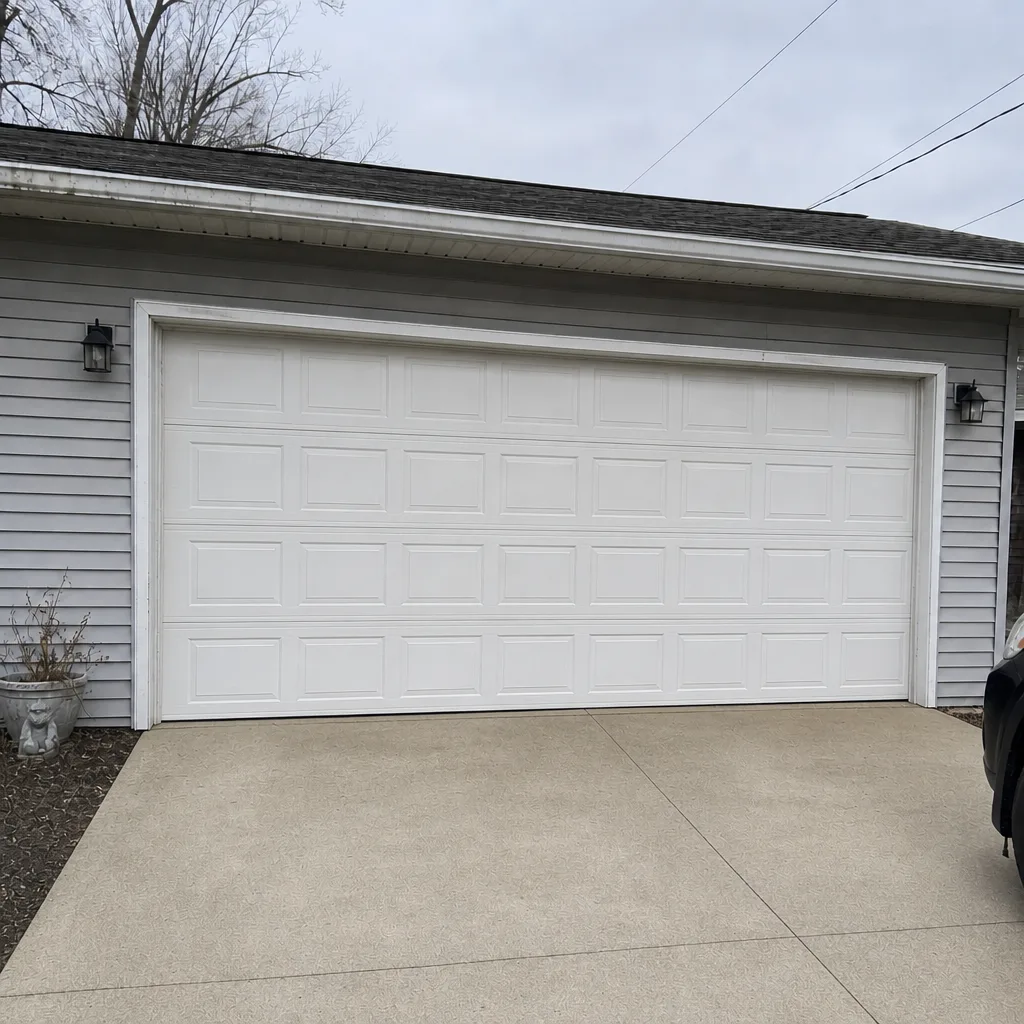 After
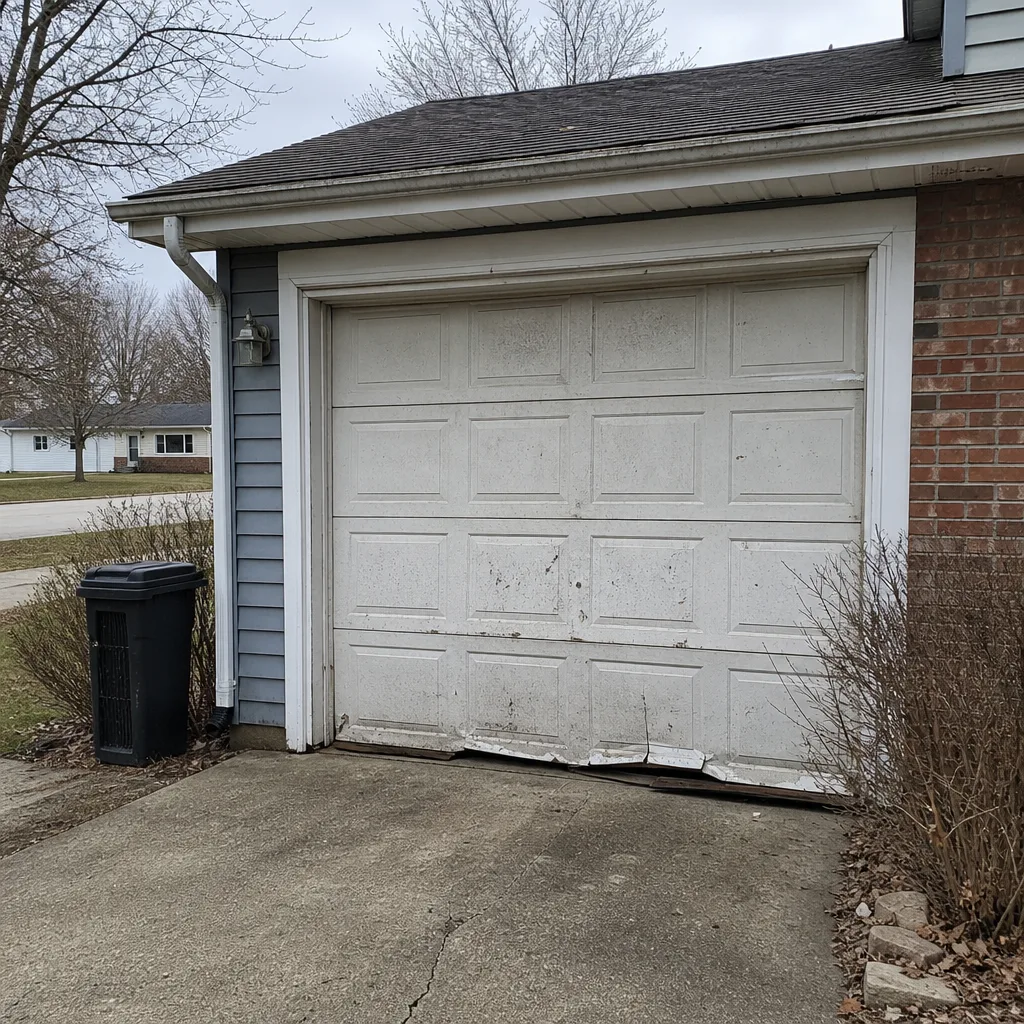 Before
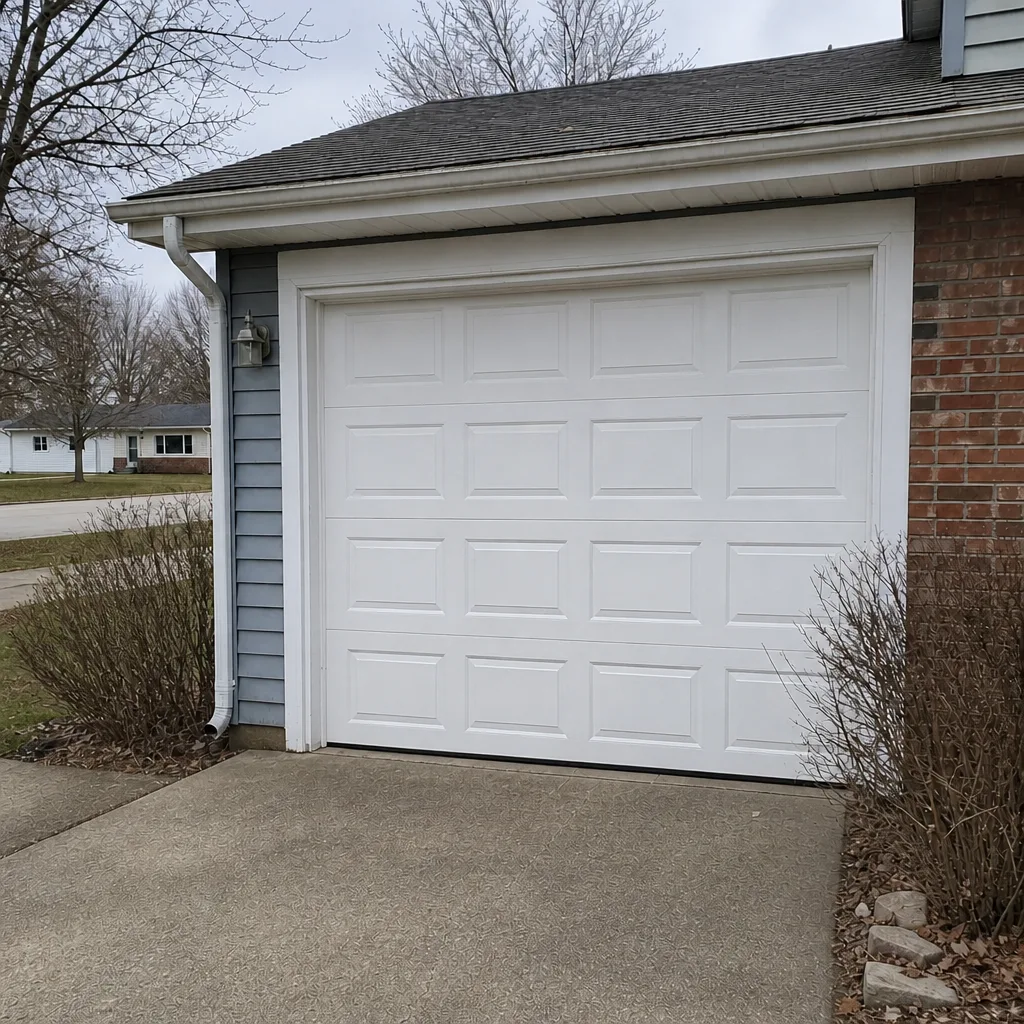 After
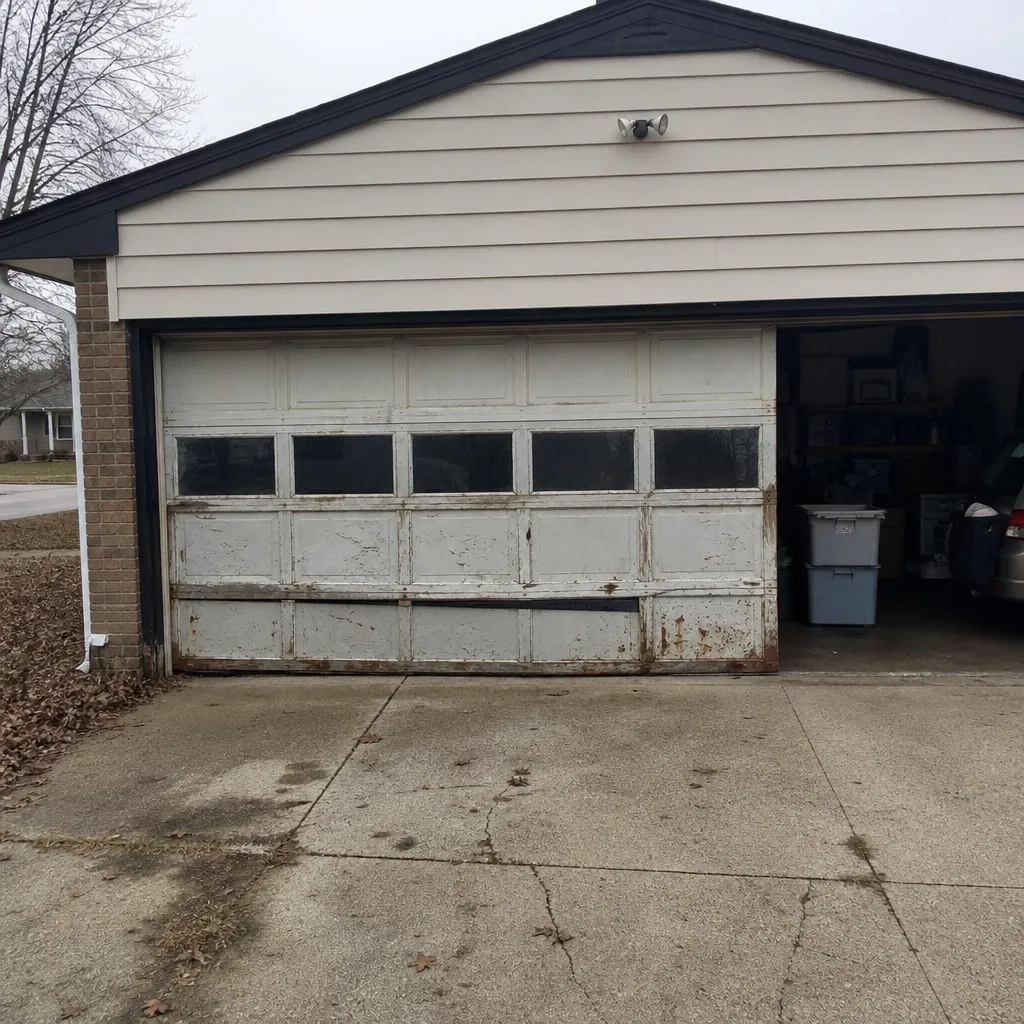 Before
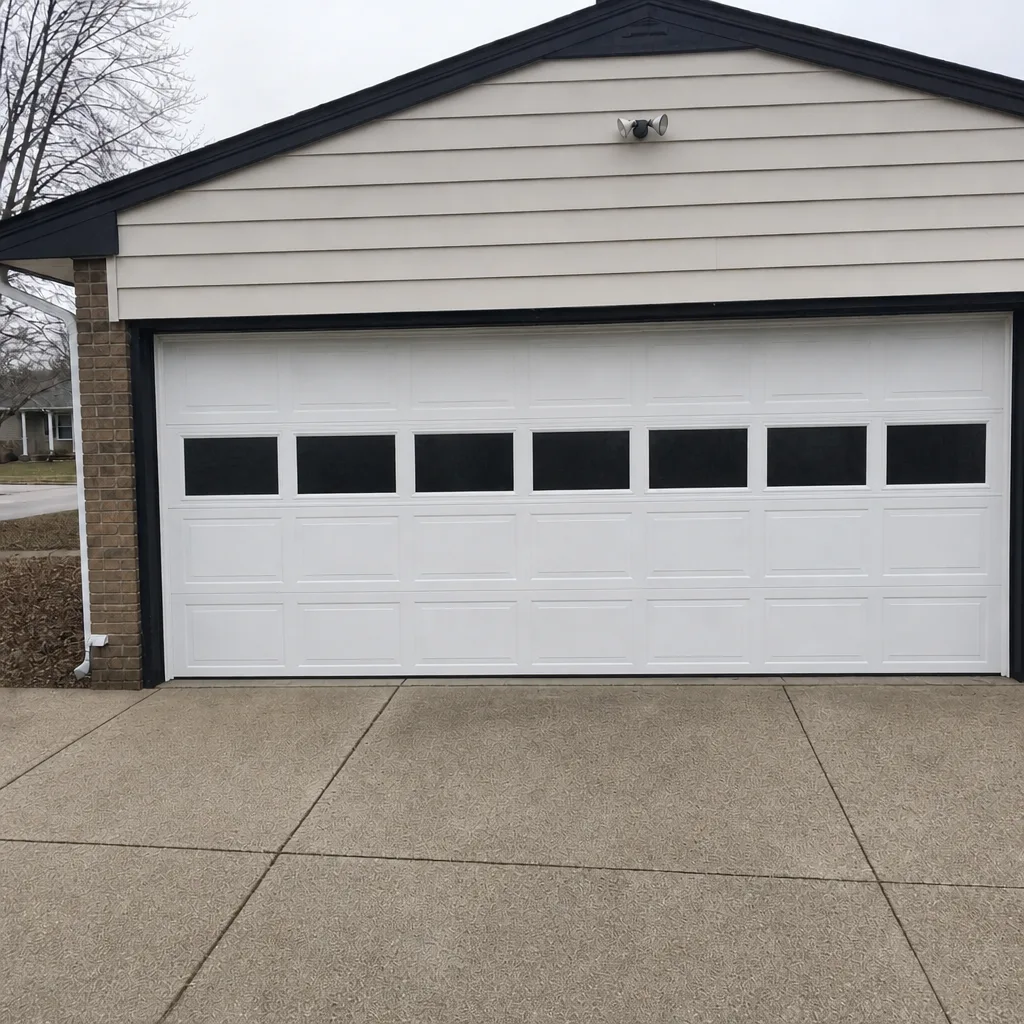 After
When to Call a Professional
Call a professional the moment you hear a loud pop from the torsion or extension spring area, see a frayed cable, or find the door crooked in its tracks. Those are the signs where the safe move is to stop using the door and get a technician out. Anything involving springs, cables or a door off-track is not a homeowner repair, and this is where the trade’s safety stakes are highest. Springs and cables are under extreme tension, and a careless move near them can cause serious injury. For the after-the-fact signs, like grinding rollers or a slow opener, schedule the visit before the small wear becomes a bigger repair. Garage Door Repair Lawrence Pros offers free estimates in Lawrence, and our technicians have up to 10 years of experience reading exactly these signals. Call (844) 681-4256.
Frequently Asked Questions
The first sign is usually a door that feels heavier than it used to, lifts a little unevenly, or struggles in the first few inches of travel. Some homeowners notice the opener laboring or hear a metallic ping during cold weather. If your door is doing any of those, don’t wait. A failed spring is next, and it rarely fails quietly. Call (844) 681-4256 for an inspection before the door stops working entirely.
A typical inspection and tune-up usually runs in the low hundreds of dollars, with a single spring replacement typically in the low-to-mid hundreds and a broken cable replacement in the same general range. Prices vary by the door’s size, brand and the part needed, so the written estimate is the price. We give a free quote up front and confirm it before any work begins. Call (844) 681-4256 for an exact quote.
Yes. The local professionals we connect you with are licensed and insured as their state requires. We’ll confirm the credentials before they arrive if you ask. Call (844) 681-4256 to book.
No. Stop using the door until a technician has looked at it. A frayed cable can snap under tension and whip, and the door has already lost some of its balance. Manual operation is not safe either. A compromised cable is a call-today problem. Call (844) 681-4256 for emergency service.
Cold thickens lubricant, which makes dry rollers and hinges squeal loudly in winter and go quiet in summer. The wear is still happening, so the fact that the squeak disappears in warmer weather doesn’t mean the problem is gone. A tune-up that lubricates the moving parts before the first freeze is usually enough. Call (844) 681-4256 to schedule one.
No. The written estimate you approve is the price. We quote before any work starts, and we don’t add charges after the fact. If we find something else while on the call, we’ll show you and quote that separately before touching it. Call (844) 681-4256 for a free estimate.
The Bottom Line
Garage doors fail in slow motion. The loud snap of a broken spring is the last chapter of a story that started with a squeak, a wobble and a slight uneven lift weeks earlier. Lawrence homeowners who catch those signals have three tools: listen for the specific sounds that point to springs, rollers or the opener; look for the visual benchmarks like cable fray, panel gaps and track drift; and sort what they find into today, this week, or monitor monthly. Photograph the signs and note the cold-weather changes. When the answer is a call today, call (844) 681-4256 for a free estimate. Our technicians have up to 10 years of experience reading the signs your door is sending, and the fix is usually simpler and cheaper the earlier we hear about it. For anything involving springs, cables or the door’s balance, stay back and let a trained professional handle it.
Written by the team at Garage Door Repair Lawrence Pros.
Related Reading
If you’d like to go deeper on the repair that’s usually behind the biggest warning signs, our garage door spring repair page walks through the spring side. For the noises that come from the motor itself rather than the door, our garage door opener repair page covers the common opener failures and how they’re diagnosed. For the full list of what we service, the main garage door repair page is the place to start. And if you’re new here, our home base at Garage Door Repair Lawrence Pros has our contact info and the services we cover.