Last updated November 22, 2026
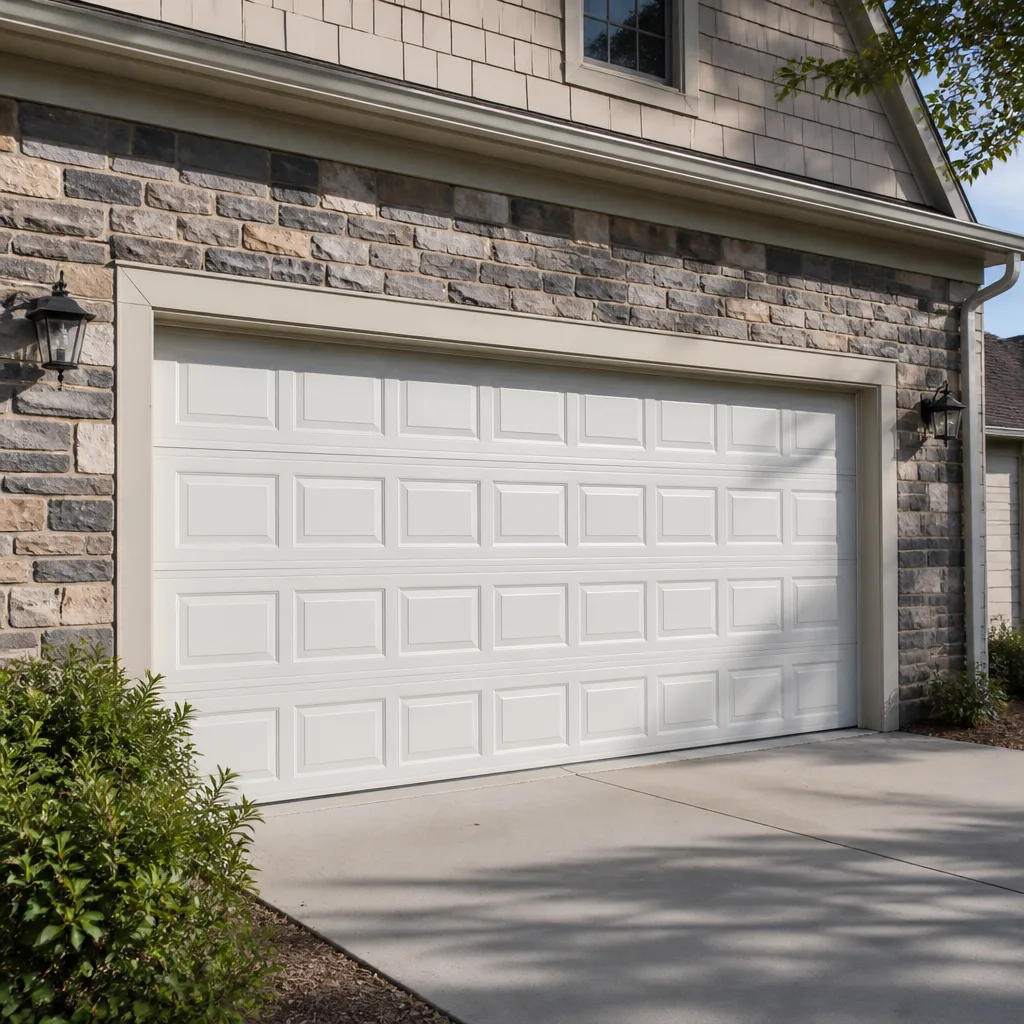 Raised-panel steel
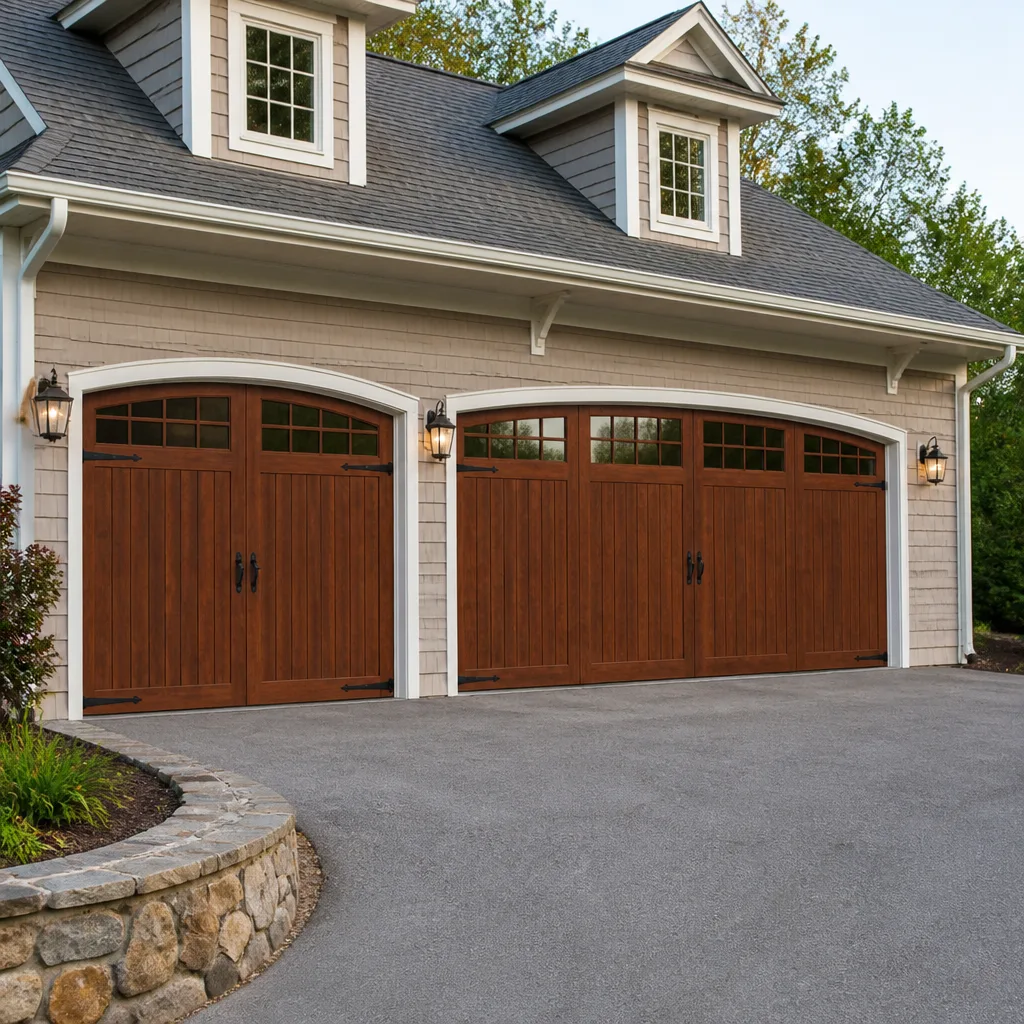 Carriage house
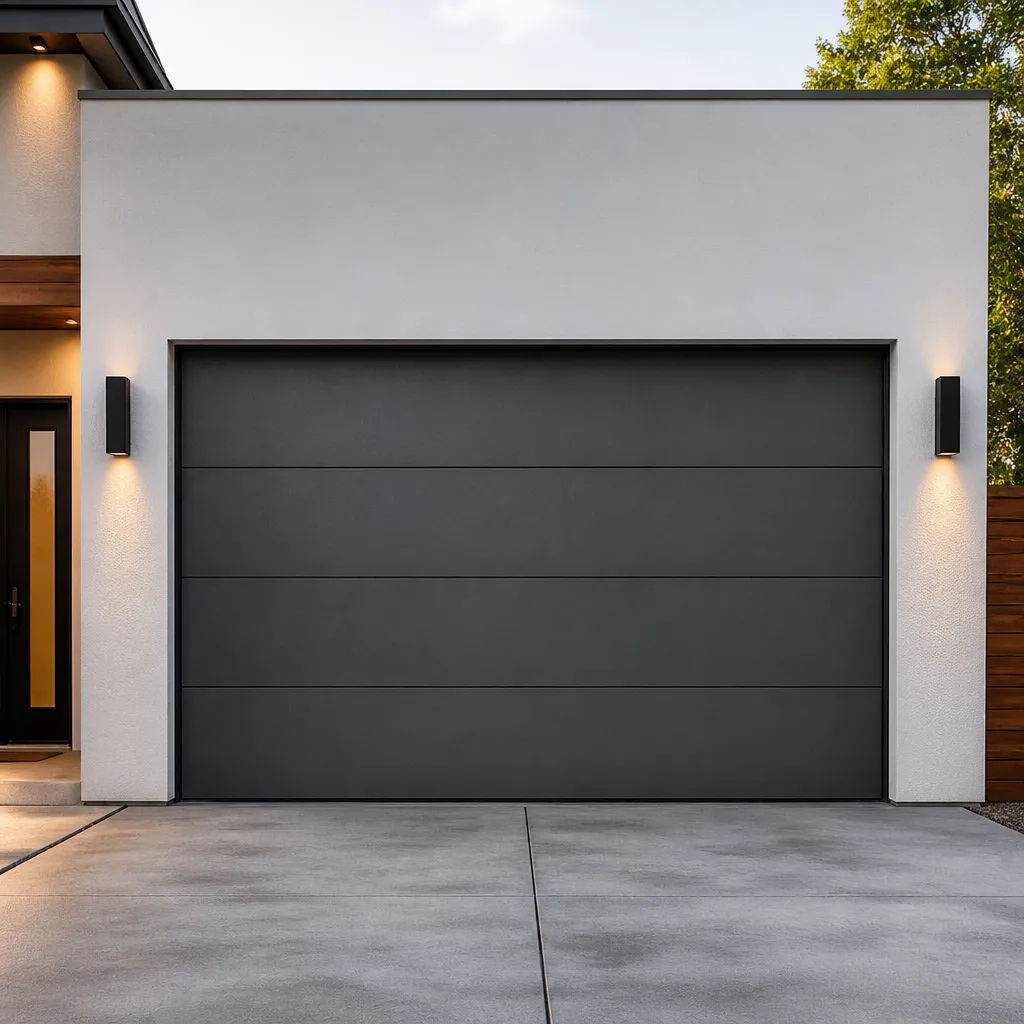 Modern flush
 Full-view glass
 LiftMaster openers
 Chamberlain openers
Full 25-point door and opener safety check with every visit - springs, cables, rollers, tracks, and your LiftMaster or Chamberlain opener included
You get a price before we start. It does not change when the pro arrives.
Get your free estimateDIY vs Professional Garage Door: The Lawrence Homeowner’s Decision Guide
Most garage door advice treats DIY as a single decision: either you’re handy enough to fix it or you’re not. That framing is wrong, and it’s why so many Lawrence homeowners get hurt or waste money. The real question isn’t whether you’re capable. It’s which parts of a garage door system can hurt you regardless of how capable you are. A torsion spring stores enough energy to send a winding bar through drywall, and that’s physics, not a scare tactic. This guide breaks the door down component by component, so you know exactly what’s safe to handle yourself, what isn’t, and where DIY quietly costs more than calling a pro in Lawrence.
Quick Answer
Safe DIY garage door tasks in Lawrence are limited to sensors, weather seals, lubrication, and visual inspections. Torsion springs, cable drums, and bottom brackets carry stored energy that can cause serious injury and should always go to a trained technician. Everything else falls in between, and the deciding factor is whether a mistake creates injury risk or property liability, not whether you feel confident.
Styles & brands we work with
- Raised-panel steel
- Carriage house
- Modern flush
- Full-view glass
- LiftMaster openers
- Chamberlain openers
Table of Contents
- The Hard Line: Safe DIY vs. High-Risk Repairs
- Why Torsion Springs and Cables Are Different
- Tool and Knowledge Prerequisites for Each DIY Task
- Indiana Liability: What Happens When a DIY Repair Fails Later
- Cost-Honest Comparison: When DIY Saves and When It Costs More
- Scenarios Where You Should Never Attempt DIY in Lawrence
- Lawrence Climate, Housing, and Garage Door Wear
- When to Call a Professional
- Frequently Asked Questions
The Hard Line: Safe DIY vs. High-Risk Repairs
We’ve seen homeowners tackle jobs that any honest technician would refuse to talk them through. The problem is that garage door advice online rarely draws a clear line, so people assume the whole system is fair game if they’re careful. It isn’t. Some components are designed so that the stored energy stays contained during normal operation and only becomes dangerous when you start removing parts. That’s the dividing line.
Here’s how the work splits in practice:
- Safe for a careful homeowner: photo-eye sensor alignment and cleaning, weather seal replacement, lubrication of hinges, rollers, and tracks, track wiping, visual safety inspections, and testing the auto-reverse feature.
- Gray zone (possible but easy to get wrong): roller replacement, hinge replacement, and re-tensioning an extension spring on a door that uses them. These require correct parts and correct installation order, and getting it wrong can turn a slow repair into a bent door.
- Never DIY: torsion spring replacement, torsion spring adjustment, cable replacement, cable drum work, bottom bracket work, and any task that requires the door to be held under tension while you work. These are the tasks where skill level can’t eliminate the risk.
Notice that the safe list is small and the high-risk list is short but critical. Most of what a garage door needs day to day is on the safe list. Most of what breaks suddenly and expensively is on the high-risk list. That split is why a Lawrence homeowner can genuinely save money on maintenance and still be right to call for the repair that actually matters.
Why Torsion Springs and Cables Are Different
Garage doors are counterweight systems. The door itself can weigh well over a hundred pounds, and the spring system is engineered to make that weight feel like ten or fifteen pounds in your hand. To do that, the spring is wound tight. When it’s live, it holds the same energy as lifting the door would require, in a compact piece of steel.
That stored energy is why the danger isn’t intuitive. Every other repair on a garage door fails quietly when it goes wrong. A sensor misalignment means the door stops. A bad seal lets in drafts. A spring failure at the wrong moment releases that energy in a fraction of a second, into whatever is in its path. The winding bar, your hand, the drum, or the door itself. The physics is what makes a YouTube video insufficient. Watching someone wind a spring doesn’t teach your hands to feel when it’s about to go, and that feel comes from doing the work repeatedly under supervision.
Cables are the second piece of the same problem. Each cable holds the spring tension at the drum, and a cable that’s under the correct load on the door can become a whip if it’s released without tension on the door. The system only stays predictable when the tension is released in the correct order, and that order changes depending on the door type. We treat garage door spring repair as a dedicated service for exactly this reason: it’s high-skill work and it doesn’t mix well with other tasks on the same visit.
What “Contained” Actually Means
On a properly assembled door, the spring sits inside a tube, or the extension spring runs through a safety cable. Those safety features exist because manufacturers know the failure mode is violent. They protect you during normal operation. They do not protect you when you’re the one releasing the tension. That distinction is the whole reason the “never DIY” list is where it is.
Tool and Knowledge Prerequisites for Each DIY Task
Most “handy homeowner” advice is vague. This section isn’t. Every task here has specific requirements, and if you don’t have them, the task isn’t a DIY task for you, regardless of how many other home projects you’ve done. The point isn’t to discourage you. It’s to give you a real checklist instead of a vague vibe.
Photo-Eye Sensor Alignment or Cleaning
- You need a step ladder tall enough that you’re not reaching overhead.
- A clean, dry cloth and a flashlight.
- A screwdriver that matches the sensor bracket, usually a Phillips head.
- You need to know which of the two sensors is the sender and which is the receiver. The LEDs tell you.
- You need to be able to watch the door close while you’re adjusting, which means a second person or a way to align and check.
If the sensors can’t be aligned with a bracket adjustment, the problem is usually wiring or a control board fault, not alignment. That’s not a DIY fix, and it’s one of the most common places people get stuck. Our garage door opener repair service handles sensor and wiring faults for every major opener brand.
Weather Seal Replacement
- Match the seal to the door’s bottom profile, not just to the door width. A seal that fits the track but not the bottom of the door will leak.
- A utility knife with fresh blades, plus a straight edge for trimming to length.
- A screwdriver or nut driver for retainer clips, depending on the door type.
- Patience on the corners: the seal needs to compress evenly or the door will fail its close cycle.
This is one of the best DIY projects on the list. It’s inexpensive, it doesn’t touch the tension system, and the failure mode is a draft, not an injury. If your door has a solid piece of trim at the bottom instead of a replaceable seal, though, you’re dealing with a panel or retainer issue, and it’s worth getting eyes on it before you start cutting.
Lubrication
- White lithium grease or a silicone-based garage door lubricant, not WD-40 in the spray can. The point is to stay put, not to evaporate.
- A cloth for wiping old grease and grit off the hinges and rollers first.
- A short bristle brush for track cleaning before you lubricate.
- Ten minutes and the door in the fully open position for roller access.
This is the task most likely to actually extend the life of your door. Do it twice a year in Lawrence, and pay attention to whether the rollers spin freely or feel rough. A rough roller is a warning sign that the door is out of balance, which brings us to the next section.
Indiana Liability: What Happens When a DIY Repair Fails Later
This is the section most garage door guides skip, and it’s the one with the biggest money implication. If you do a DIY repair and nothing bad happens, you’ve saved yourself a service call. If you do a DIY repair and it later contributes to an injury or property damage, the liability picture shifts in ways most homeowners don’t think about until it’s too late. We’re not lawyers and this isn’t legal advice, but the pattern shows up often enough that we want you to know it exists.
Homeowners’ insurance, in general terms, is built to cover accidents and failures that weren’t caused by your own negligence. A spring that fails on its own after years of wear is one thing. A spring that fails after a homeowner adjusted it incorrectly, or a door that comes off its track because a hinge was installed backward, is a different category. Insurers ask about recent work on the system for a reason. If the correction was DIY and left no paper trail, you can end up in a dispute over whether the issue was pre-existing or introduced.
There’s also the disclosure side. When you sell a house in Indiana, standard seller disclosures ask about systems that have been repaired or replaced. A garage door spring that was professionally replaced and documented is a simple line on a form. A repair you did yourself with no record is harder to describe, and harder for a buyer’s inspector to verify.
The fix isn’t to avoid DIY entirely. It’s to be honest about which repairs you’re willing to put your name on. Maintenance and sensor work, sure. Torsion spring and cable work, no. That single split protects you on every front.
Cost-Honest Comparison: When DIY Saves and When It Costs More
DIY only saves money when it actually stays fixed. Here’s how the numbers usually shake out for a Lawrence homeowner thinking through a garage door issue. The figures below are typical local ranges, and every job is different, so treat them as estimates that a written quote will confirm.
- Weather seal replacement. DIY: materials run in the range a homeowner pays at a hardware store. Professional: typically $120-$260 for parts and installation on a standard single door. DIY saves real money here, even if you buy a second seal after the first cut goes wrong.
- Sensor alignment. DIY: free if you have the tools. Professional: typically $90-$180 for a service call. This is a genuine win for DIY if you have the patience for it.
- Lubrication and adjustment. DIY: $15-$30 for lubricant. Professional: typically $100-$200 if bundled with a general service check. If you enjoy the task, DIY is fine. If you don’t, the professional visit often catches small issues you’d miss.
- Roller or hinge replacement. DIY: parts are usually modest. Professional: typically $150-$300 depending on how many pieces need swapping. This is the crossover zone. If a single roller is worn, DIY. If three or four are worn and the door is starting to sag, professional eyes on the door will pay for themselves.
- Torsion spring replacement (one spring). DIY: no. Professional: typically $180-$340 for one spring. A matched pair is usually replaced together, so a pair costs roughly twice that. This is the repair where the DIY savings disappear entirely if the job goes wrong.
- Opener motor or control board. DIY: tempting, but the wiring side of a smart opener like a Chamberlain or Genie often trips people up. Professional: opener repair runs roughly $120-$320 depending on the fault.
The pattern is clear. The jobs you can safely DIY are also the ones with the smallest savings. The jobs with the biggest savings potential are the ones with the biggest potential correction cost. A spring that fails during DIY doesn’t just fail. It damages the door, the drum, or the person working. Recovering from that often costs more than the original repair, and occasionally costs more than a new door.
Where DIY Quietly Costs More
Three specific patterns show up when we’re called after a DIY attempt:
- The homeowner bought a generic part that doesn’t match the door’s geometry, and it worked for a few weeks before failing in a way that damaged a panel.
- The homeowner reset the opener’s travel limits to make up for a door that wasn’t running smoothly, and the door started hitting the frame or failing the reverse test.
- The homeowner adjusted a spring to fix a “slow” door without realizing the door was out of balance for another reason, and the spring or cable failed shortly after.
Each of those turns a small repair into a bigger one. If you’re not sure which category your garage door issue falls into, the cheapest step is a call. Estimates are free, and it takes ten minutes to know whether you’re facing a seal or a spring. Our Garage Door Repair Lawrence Pros team works on LiftMaster, Chamberlain, Genie, Clopay, Amarr, Wayne Dalton, Craftsman, and Raynor equipment, so there’s no guessing which door system you have.
Scenarios Where You Should Never Attempt DIY in Lawrence
Every one of these situations has a specific reason why the answer is always “call,” regardless of how confident you feel:
- The door is off-track. A door that’s out of its track is being held by spring tension, and moving it before the tension is released can release the door. Even opening or closing it by hand can bend panels beyond repair.
- A cable has snapped. The door is now held on one side by the spring still under tension. It works until it doesn’t. Every minute of DIY guessing increases the chance of a violent failure.
- You hear a loud snap from the spring tube. That sound is the spring breaking. The energy has just been released, and the correct response is to leave the door alone and call. Getting on a ladder to look is the wrong move.
- The door won’t open at all and the motor is running. That combination usually means the opener is fine and the door side has failed. It’s one of the fastest paths to a larger repair if you force the door by hand.
- You’re inspecting the door and find bent hinges or a sagging panel. These can indicate the door is out of balance, and re-balancing is a spring adjustment. Not DIY.
- You just moved into a Lawrence home and the door has been making noise since you arrived. A door you haven’t lived with through a full season is a door with unknowns. Balance and tension need to be verified before any DIY work makes sense.
- You’ve already replaced one part and the problem persists. Two-part failures are usually not two separate problems. They’re one underlying issue, often balance, and that’s a spring-related diagnosis.
We’ve had customers in Lawrence call after confirming a spring was broken, wanting to know if they could save a few dollars by doing the swap themselves. The honest answer is always the same: the repair is not worth the risk, and the door will need professional attention either way because the tension gets set to match the door’s weight. There’s no path where the DIY version is both safe and cheaper.
Lawrence Climate, Housing, and Garage Door Wear
Garage doors age differently depending on where they sit. In Lawrence, the swing between humid summers and cold winters puts real stress on wood and steel door surfaces, on seals that flex and shrink across the year, and on the springs that have to compensate as the door’s weight shifts with moisture and temperature. A door that was smooth in October can feel different in February, and that’s not a defect. It’s the local climate working on the system.
What that means practically for a Lawrence homeowner:
- Lubrication twice a year (spring and fall) makes a bigger difference here than in places with a narrower temperature range. Grit and moisture interact, and the tracks and rollers take the brunt of it.
- Weather seals wear faster than owners expect, especially on doors facing west or south, where sun exposure compounds the seasonal flex. Replacing a seal isn’t just about drafts. It’s about keeping water out of the bottom panel and track.
- Springs are the component most likely to fail after a long cold stretch. If your door suddenly feels heavier in late winter, don’t adjust the opener to compensate. Have the door looked at. The opener isn’t the issue.
- Homes in Lawrence with older doors, especially Clopay and Amarr models from before the smart opener era, often get upgraded openers without the door being re-balanced. That combination puts extra load on the springs, and the failure typically shows up a year or two later.
Hail isn’t a big local factor. What we do see more of is impact damage from the door hitting something in the track, or from an object being caught under a closing door when the safety reverse is out of adjustment. That’s why the reverse test is on the safe-DIY list and worth doing monthly.
See the difference
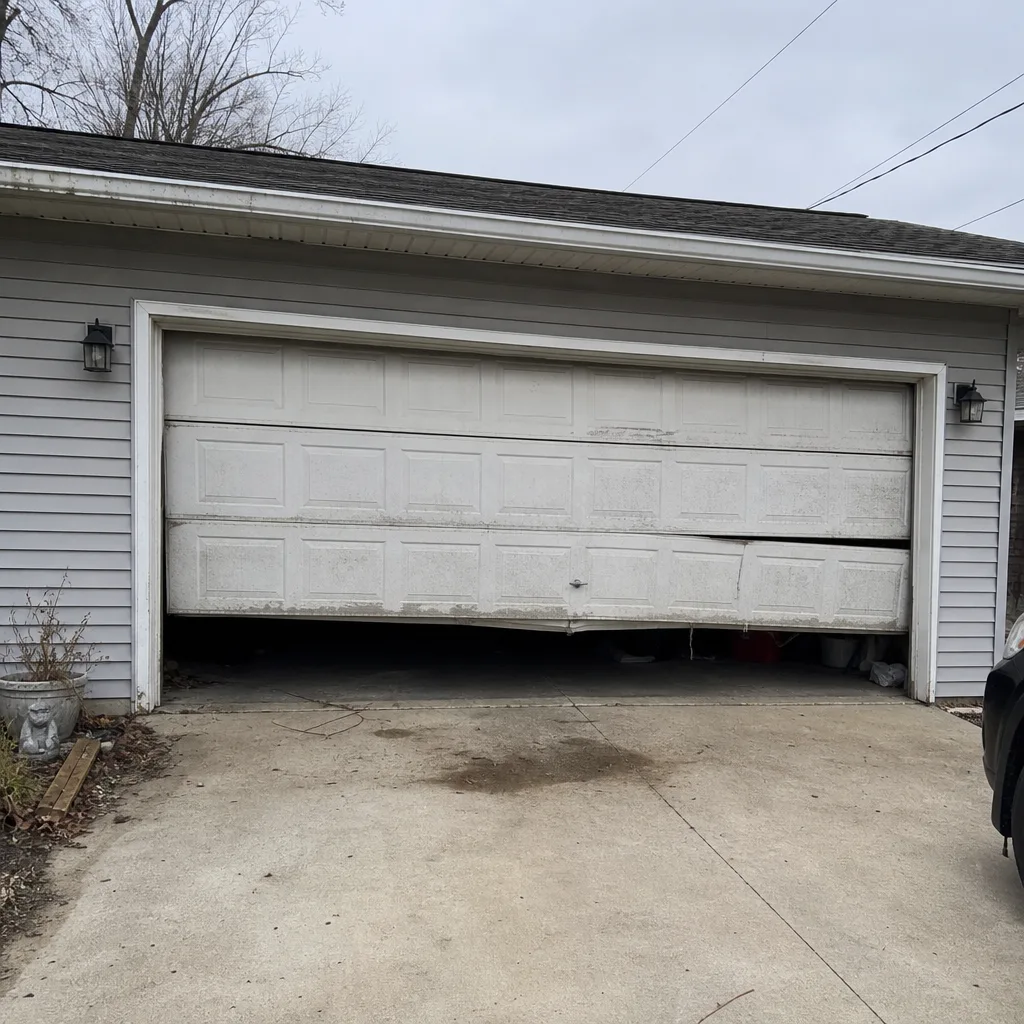 Before
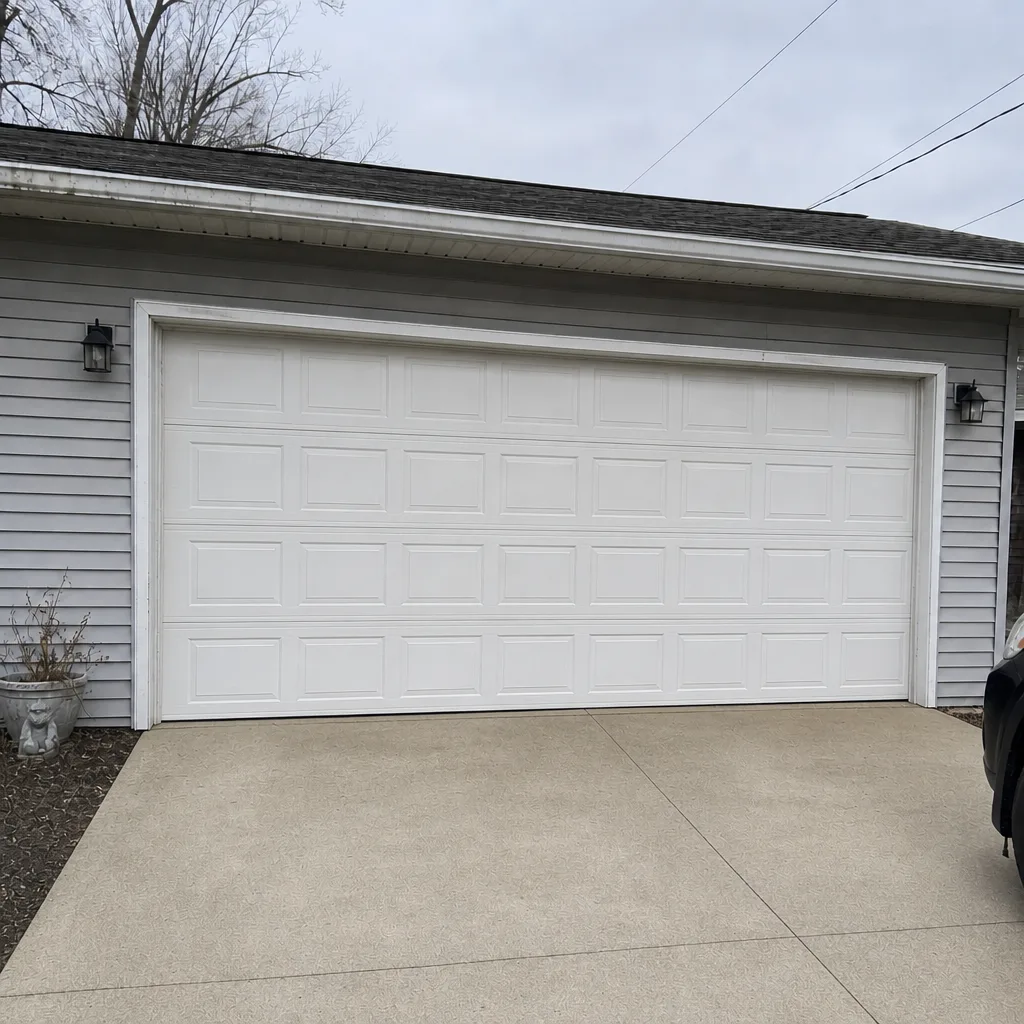 After
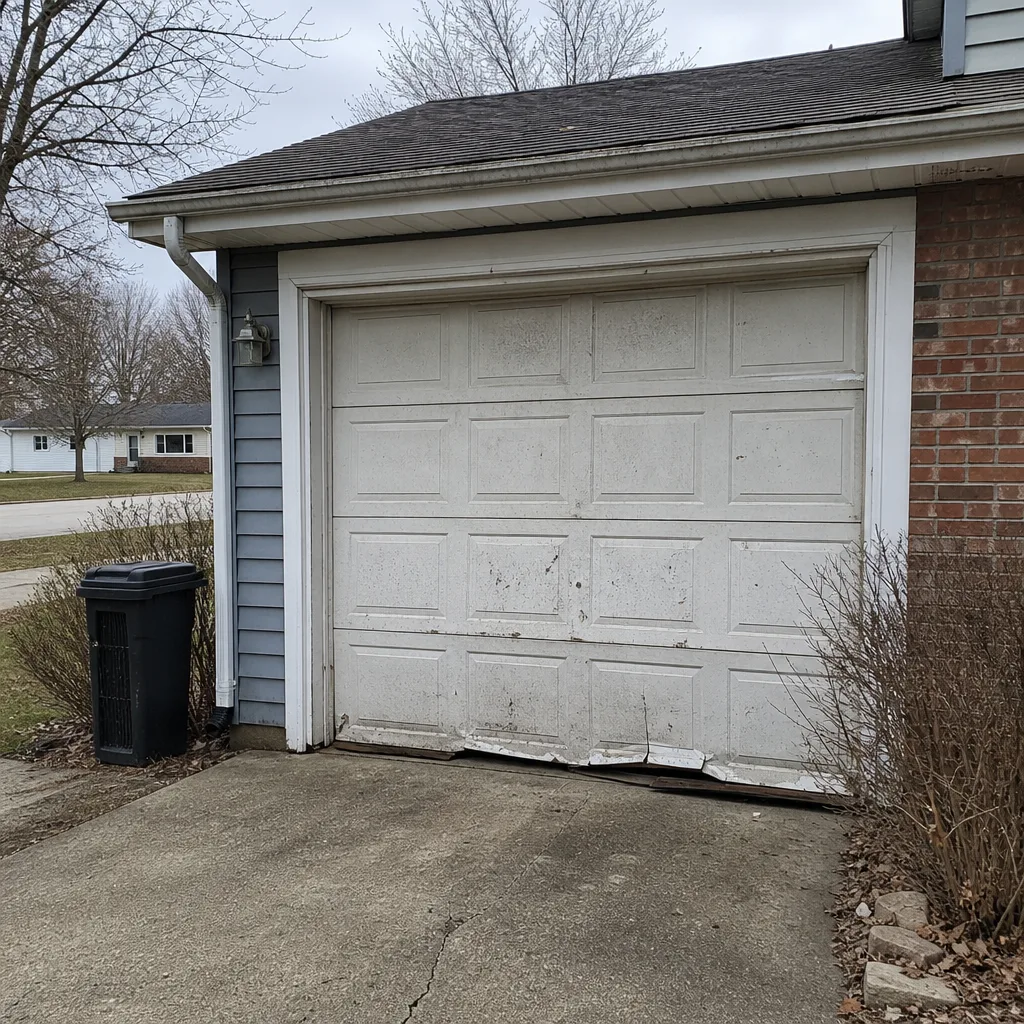 Before
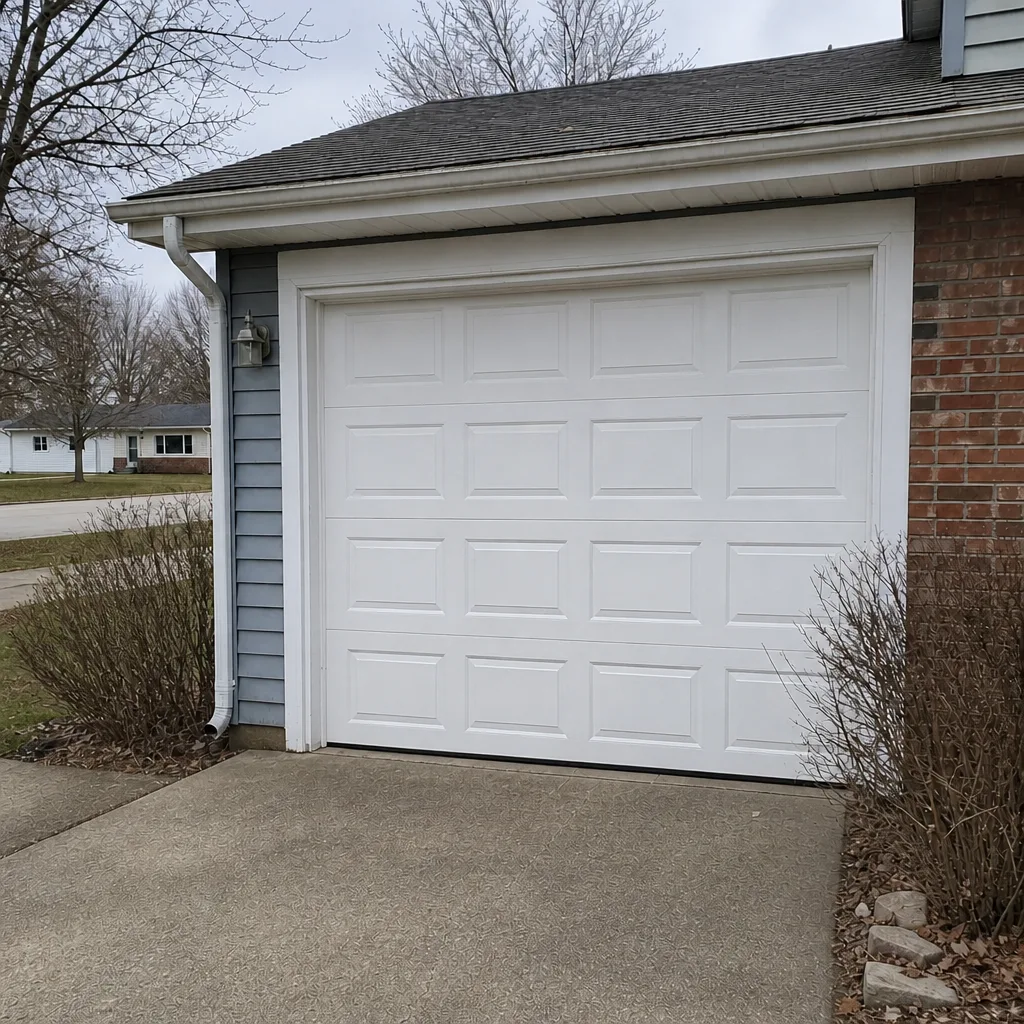 After
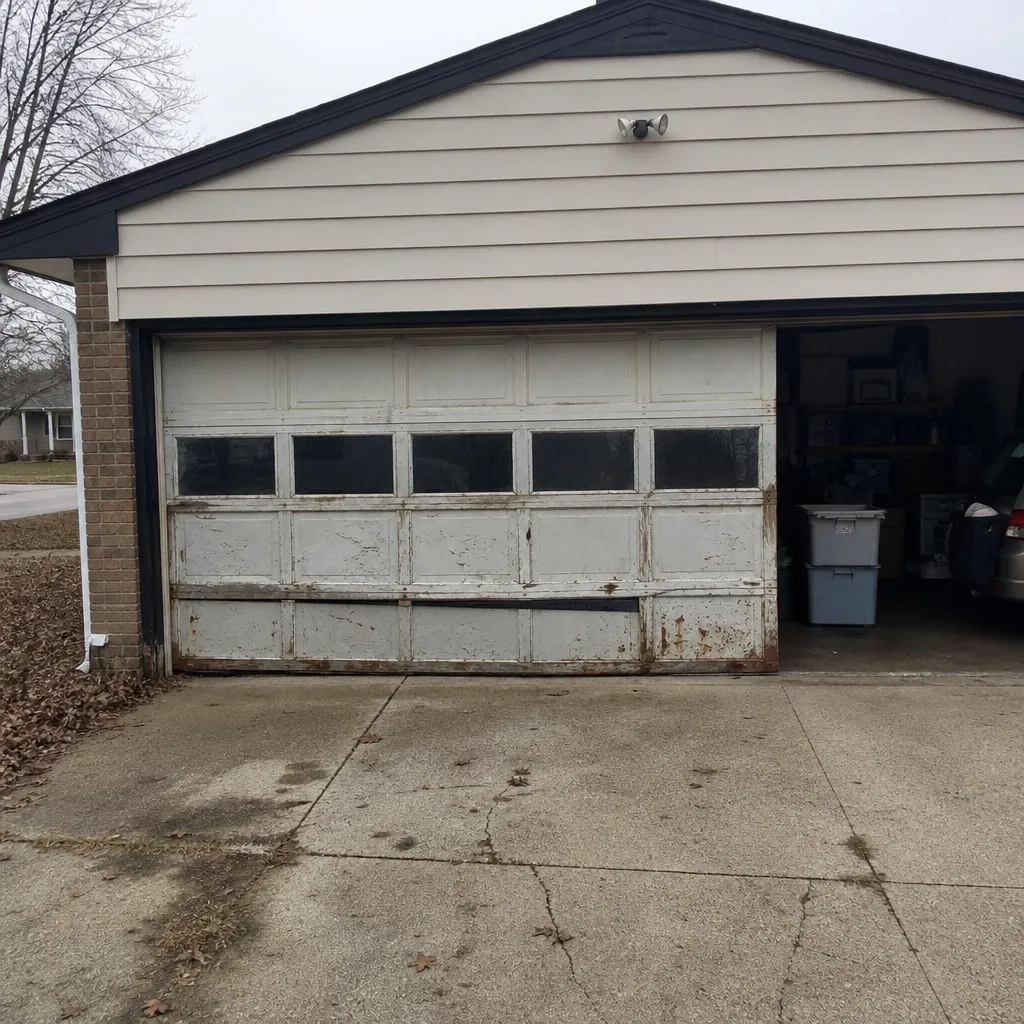 Before
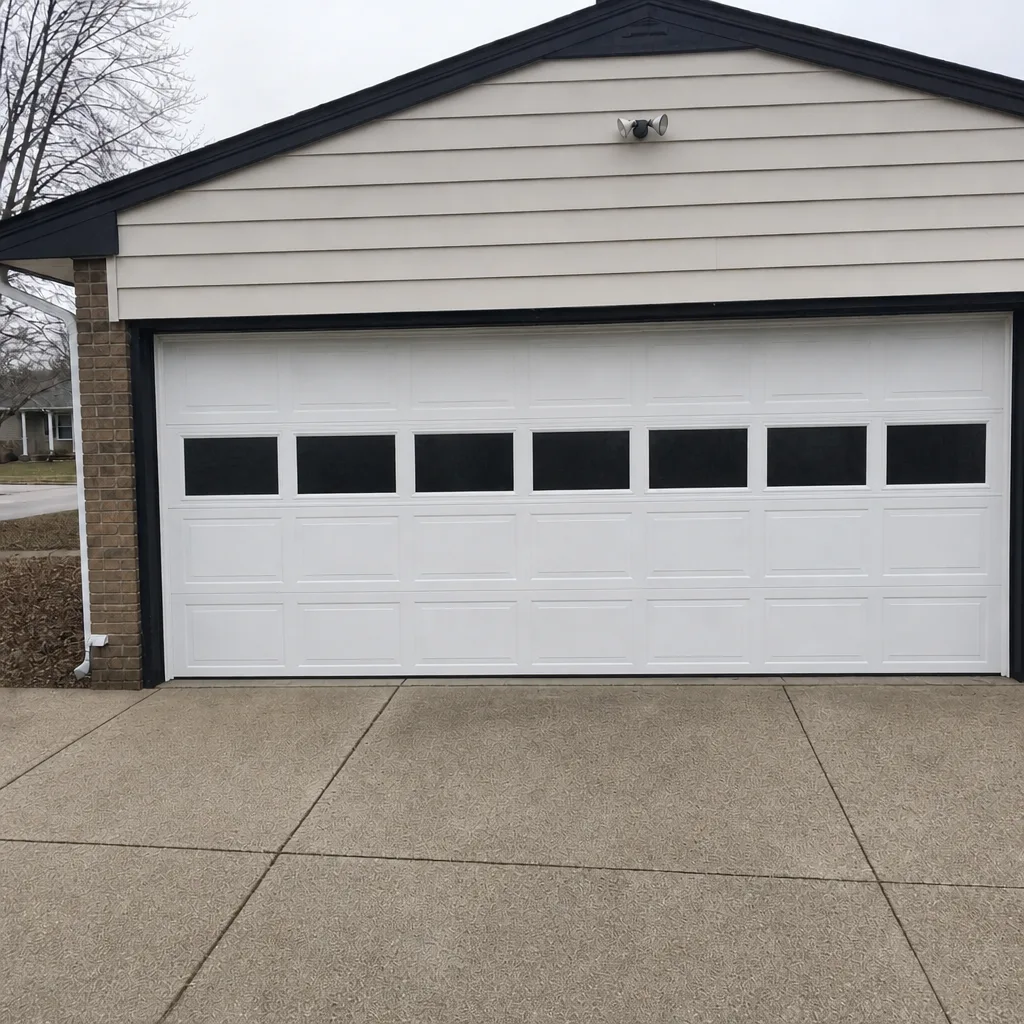 After
Common Mistakes to Avoid
- Treating all garage door repairs as equally risky. They aren’t. The biggest mistake is either avoiding all DIY (and overpaying for sealed jobs) or treating all repairs as equally doable (and taking on spring work). The split is the whole point.
- Confusing “the door won’t close” with an opener problem. In Lawrence, this is usually a sensor alignment or a door balance issue. Adjusting the opener’s travel limit to force the door closed is a common DIY shortcut, and it damages panels over time.
- Buying a spring or cable by model number only. Springs are matched to door weight, not to the opener. A spring sized incorrectly for the door accelerates wear on the opener, the door, and the spring itself.
- Lubricating the tracks. Tracks should be wiped clean, not greased. Grease traps grit in Lawrence’s humid season, and the rollers start to slide instead of roll.
- Skipping the reverse test. The auto-reverse feature is the single safety function on a garage door that could hurt someone in the driveway. Test it monthly by putting a small object in the door’s path.
- Assuming a new opener fixes an old door. If the door isn’t balanced, a new opener just adds more force to an already strained system. We see this most on LiftMaster and Chamberlain upgrades where the door itself was never checked.
- Not documenting professional repairs. If you ever sell the home, a documented spring replacement is a five-second line on the disclosure. An undocumented one is a question mark.
If you’ve already made one of these mistakes, it’s not a problem. It’s a call. Most of the correction cost from a DIY misstep is small if it’s caught early and larger if it’s left for a season. Our garage door repair service is built around exactly this kind of visit.
When to Call a Professional
Call for these situations, regardless of how handy you are:
- Any broken torsion or extension spring, or a door that suddenly feels heavier than it did last week.
- Any cable issue. Snapped, frayed, off the drum. All of them are spring-tension work by another name.
- Any door off its track, or any door that’s bent a panel.
- Any opener fault that survives a power cycle and a remote battery change. Wiring and control board work on smart openers like Chamberlain and Genie isn’t a homeowner job.
- Any new installation or full replacement. That work involves measuring the door opening, ordering a door sized to the frame, and re-balancing the system around it. It’s a scheduled job, not a same-day one.
- Any emergency. A door that’s stuck open overnight in Lawrence is a security problem, and we offer emergency service for exactly that reason.
Garage Door Repair Lawrence Pros offers free estimates in Lawrence. Our technicians have up to 10 years of experience, and we work on the eight manufacturer brands most likely to be on your door or opener. There’s no upsell ladder. You get a written estimate, you approve it, and the price is set before any work begins. Call (844) 681-4256.
Frequently Asked Questions
It depends entirely on which repair you’re facing. For sensors, seals, and lubrication, DIY is genuinely cheaper and safe. For springs, cables, and anything involving tension, DIY is either more expensive after correction or an injury risk. Call (844) 681-4256 for a free estimate before you decide on anything spring-related.
No. Torsion springs store enough energy to cause serious injury, and no video teaches the feel of when a spring is about to release. The tooling alone (proper winding bars, correct sizing, and a way to control the door during the swap) is beyond most home setups. Use garage door spring repair for spring work, and leave the door alone until a technician arrives.
Typical spring repair in Lawrence runs about $180-$340 for a single spring. A matched pair is usually replaced together, so a pair costs roughly twice that. The written estimate confirms the final price before any work starts. Call (844) 681-4256 for an exact quote, and estimates are free.
No. The written estimate sets the price, and you approve it before work begins. If a job turns out to be larger than the estimate allowed for, we tell you before we continue. There’s no invoice that lands above the quote.
The local professionals we connect you with are licensed and insured as Indiana requires. We can tell you ahead of time which manufacturer brands we work on (LiftMaster, Chamberlain, Genie, Clopay, Amarr, Wayne Dalton, Craftsman, and Raynor) so there’s no surprise on the day. Call (844) 681-4256 to talk through your door.
Call right away if the door is stuck open, off its track, or if a spring or cable has snapped. Those are the situations where waiting overnight in Lawrence creates a security or safety issue. Emergency service is available for exactly these calls. Call (844) 681-4256 and we’ll get someone out.
You can. Lubrication is on the safe-DIY list, and it’s one of the highest-value things you can do for your door in Lawrence’s climate. Use a garage door-specific lubricant on the hinges and rollers, wipe the tracks clean instead of greasing them, and check the rollers for rough spots while you’re up there. If a roller feels rough, that’s a balance issue worth having looked at.
The Bottom Line
The DIY vs. professional question for a Lawrence garage door isn’t about confidence or skill. It’s about which parts of the system can hurt you no matter how careful you are. Handle the seals, sensors, and lubrication yourself. Those are real savings and low risk. Leave the springs, cables, and drums to a technician, because the physics doesn’t negotiate. Anything in between, get a free estimate before you make the call on your own. One phone call to (844) 681-4256 tells you which side of the line your repair sits on, and that’s cheaper than guessing.
If you’d like to learn more about what we cover for Lawrence homeowners, our garage door repair and garage door opener repair services are the best places to start. For spring work specifically, our garage door spring repair is the dedicated service to ask for. Call (844) 681-4256 for a free estimate.
Written by the team at Garage Door Repair Lawrence Pros.