Last updated November 22, 2026
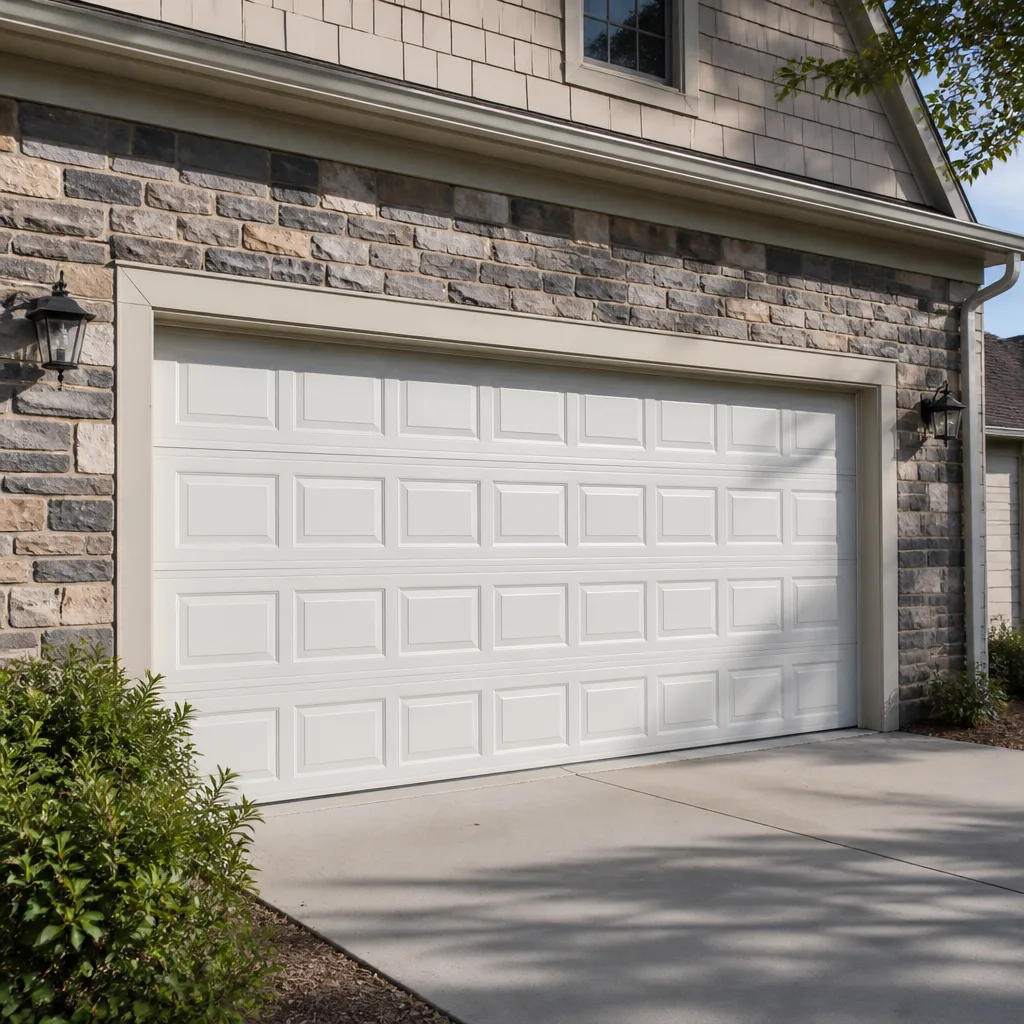 Raised-panel steel
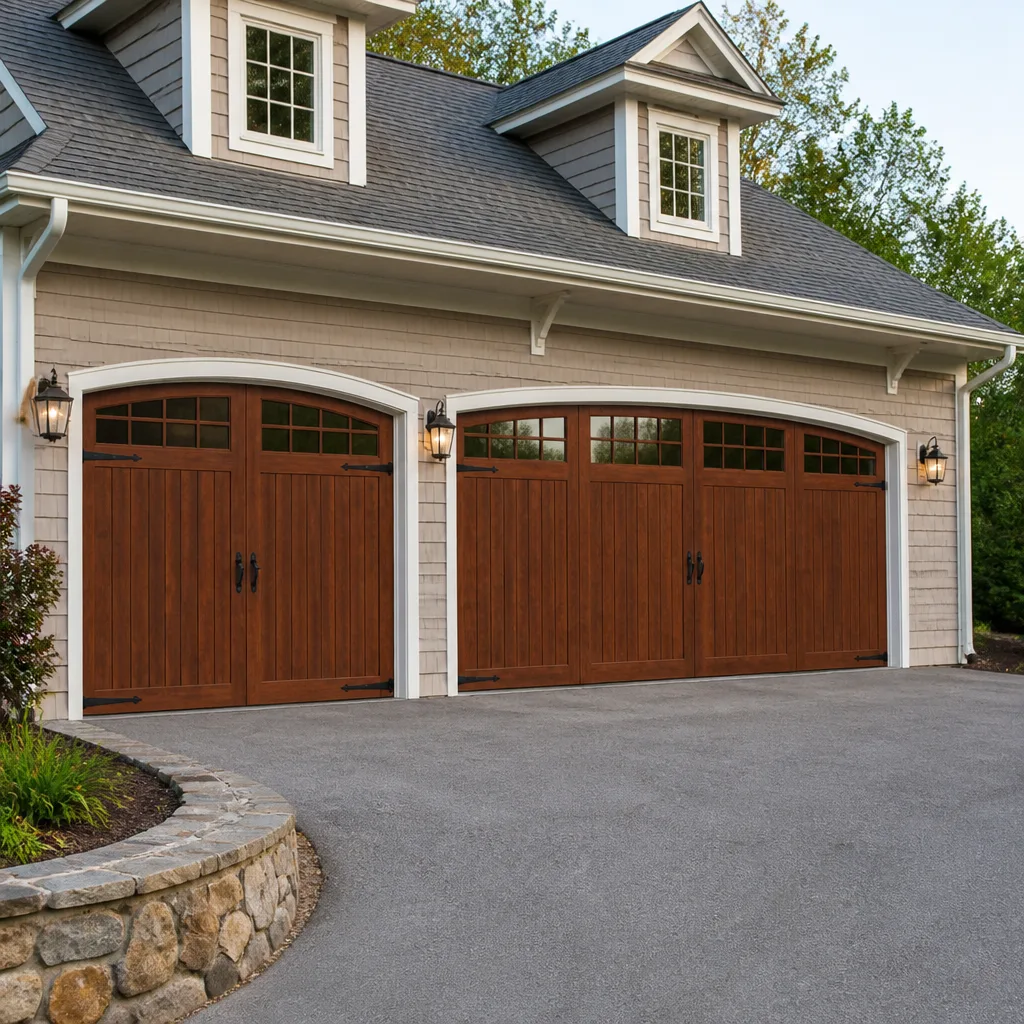 Carriage house
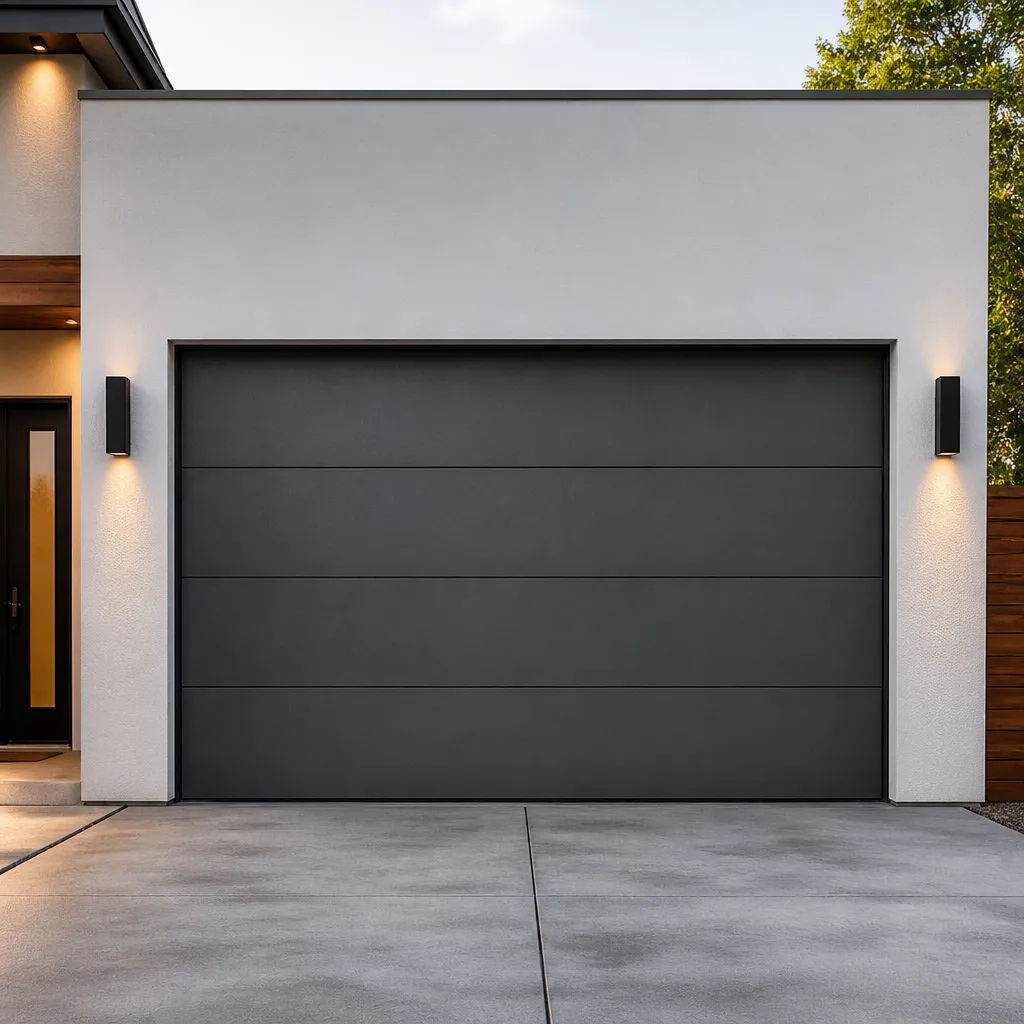 Modern flush
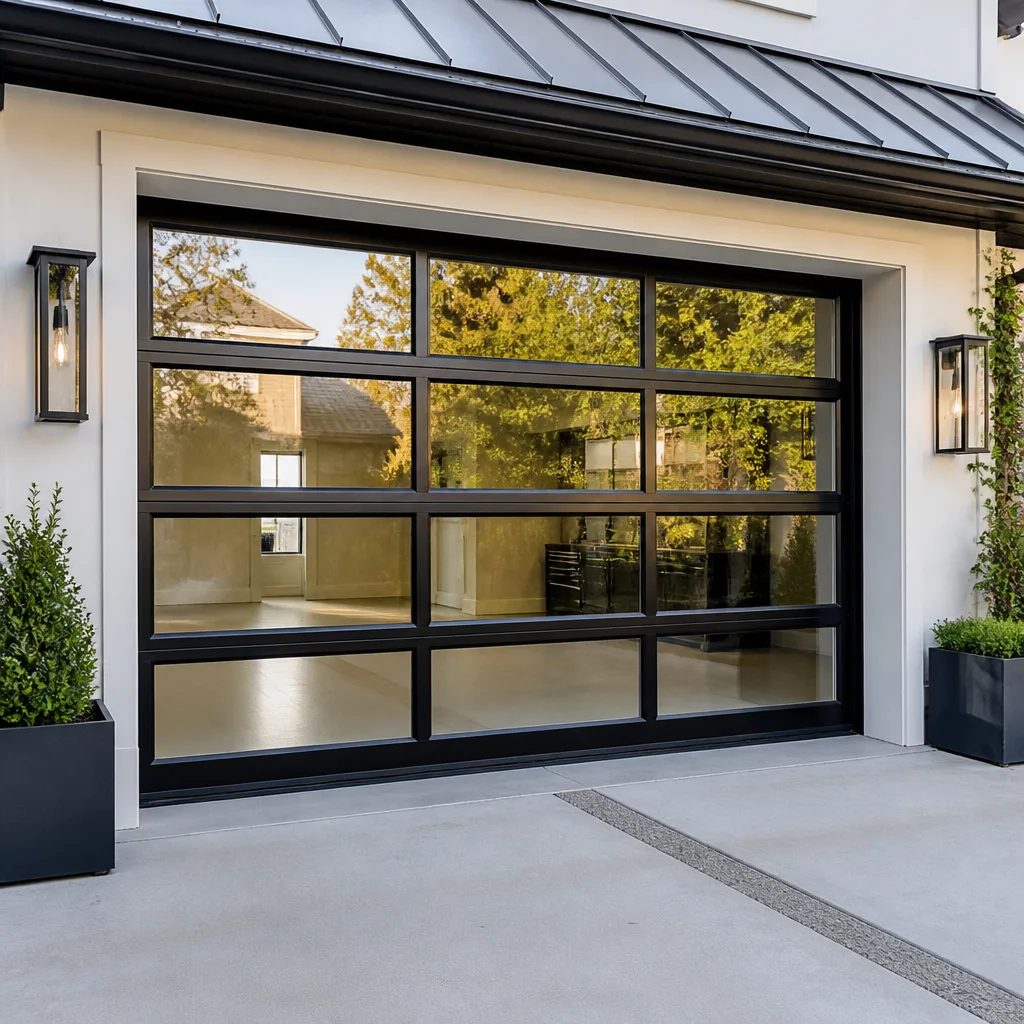 Full-view glass
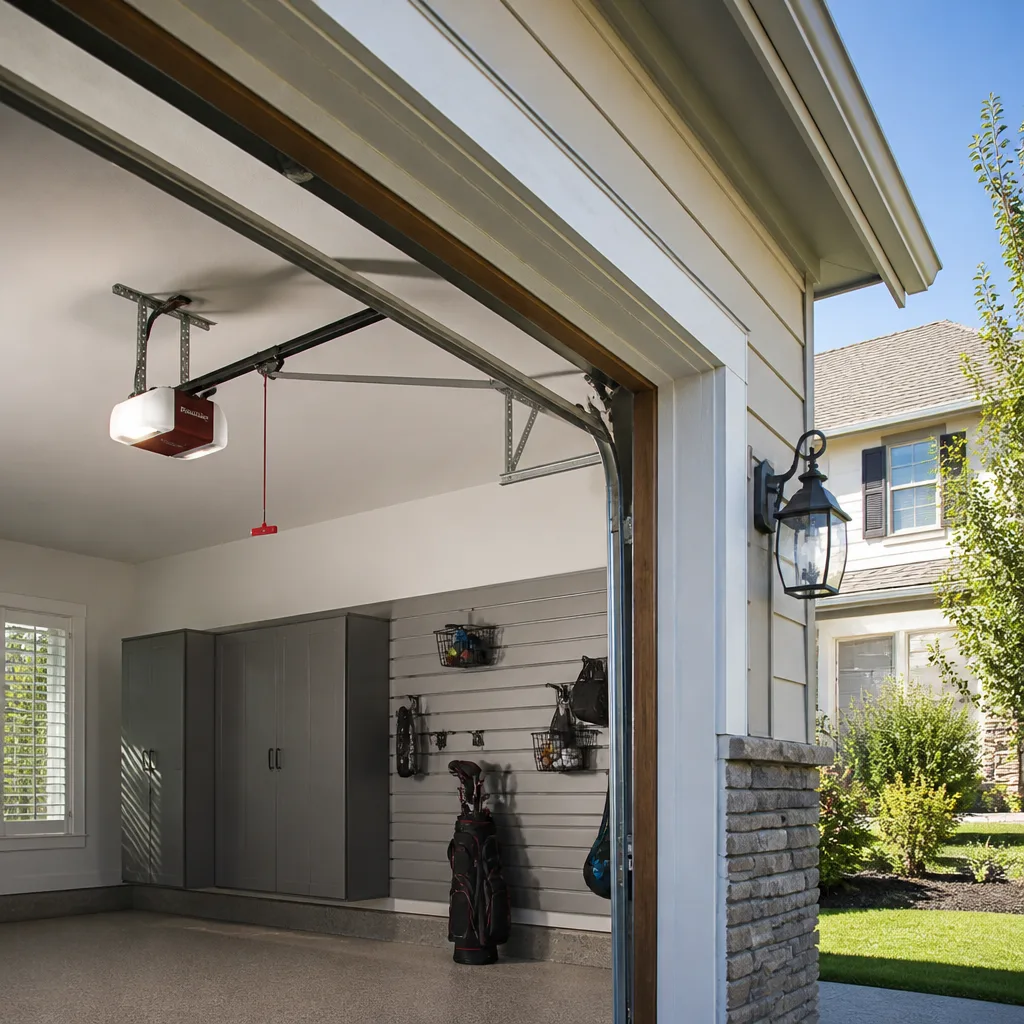 LiftMaster openers
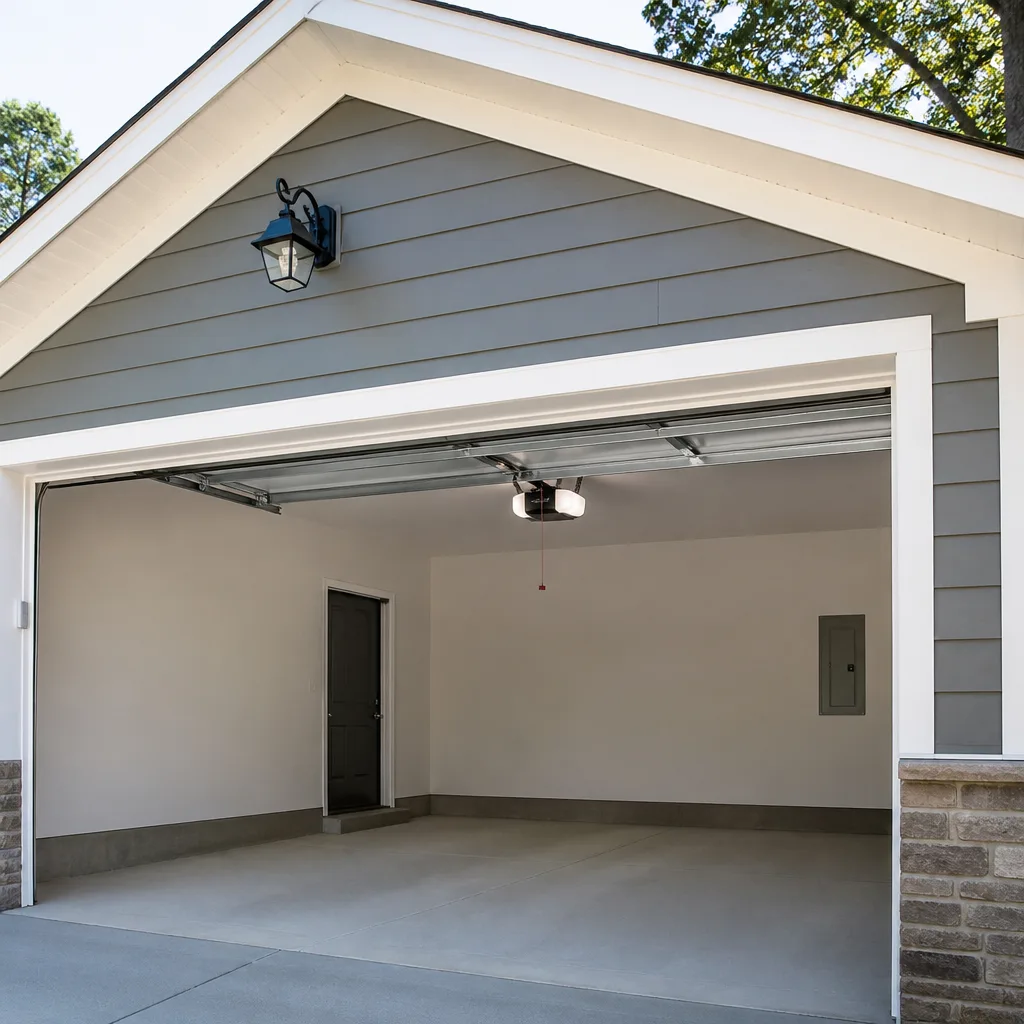 Chamberlain openers
Full 25-point door and opener safety check with every visit - springs, cables, rollers, tracks, and your LiftMaster or Chamberlain opener included
You get a price before we start. It does not change when the pro arrives.
Get your free estimateThe Complete Guide to Garage Doors in Lawrence
Most “complete guides” to garage doors are written for a fictional average homeowner in a fictional average climate. Lawrence, IN is neither, and the difference shows up in your repair bills. Our region’s clay-heavy soil swells and shifts with every freeze-thaw cycle, which throws floor seals and bottom panels out of alignment in ways homeowners in sandy or rocky ground rarely see. Lawrence subdivisions tend to be built within a narrow band of years, which means most of the hardware on your street comes from just a handful of manufacturing generations. General advice ignores all of it. What follows is a guide mapped to the conditions, codes, and equipment actually in front of you. You’ll learn how local ground movement affects your door, how to tell a repair from a replacement, what triggers a permit, and how to match a technician’s expertise to the system you already own.
Quick Answer
A Lawrence garage door problem is best solved by matching the fix to your specific hardware and to Indiana’s freeze-thaw reality, not by following generic advice. Most problems fall into one of three buckets: a worn mechanical component (springs, cables, rollers), an opener that’s reached the end of its reliable life, or a door whose panels or alignment have been pushed out of true by seasonal ground movement. Identify the bucket first, then decide repair versus replace. In Lawrence, that decision is driven by your door’s age, its material, the soil conditions around your slab, and how the work is done.
Styles & brands we work with
- Raised-panel steel
- Carriage house
- Modern flush
- Full-view glass
- LiftMaster openers
- Chamberlain openers
Table of Contents
- How a Garage Door System Actually Works
- How Lawrence’s Clay Soil and Frost Heave Affect Your Door
- Door Styles and Materials in Lawrence Neighborhoods
- Repair or Replace? A Decision Tree
- Permits and Code in Lawrence and Marion County
- Matching a Technician’s Expertise to Your Hardware
- Springs, Cables, and Why Safety Comes First
- What Routine Care Looks Like Here
How a Garage Door System Actually Works
A garage door isn’t a single thing. It’s a system of parts that trade force with each other, and when one part weakens, the others take up the slack. Understanding that relationship is what lets you describe a problem accurately and understand what a technician is proposing to fix.
The major components:
- Torsion or extension springs. These counterbalance the door’s weight. Torsion springs sit on a shaft above the door. Extension springs run along the horizontal tracks. Either type carries enormous stored energy.
- Cables and drums. Cables connect the bottom bracket to the spring system and wind on drums. They carry the spring’s force to the door.
- Track and rollers. The track guides the door up and back. Rollers ride inside it. Bent track or worn rollers cause grinding and jerking.
- Hinges and panels. Hinges join the door sections. Panels are the visible exterior and a structural part of the assembly.
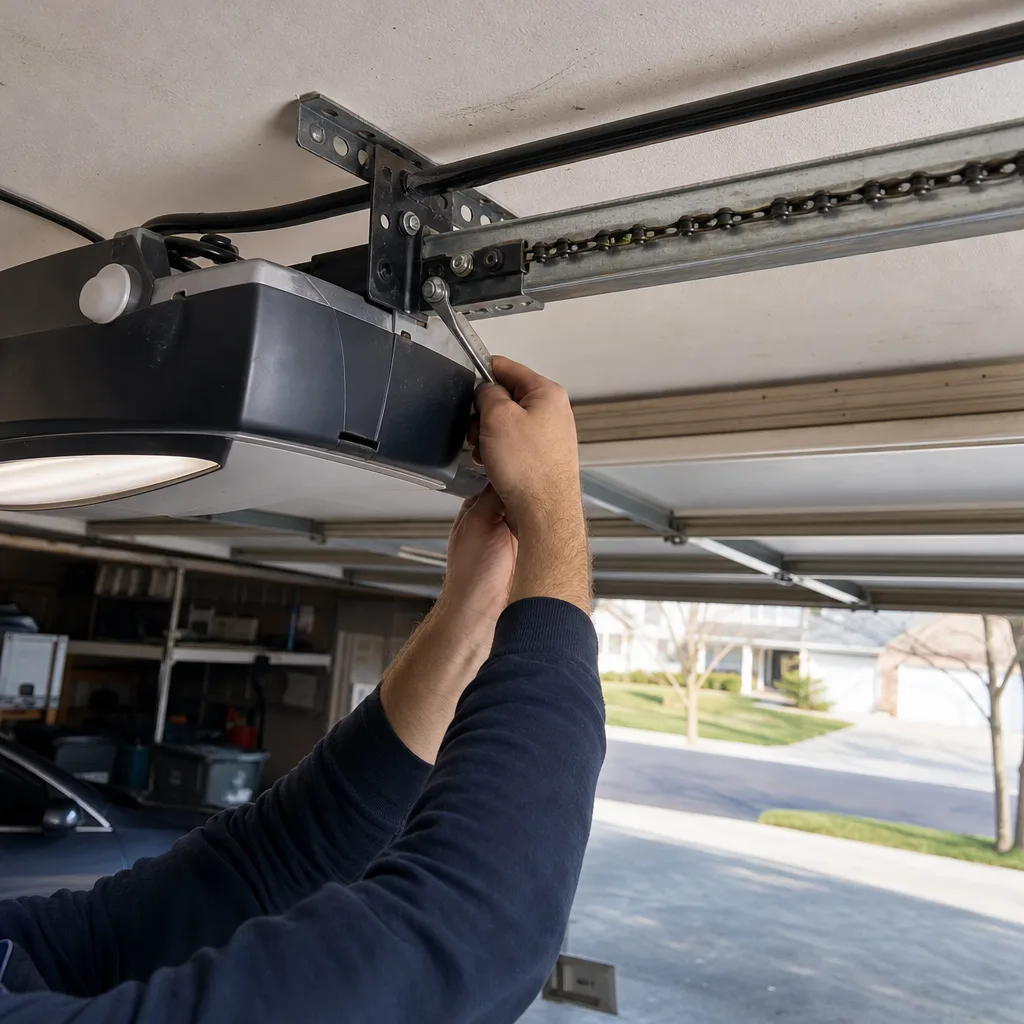
- The opener. The motor and rail that lift and lower the door. Openers from brands like LiftMaster and Chamberlain add smart-home connection and battery backup; Genie units cover many traditional installations.
- Safety reversal and photo-eye sensors. The system that stops a closing door when something is in the way.
The reason this matters: a door that “feels heavy” might have a broken spring, worn rollers, or a misaligned track. The symptoms overlap. A technician who already knows your brand and model family knows the common failure points before arriving, which shortens the diagnostic and reduces the chance of guessing. Our technicians have up to 10 years of experience with residential systems, and that brand familiarity is the difference between a plan and a search.
For a dedicated deep dive into mechanical failures, see our guide to garage door repair.
How Lawrence’s Clay Soil and Frost Heave Affect Your Door
Here’s the part competitors skip. The ground beneath your garage slab in Lawrence is dominated by clay, and clay does something sand and rock don’t: it swells when it takes on water and shrinks when it dries. Through Indiana’s seasonal cycle, that movement is repetitive, predictable, and slow. It doesn’t crack your door in half. It nudges it out of alignment, a little at a time, until you notice.
What this looks like in practice:
- Gaps at the floor seal. As the slab and the surrounding grade move independently, the rubber seal at the bottom of the door can lift or compress unevenly. You get a partial gap on one side and a dragging seal on the other.
- Bottom panel misalignment. The lowest section is anchored to cables and a bracket, and it takes the most stress. Repeated seasonal shifts can pull it out of level, which throws off the door’s travel.
- Uneven wear on rollers and hinges. When the door runs slightly out of true, one side works harder than the other. That accelerates wear on that side.
- Opener strain. A door that drags or binds forces the opener to work past its design limit. The motor isn’t failing; it’s compensating for a door that’s fighting the floor.
The frost heave piece deserves a plain explanation. When water in the soil freezes, it expands and pushes. Under a garage slab and along the apron in front of it, that push can be uneven. It’s one reason residential garage projects often get subcontracted to a foundation or concrete specialist when the slab or apron itself has heaved. If your door suddenly won’t close flush after the ground thaws, the door may be fine. The floor may have moved.
What to check before calling: look at the gap under the door from inside on a bright day. If the light comes through as a uniform thin line, the seal is seating well. If it’s a wedge on one side, that’s alignment, not a failed seal. That one observation tells a technician a lot about what they’re walking into.
Door Styles and Materials in Lawrence Neighborhoods
Walk through most Lawrence subdivisions and a pattern emerges. The housing stock was built within a relatively narrow period, which means your neighbors’ doors and yours likely share a manufacturing lineage. That’s useful for two reasons: it tells you what replacement parts exist off the shelf, and it tells you what’s consistent with the neighborhood’s appearance for resale purposes.
The dominant materials you’ll see around Lawrence:
- Steel sectional doors. The most common by far. Durable, affordable to maintain, and widely available. Steel doors are where panel repair makes the most sense, because sections are replaceable individually.
- Insulated steel. A step up from standard steel, often with a foam core. Common in homes that were built with a temperature-controlled garage or an attached bedroom over the garage.
- Wood and wood-look composite. Less common but present in older or more custom parts of town. These need attention to finish and moisture because Indiana’s humidity swings are hard on wood.
- Carriage-style and accent panel designs. Popular in neighborhoods where the front elevation carries more curb appeal. These often use steel or composite faces with decorative hardware.
Why this matters for resale and parts: if your door’s manufacturer still makes your model line, a damaged panel can be replaced without touching the rest of the door. If the line has been discontinued, you’re looking at either a full door replacement or a mixed assembly that looks mismatched from the street. Clopay and Amarr, both in our service range, are common in Lawrence-area homes, and knowing whether your model is current or retired is the first question worth asking.
Curb appeal isn’t vanity here. The garage door is usually the largest single visual element on the front of a Lawrence home. A door that’s the wrong color or the wrong style for the surrounding houses reads as a fix-up property to a buyer. A door that matches the neighborhood’s character reads as maintained.
Repair or Replace? A Decision Tree
This is where generic advice costs homeowners the most. The wrong call in either direction is expensive: repairing a door that should be replaced throws money after a failing system, and replacing a door that needed one component is overkill. Work through these questions in order.
- Is the door structurally sound? Look for widespread panel buckling, separation between sections, or a door that hangs visibly out of square. If the door’s structure is compromised, replacement is usually the honest answer.
- How many components have failed at once? One broken spring on a door in otherwise good shape? That’s a repair. Three failures across springs, cables, and rollers on the same door? You’re likely looking at the end of a service life.
- Is the failure mechanical or cosmetic? Mechanical failures (springs, cables, opener) are almost always repairable. Cosmetic failures (dents, faded finish, cracked panels) depend on whether matching replacement panels exist.
- Is the door’s material and style still available? If your model line is current, panel replacement is a clean fix. If it’s discontinued, replacement becomes the practical route.
- How does the door’s energy performance compare to what’s available now? An older uninsulated door on a temperature-sensitive garage saves money over time when replaced with an insulated steel door. For a garage under a heated room, this tips the scale toward replacement.
- What’s the door’s role in your home? A door that’s a daily-use path from the house to the car earns more from a durable, well-supported system than a door that opens twice a week.
The hard part is that you often can’t make this call from a visual inspection. A technician has to see how the door travels under power, know whether the springs are near their rated cycle count, and check alignment at the floor. That’s where a free estimate makes the decision cheap to get right. If the answer is a component fix, our team can do it; if it’s a replacement, we carry that through too, so you don’t have to start over with a second company.
For opener-specific questions, including whether a failing opener is worth replacing, see garage door opener repair.
Permits and Code in Lawrence and Marion County
This section exists because generic garage door guides never mention it, and homeowners get surprised. The exact rules depend on your project, so the practical move is to ask the city’s building department directly before scheduling work that changes the structure or the electrical. We tell customers the same thing: a five-minute call to verify what your project needs beats discovering a problem later.
What tends to trigger a permit conversation in the Lawrence and Marion County context:
- Replacing a door with one of a different size or weight class, which can affect header loading.
- Changing the framing around the opening.
- Adding a new opener circuit or running new electrical to the opener.
- Any work that changes the door’s fire separation performance when the garage is attached to the house.
Straightforward repairs (a spring, an opener unit swap, a roller change) generally don’t need permits, but the size change point is the one homeowners miss. If you go from a standard door to a taller or heavier door, the header carries more than before, and that’s a structural question, not just a hardware question. Ask before you buy.
Code questions also come up around the safety reversal system. Every new opener installation has to meet current safety standards, and that’s a strong argument for having a licensed and insured installer do the work rather than a general handyman. The local pro we connect you with is licensed and insured as their state requires.
Matching a Technician’s Expertise to Your Hardware
Here’s the counterintuitive point in this guide: the brand of your garage door and opener matters more than most homeowners realize, and it matters for one reason. Component failure patterns are brand-specific. A technician who knows LiftMaster logic boards and one who knows Genie logic boards are solving different puzzles. Generic repair people guess. Brand-matched technicians arrive knowing.
How to match expertise to your hardware:
- Look at your opener first. The brand and model are printed on the motor housing or the back panel. Write it down.
- Look at your door’s bottom panel. Many manufacturers place a label or stamp there. It tells you the door’s brand and often its model line.
- Note the door’s material and style. Steel, wood, or composite; sectional or single-panel; standard or carriage accent.
- Match the brand to your service provider. Our team serves LiftMaster, Chamberlain, Genie, Clopay, Amarr, Wayne Dalton, Craftsman, and Raynor. That covers the full range of residential systems in Lawrence homes.
- Ask a clarifying question on the call. A technician who knows your brand will ask a specific follow-up question (a model number, or what the door does when it reverses). A technician who’s guessing will ask for a general description.
This is what brand-matched service means in practice. When you describe a symptom, the technician already knows whether your specific opener has a known issue with the travel limit switch or the logic board. That shortens the diagnostic and reduces the chance of an unnecessary part swap.
Our opener expertise spans both modern smart-home-capable systems and traditional opener families, so a legacy Craftsman unit gets the same informed treatment as a new Wi-Fi-enabled opener. The Garage Door Repair Lawrence Pros team works the brand you actually have.
Springs, Cables, and Why Safety Comes First
We’ll say this plainly: garage door springs and cables are dangerous, and the most common mistake is a homeowner trying to handle spring work themselves. A torsion spring under load stores enough energy to cause severe injury if it releases unexpectedly. This is not a work-with-caution job. It’s a work-with-a-trained-professional job, and that’s why we don’t give step-by-step instructions for spring or cable work.
What’s safe to know and check:
- Signs a spring has failed. A door that won’t stay up, feels much heavier than usual, or shows a visible gap in a torsion spring. Stop using the door. Don’t try to lift it by hand.
- Cable warning signs. Fraying, kinks, or a cable out of its drum track. Cables carry the spring’s force, and a damaged cable is a safety concern, not just a noise.
- What to do instead. Keep the door closed, disconnect nothing, and call a technician. Spring repair is a dedicated service that takes the right tension tools and a technician who’s done it before.
Springs are also where the repair-or-replace judgment matters most. A spring is matched to the door’s weight. If a door’s weight has changed (say, a panel was replaced with a heavier section), the spring may need a different rating. Replacing a spring without confirming the door’s weight is a shortcut that shortens the new spring’s life. We do spring work as a dedicated service specifically because it deserves that focus. Learn more in our garage door spring repair guide.
One more safety point on the electrical side. If your opener’s wiring is damaged or you’re replacing a legacy opener with a modern unit, the electrical work should be done to code. That’s another place where the licensed and insured local pro matters.
What Routine Care Looks Like Here
Routine care in Lawrence is different from routine care in a dry climate. Our freeze-thaw cycle and humidity swings make lubrication, seal inspection, and alignment checks more valuable here than elsewhere. The goal isn’t to do the maintenance yourself; it’s to know what to look at so you catch small issues before they compound.
A reasonable monthly list:
- Look at the floor seal. Check for gaps and light coming through from inside on a bright day. Catching a seal problem early saves you the bottom-panel misalignment that follows.
- Listen for changes. A door that used to run quietly and now grinds or jerks is telling you something. Rollers, track, or springs are the usual suspects.
- Test the safety reversal. Every opener has a test procedure for the photo-eye sensors and the reversal on contact. The opener manual is the authoritative reference for yours.
- Check the outdoor apron. Look for cracks or heaved concrete in front of the door. That’s your early warning that the ground is moving and the door might follow.
- Note the seasons. The door may run slightly differently in early winter and early spring. If a problem appears only in one season, alignment caused by ground movement is worth ruling out.
When something on that list turns into a real problem, that’s when to call. Emergency garage door service is part of what we do, because a door that’s stuck open in cold weather is an immediate issue. We can work with your insurer where coverage applies. Same-day service and fast dispatch from 7am to 7pm are available for urgent calls.
Common Mistakes to Avoid
- Treating cold-weather stiffness as normal. A door that runs stiffly through an Indiana winter might be a seal riding the slab, not cold hardware. Left alone, the opener works harder and wears faster. Get the gap checked.
- Replacing a spring without checking the door’s weight. Springs are matched to the door. A shortcut spring or a mismatched rating shortens the new spring’s life and leaves the door unbalanced.
- Choosing a replacement door without checking the neighborhood norm. In a Lawrence subdivision where most doors are steel sectional, a mismatched style is a resale question, not just a taste question. Look at the street before you shop.
- Skipping the permit check on a size change. Going taller or heavier affects the header. Ask the building department before you order.
- Hiring a general handyman for spring or electrical work. Springs and opener wiring are safety issues. Use a licensed and insured professional.
- Repairing a door that should be replaced. Three or more failures across a single door on a compromised structure means a repair just postpones the bill. Run the decision tree before you spend.
- Ignoring the concrete apron. A cracked or heaved apron in front of the garage is often the first visible sign that the clay beneath is moving. Catch it early.
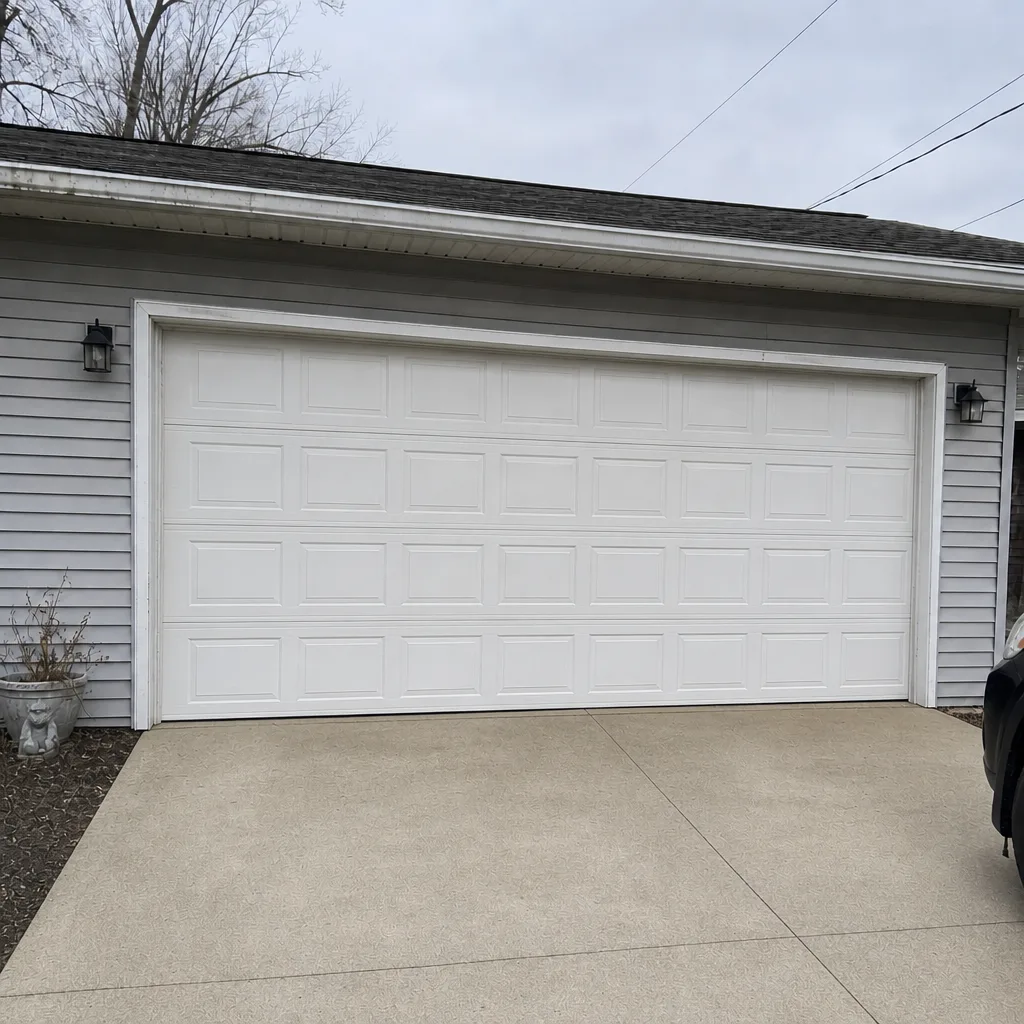
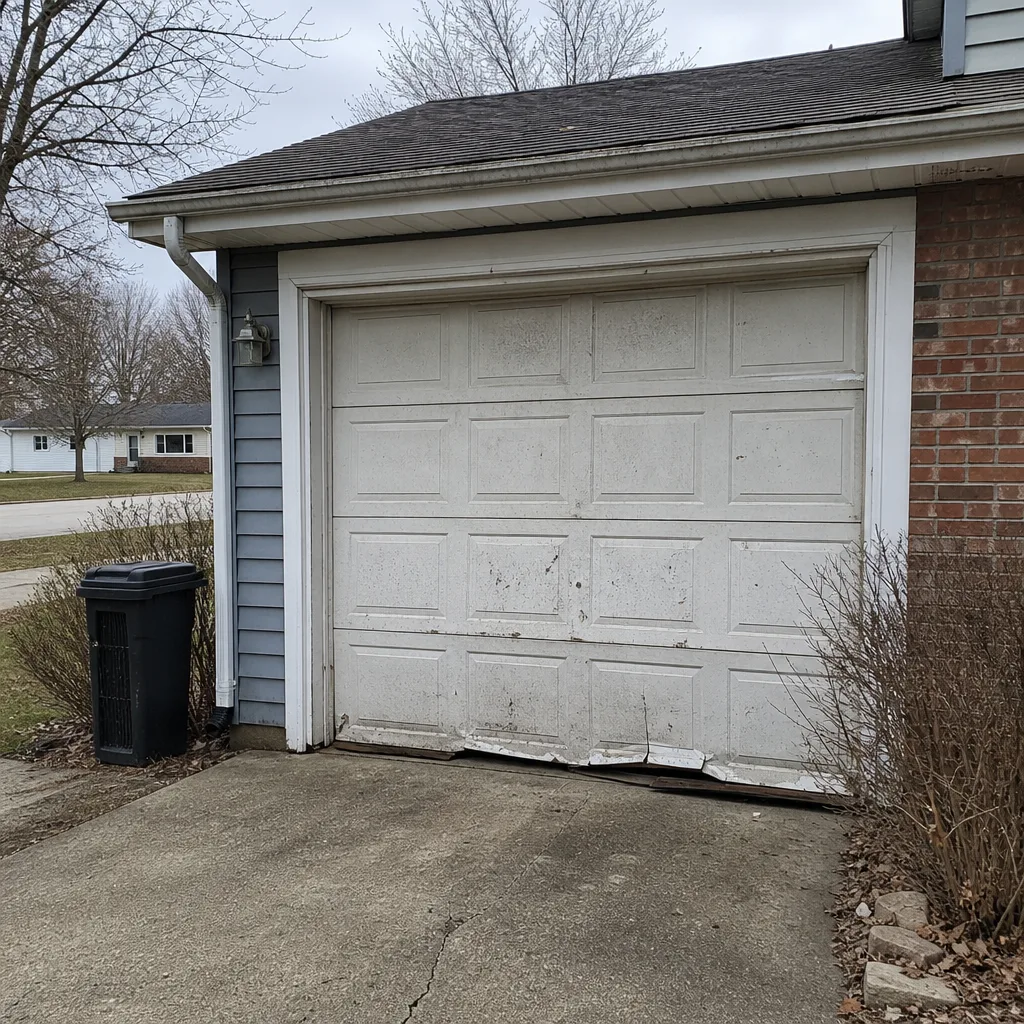
See the difference
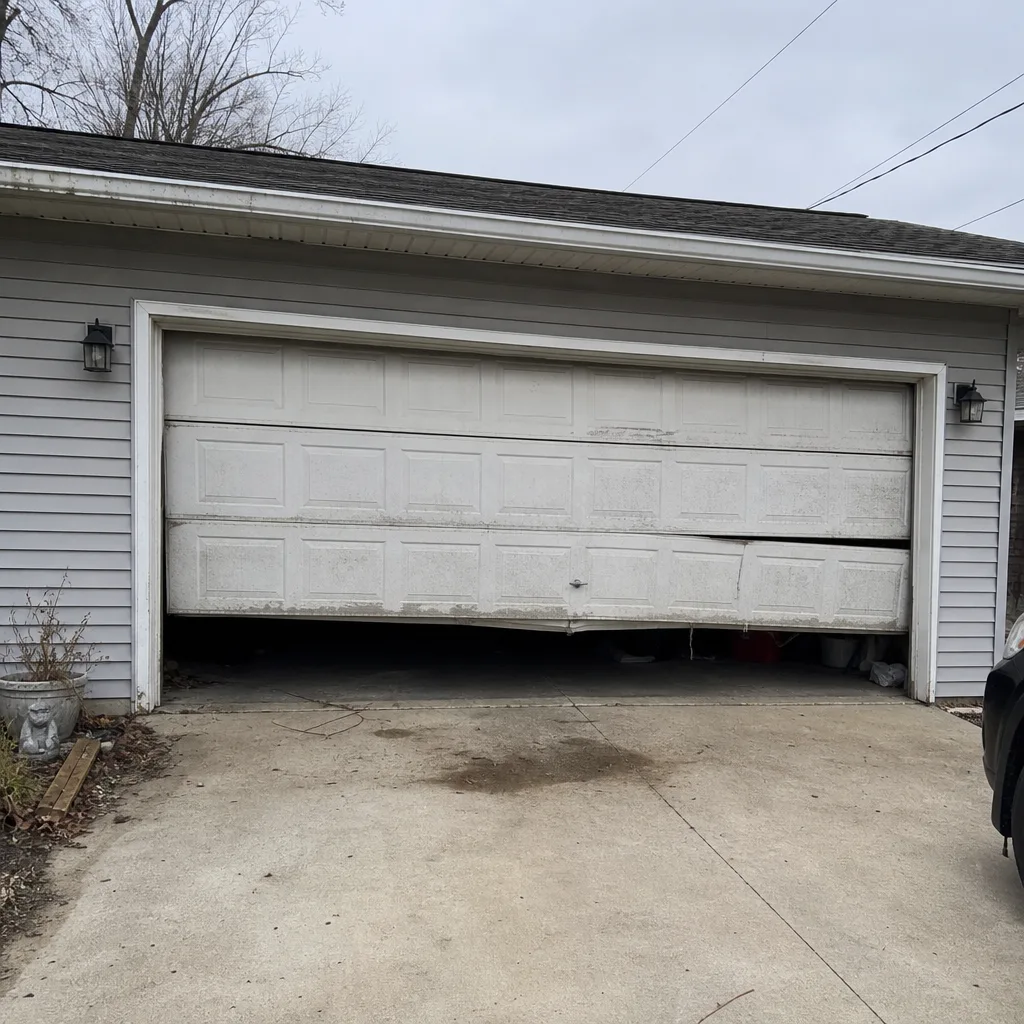 Before
 After
 Before
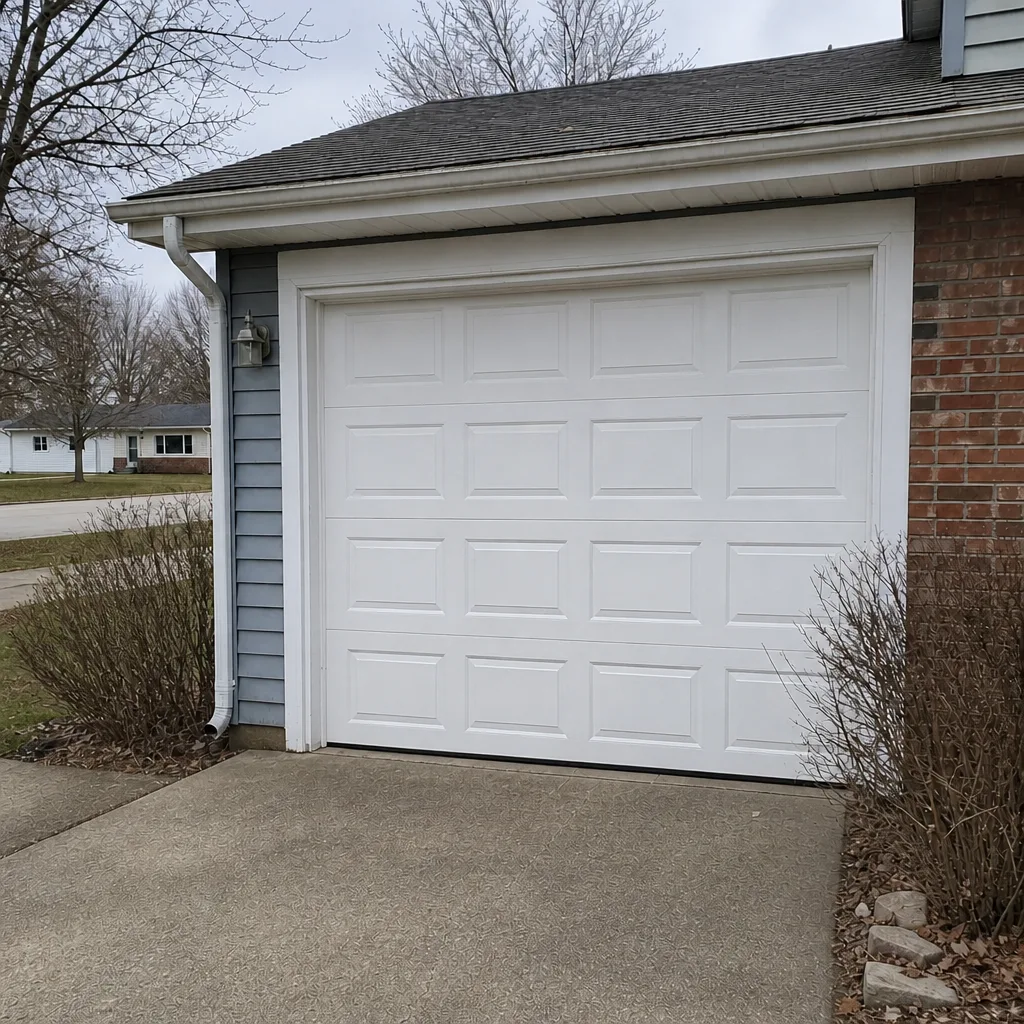 After
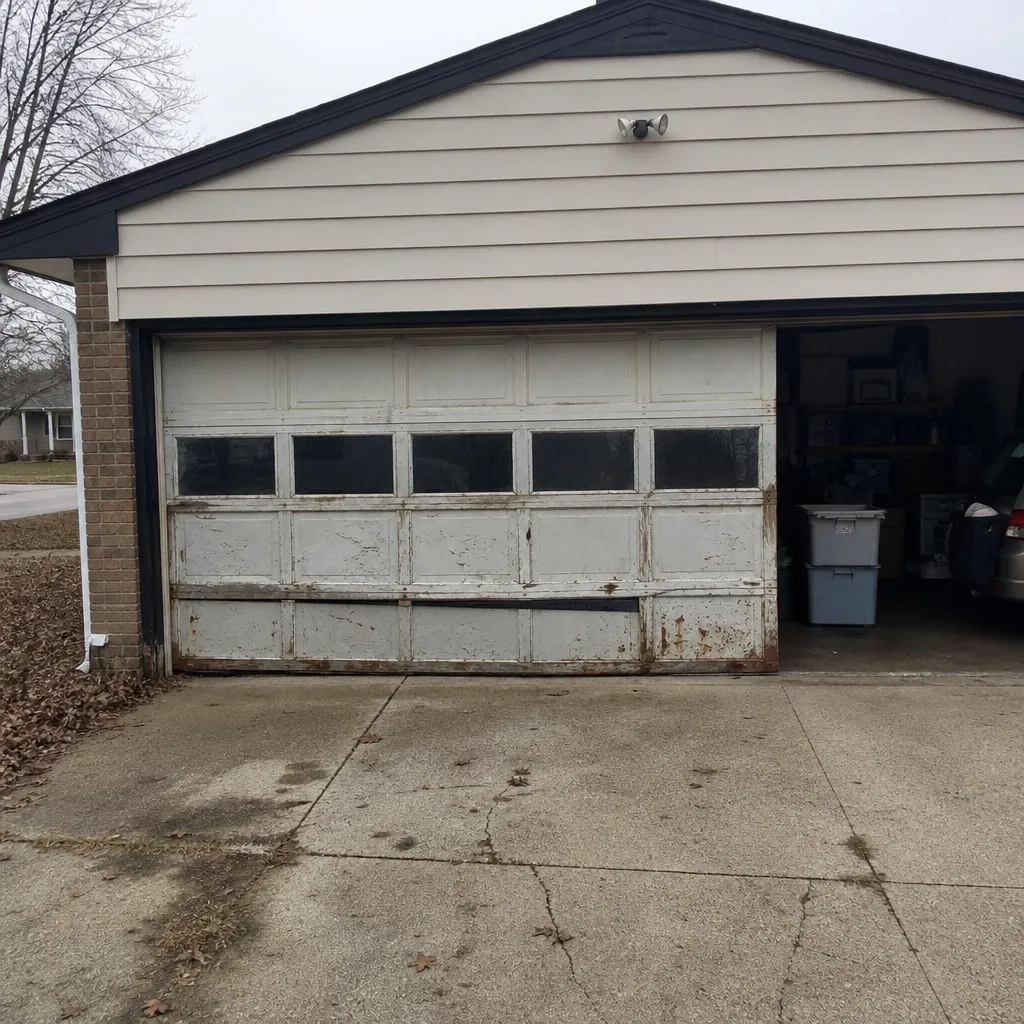 Before
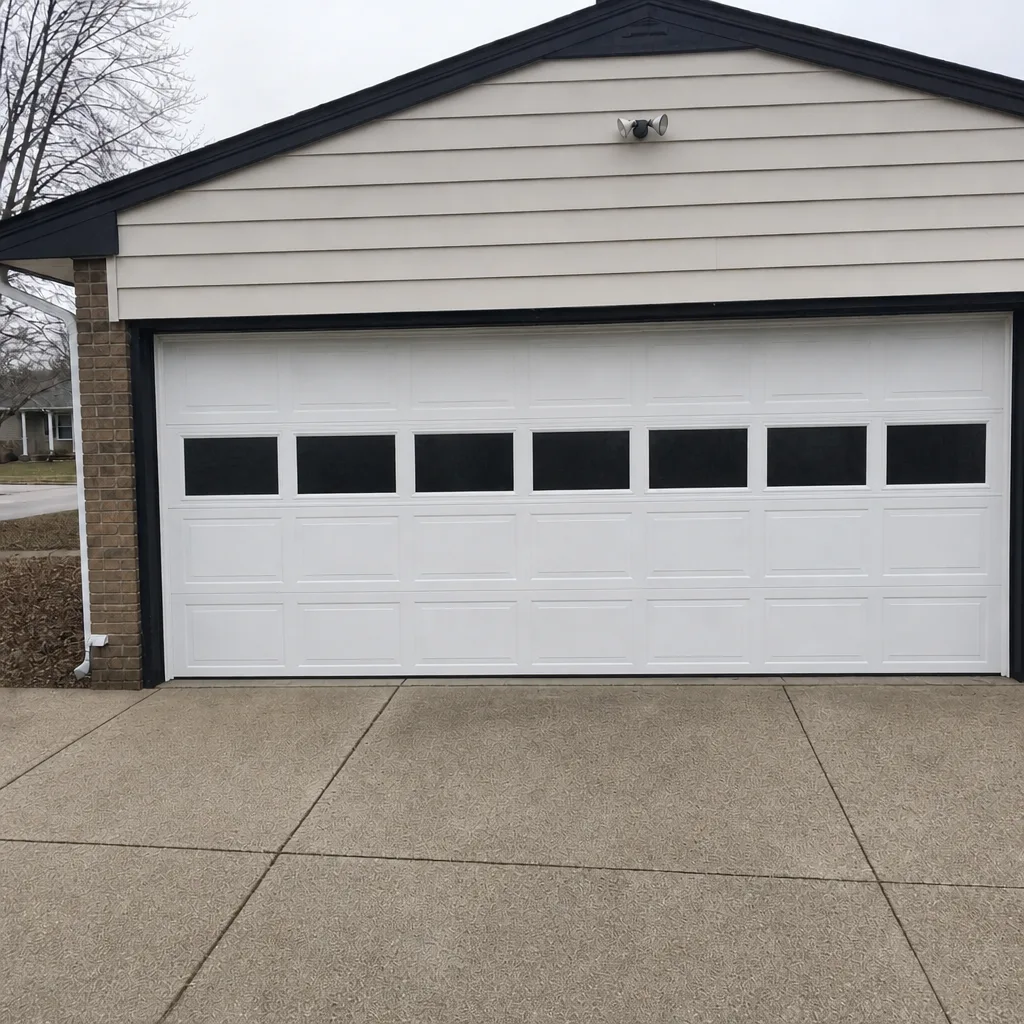 After
When to Call a Professional
Call a professional when the problem touches springs, cables, electrical wiring, or something you can’t diagnose from the outside. That includes a door that won’t stay up, a spring that’s visibly broken, a cable that’s frayed or off its drum, an opener that trips the breaker, or a door that suddenly won’t close flush after a seasonal change. If you aren’t sure whether it’s the door or the floor, that’s also a call worth making, because the diagnosis is fast and the answer determines the whole plan.
Garage Door Repair Lawrence Pros offers free estimates in Lawrence – call (844) 681-4256. Our technicians have up to 10 years of experience, and the local pro is licensed and insured as their state requires. You’ll get a written price before any work starts, and the written estimate sets the final price.
Frequently Asked Questions
Most garage door repairs in Lawrence fall into typical estimated ranges based on the component: a spring is priced per spring, a matched pair is replaced together and costs about twice a single spring, and opener repairs vary by brand and part. The written estimate sets the final price, and estimates are free. Call (844) 681-4256 for an exact quote, since the number depends on your specific door and what failed.
We offer same-day and emergency service with fast dispatch from 7am to 7pm, so a stuck or broken door is exactly the kind of call we prioritize. The local pro will confirm availability when you call. Call (844) 681-4256 to check today’s schedule. Estimates are free.
No. The written estimate sets the final price, and we quote and agree on the price before any work starts. If the diagnosis turns up something beyond what the call described, we talk to you about it before the work, not after. That’s why we can stand behind the number.
Yes. The local pro we connect you with is licensed and insured as their state requires. Our technicians have up to 10 years of experience, and we serve the brands actually installed in Lawrence homes, including LiftMaster, Chamberlain, Genie, and Clopay. Call (844) 681-4256 to get started.
Yes, more than most homeowners expect. Clay swells and shrinks with Indiana’s freeze-thaw cycle, and that movement can push a garage slab and its surrounding grade out of step. The result is often a floor seal that gaps on one side, a bottom panel out of level, or an opener that suddenly works harder. If your door behaves differently after a thaw, the ground is the first thing to rule out.
It depends on the project, and the safest answer is to ask the city’s building department. Straightforward repairs generally don’t require one, but a size or weight change, framing work, or new electrical for an opener is worth checking. A five-minute call to the building department before you order a door prevents a bigger problem later.
The Bottom Line
The garage door decisions that cost Lawrence homeowners the most are the ones made with generic advice. Your door sits on clay that moves with the freeze-thaw cycle, in a neighborhood whose housing stock shares manufacturing generations, under a permit and code framework that’s specific to the area. Match the fix to your hardware, run the repair-or-replace decision tree honestly, check the permit question before a size change, and hire a technician who knows your brand rather than a generalist who guesses. When you need a hand, Garage Door Repair Lawrence Pros offers free estimates in Lawrence – call (844) 681-4256. The written estimate sets the final price.
Written by the team at Garage Door Repair Lawrence Pros.